
Owusu on Africa
Türkiye: The Sahel’s Middle Power of Choice
Türkiye has quietly become the Sahel’s most trusted foreign security partner. Here’s how Ankara outmaneuvered France, Russia, and the West.

By Fidel Amakye Owusu
Since 2020, a wave of coups has swept across the Sahel, and with it came a wave of resentment toward the West. France, the region’s dominant power for decades, has paid the steepest price. Its troops have been expelled. Its embassies have been shuttered. Burkina Faso, the newest holdout, recently severed diplomatic ties altogether – a stunning reversal for a country France once helped shield from jihadist insurgents. Washington has not been spared either: a U.S. drone base in Niger was shut down at the junta’s insistence.
Amid this retreat of Western influence, one country has moved in the opposite direction. Türkiye, a middle power with neither the colonial baggage of France nor the superpower reputation of the United States, has emerged as the partner of choice for the Sahel’s military rulers. The question worth asking is not just how Ankara pulled this off, but what it reveals about the changing rules of influence in Africa.
Russia’s Fading Shine
The first reason is disillusionment with Moscow. Russian mercenary forces, once welcomed as a alternative to Western troops, have largely failed to deliver the security gains the juntas promised their citizens.
Insurgent violence has continued, in some cases worsened, despite the Kremlin-linked presence. That failure has pushed military governments to diversify their security partnerships.
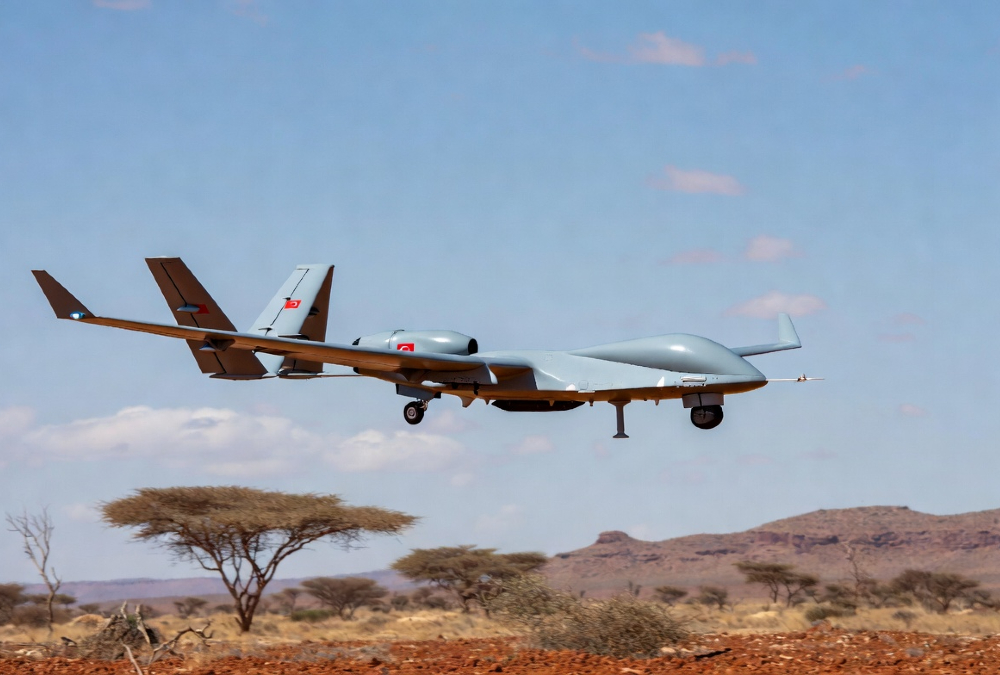
Türkiye, with battle-tested drones and a growing defense-export industry, has stepped neatly into the gap – not by replacing Russia outright, but by supplementing a relationship that has clearly underdelivered.
The Advantage of Being Neither East nor West
The second reason is geopolitical positioning. Türkiye is a NATO member, yet it is rarely perceived, at home or abroad, as a “Western” country. That ambiguity is precisely its appeal. After years of anti-Western rhetoric that juntas themselves helped popularize, openly courting Washington or Paris would carry real political risk. Türkiye offers a workaround: modern military hardware without the symbolism of aligning with former colonial powers.
This is not to say the West has been shut out entirely. Mali has reportedly permitted limited U.S. intelligence operations on its soil, and Burkina Faso has signed a health cooperation agreement with Washington. But these arrangements are handled quietly. Publicly, the juntas prefer to be seen standing apart from the West, even as they engage with it behind closed doors. Türkiye lets them have it both ways.
Diplomacy Laid the Groundwork
The third factor is patience. Türkiye did not appear in the Sahel overnight. Ankara has maintained embassies across the region for years, steadily building relationships and trust well before the coups made headlines.
That long-term diplomatic investment gave Türkiye a head start once the juntas began looking for new partners – and a level of familiarity that rivals could not easily replicate.
No One Is Threatened by Türkiye – Yet
Perhaps the most decisive factor is the least visible one: neither Western powers nor Russia appear to view Türkiye’s presence as a threat, at least not in the way they view each other’s involvement. Türkiye has become the rare actor in the Sahel that most everyone can tolerate. That neutrality, more than any single defense contract or diplomatic cable, is what has allowed Ankara’s influence to grow largely unchallenged.
The Bigger Picture
Türkiye’s rise in the Sahel is not simply a story about drones or diplomacy. It is a case study in how middle powers can outmaneuver great powers when the great powers are busy competing with each other.
As long as Western nations and Russia remain locked in their own rivalry, countries like Türkiye will keep finding room to grow – not by winning a contest for dominance, but by avoiding one altogether.
That may be the most important lesson for policymakers in Washington, Paris, and Moscow alike: in a region exhausted by great-power politics, the actor that looks least like a great power may end up with the most influence.
Fidel Amakye Owusu is an International Relations and Security Analyst. He is an Associate at the Conflict Research Consortium for Africa and has previously hosted an International Affairs program with the Ghana Broadcasting Corporation (GBC). He is passionate about Diplomacy and realizing Africa’s global potential and how the continent should be viewed as part of the global collective.
