
A Diaspora View of Africa
Can East Africa Resolve Its Disputes Before They Become War?

By Gregory Simpkins
Africa’s Sahel region has been considered the most dangerous and chaotic area for some time now. However, the East Africa region seems ready to experience an expansion of existing conflicts into a wider, more destructive, all-consuming regional war.
The Horn of Africa – Djibouti, Eritrea, Ethiopia, Somalia, and often Sudan, South Sudan and Kenya – has gradually become one of the most volatile regions on the continent. The grievances are old, but several have flared since 2020 and already appear to be triggering a wider war.
Here’s the breakdown:
Ethiopian Prime Minister Abiy Ahmed Ali received the Nobel Peace Prize in 2019 “for his efforts to achieve peace and international cooperation, and in particular for his decisive initiative to resolve the border conflict with neighboring Eritrea.” An international arbitration commission ruled in favor of Eritrea in 2002 on the border dispute, yet the Ethiopian government refused to accept the ruling. After 16 years of “no war, no peace” between the two countries, Abiy Ahmed broke the deadlock and accepted the decision. In September 2018, he and Eritrean President Isaias Afwerki signed a historic peace agreement.
Unfortunately, the peace has not lasted. The combination of a history of border conflict, war crimes and now the reignited Tigray war have put the two nations back into conflict.
During the 2020-2022 Tigray War, Eritrean troops entered Tigray to fight the Tigray People’s Liberation Front (TPLF) alongside Ethiopia. There were accusations of massacres, rape and looting. Eritrea reportedly now resents being blamed internationally.
Eritrea apparently feels that Ethiopia is weak after the first Tigray conflict and now the renewed hostilities and has joined a coalition of nations in the region opposing Ethiopian courting of Somaliland. Eritrea also hosts anti-Ethiopia groups. Eritrea denies Ethiopian accusations that its troops are inside the country, but the two have assumed war footing. The border between the two countries remains militarized. No genuine reconciliation has taken place.
Meanwhile, Ethiopia, which is landlocked, wants a port since it has lost the one in Eritrea. Ethiopia signed an MOU with Somaliland to lease 20 kilometers (12 miles) of coastline for 50 years in exchange for possible recognition of Somaliland. Somalia sees it as violating sovereignty and called it an “illegal act of aggression”. Diplomatic ties were suspended for a while. Somalia does not recognize Somaliland independence and sees it as part of its territory.
Türkiye and Egypt have now stepped in as guarantors for Somalia-Ethiopia talks. If Ethiopia stations troops in Somaliland, Somalia has threatened war.
The Nile Question: Ethiopia, Egypt and the GERD
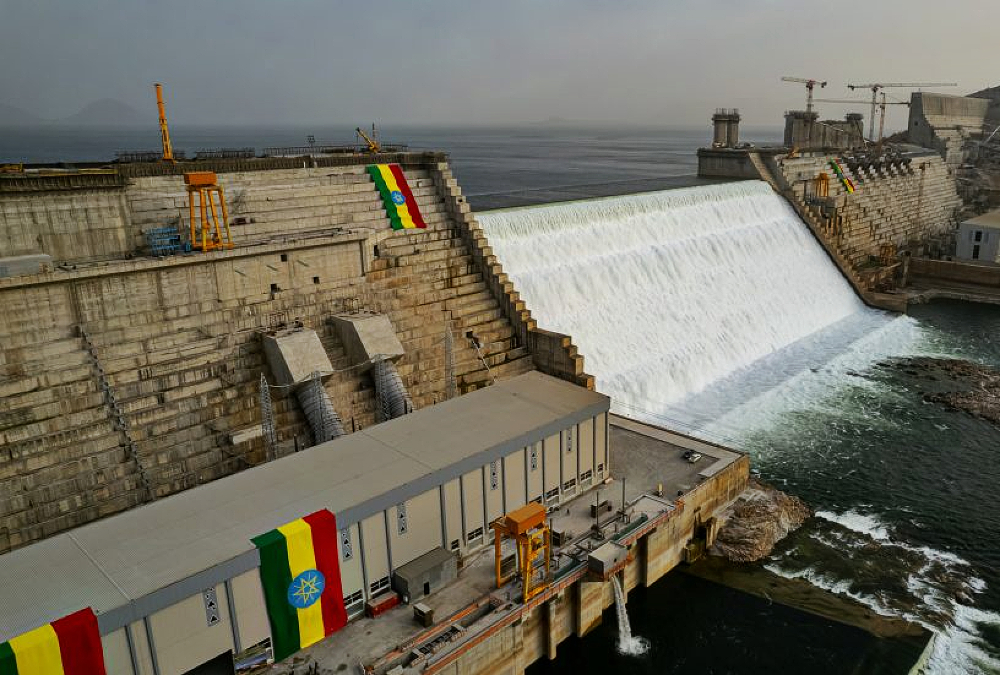
Ethiopia also is engaged in a major dispute with Egypt and Sudan over the impact of the Grand Ethiopian Renaissance Dam (GERD). Ethiopia filled it unilaterally in 2020-2023 creating a 6,000-megawatt electricity producing facility on the Blue Nile. Egypt calls it an “existential threat” since 95% of Egypt’s water comes from the Nile – the combination of the Blue Nile and the White Nile. Egypt wants a binding deal on filling and drought rules to which Ethiopia has refused to agree. Sudan initially opposed the GERD due to the flood risk but now is closer to the Ethiopian position after its own civil war, although it is still worried about dam safety.
As of 2025, talks on the GERD have stalled. Egypt is building closer ties with Eritrea and Somalia as counterweight to Ethiopia. Egypt also has hinted at military options. Direct conflict may not be likely, but proxy support is real.
Somalia has both an internal conflict as well as a dispute with its neighbors and the jihadist group al-Shabaab over territory. There is a maritime border dispute over the oil-rich Indian Ocean waters. The International Court of Justice ruled in Somalia’s favor in 2021, but Kenya rejected it initially. Tensions have been lowered but are not gone.
Ethiopian troops are in Somalia as part of an African Union peacekeeping mission. Ethiopia also has been accused of arming regional forces. The Somali federal government resents Ethiopia dealing directly with Somaliland and Jubaland.
Al Shabaab exploits all these fractures. Attacks in Kenya, Ethiopia’s Somali region and the capital of Mogadishu keep the region unstable.
The Sudan civil war spillover affects the region as a whole. The war between the Sudan Armed Forces (SAF) and the Rapid Support Forces (RSF) paramilitary has been ongoing since April 2023. Ethiopia is accused of hosting RSF leaders. There also is concern about Sudanese refugees. Egypt backs the SAF and sees the RSF as a United Arab Emirates-backed threat on Red Sea. The UAE is accused by Sudan of arming the RSF, which the UAE denies. South Sudan is hosting refugees but also is dragged into the conflict because oil pipelines run through Sudan. In sum, Sudan’s war is pulling in regional powers and reopening old border disputes with Ethiopia in the Al-Fashaga area.
Eritrea and Djibouti have an unresolved dispute involving the border and ports. A 2008 border clash broke out over Ras Doumeira. Qatar mediated, but troops remain. Djibouti hosts US, Chinese, Japanese, French and Italian bases and wants to be the favored port provider for everyone. Eritrea resents Djibouti’s closeness to Ethiopia and the UAE. This is a low-level dispute currently but could reignite.
The bottom line is that the Horn isn’t in one big war yet, but it’s a web of unresolved borders, water stress and port competition. Ethiopia’s need for sea access and Egypt’s need for Nile water are the two pressures squeezing everyone else. The El Alamein Joint Declaration was issued on October 4 by Egypt, Eritrea, Sudan and Somalia. It establishes a unified four nation front on Red Sea governance, Nile River cooperation and the sovereignty of member states; it is aimed at containing Ethiopia.
An Even Bigger Crisis Looms
The UAE, Türkiye, Egypt, Iran and Russia are all competing for Red Sea bases. Local grievances can become proxy fights on behalf of interests beyond the Horn of Africa. A conflict over the Red Sea would hit East Africa first and hardest because the region lives on that sea lane. About 12-15 percent of global trade and 30 percent of container traffic passes through the Bab el-Mandeb strait into the Red Sea – cargo including oil, wheat, fertilizer, medicine, electronics and cars.
In the event of a wider Red Sea conflict, shipping costs would spike: Insurance for ships jumps 200-500 percent when the Houthis or others attack. Companies reroute around the Cape of Good Hope, which takes10 to 14 days and adds at least US$1 million per voyage. Port cities in Africa would be hurt most: Djibouti, Port Sudan, Berbera and Mombasa. Djibouti gets 90 percent of its revenue from port fees from Ethiopia. If traffic drops, Djibouti’s economy collapses.
Ethiopia, Sudan, Somalia and Kenya import 50-80 percent of their wheat from Russia, Ukraine or the European Union via the Red Sea. Egypt and Saudi Arabia are also buyers. Prices would jump quickly and precipitously. East Africa also imports refined fuel through Djibouti and Mombasa. The more expensive shipping becomes, the higher petrol, diesel and transport costs will rise.
Ethiopia would be the biggest loser since 95 percent of its trade goes through Djibouti’s port. If Djibouti is unsafe, Ethiopia has no backup. The Somaliland port deal was envisioned partly to avoid this exact risk. Fuel and fertilizer shortages would hit farming hard in the country. That means food insecurity for 110 million people. GERD construction and other projects need imported materials, and delays will cause a nationwide economic slowdown in a nation hailed for its economic resurgence.
Red Sea actors beyond the Horn would pull in local proxies. In addition to the Houthis in Yemen, al-Shabaab in Somalia already has Red Sea smuggling routes. More weapons, money and fighters could flow in as a result of chaos from a wider conflict. Iran, the UAE, Saudi Arabia, Egypt and Türkiye all have bases in the Horn, and a wider war would likely mean they would start funding local militias to advance their specific interests.
Regional Spillover: From Eritrea to the Return of Piracy
Eritrea already has been accused of backing the Houthis and could get dragged into a wider conflict directly. More piracy off the coast of Somalia is likely. In 2008-2012, piracy exploded when naval patrols left the area. With conflict, warships would leave, and pirates would inevitably return off the Somali area of Puntland.
Sudan and Yemen both are already source countries for refugees. A Red Sea war would close escape routes so that refugees get trapped. The World Food Programme ships to Somalia, South Sudan and Ethiopia using Red Sea ports. Even delays increase famine risk in areas already in drought. Djibouti hosts more than 30,000 refugees and more would arrive with no way to leave.
The Horn of Africa hosts foreign military bases: US, China, France, Italy and Japan in Djibouti; the UAE in Berbera and Assab, and Türkiye in Mogadishu. A Red Sea war turns these bases into targets or staging points for military actions. Egypt would use Red Sea bases to pressure Ethiopia over GERD. Kenya and Tanzania would get pulled in as “safe” ports, but also as targets for terror attacks.
Kenya, Tanzania and Seychelles depend on income from Red Sea/Indian Ocean tourism, which would drop when the region is labeled high risk. Moreover, investors hate uncertainty and would shy away from regional investment. Infrastructure projects like the Lamu Port-South Sudan-Ethiopia Transport Corridor, a major regional infrastructure project in Kenya with a rail line to Ethiopia, could get delayed.
For East Africa, a Red Sea conflict isn’t far away. It’s a chokepoint crisis. Even without shots fired in Mombasa or Addis, you’d see: US$200 bags of wheat, US$2 liters of fuel, port layoffs in Djibouti and more boats of pirates and refugees.
The region’s biggest vulnerability is Ethiopia’s dependence on Djibouti, and everyone’s dependence on cheap wheat and fuel coming through Bab el-Mandeb.
This complex situation isn’t a secret or difficult to figure out, but what will the international community do to prevent this looming catastrophe while there is still time to do so?
Gregory Simpkins, a longtime specialist in African policy development, is the Principal of 21st Century Solutions. He consults with organizations on African policy issues generally, especially in relating to the U.S. Government. He further acts as a consultant to the African Merchants Association, where he advises the Association in its efforts to stimulate an increase in trade between several hundred African Diaspora small and medium enterprises and their African partners.
