
Owusu on Africa
Should an Entrepreneur and a Politician Agree on a Budget?

By Fidel Amakye Owusu
Three months ago, I found myself in a strategic planning meeting with one of my executive partners at DefSEC Analytics Africa Ltd. The discussion centered around a proposal: should the company begin offering its employees private health insurance, beyond what’s already available through Ghana’s National Health Insurance Scheme (NHIS)?
I exercised my veto and rejected the idea – respectfully but firmly.
My reasoning was simple: as a young and growing company, it would be inefficient for us to take on that additional financial burden at this stage. Moreover, Ghana’s national health insurance system, despite its known challenges, is generally accessible and affordable.
Encouraging our employees to enroll in the NHIS seemed both practical and responsible.
But here’s the twist – had I been making this decision as a head of state rather than as a business owner, I likely would have chosen differently. And if DefSEC reaches a point where we are financially strong enough to offer better benefits without compromising operational efficiency? Then yes, I would absolutely revisit the idea.
The Business of Government vs. The Government of Business
Over the past few weeks, the United States has announced widespread cuts and suspensions to foreign aid programs across several countries – moves stemming from executive orders issued by the president, who repeatedly emphasized government efficiency during his campaign and early presidency.
Even before his inauguration, President Trump tasked high-profile entrepreneurs like Elon Musk with evaluating the effectiveness of federal programs. The subsequent implementation of these reviews has had real-world consequences: job losses, both among U.S. citizens and international partners.
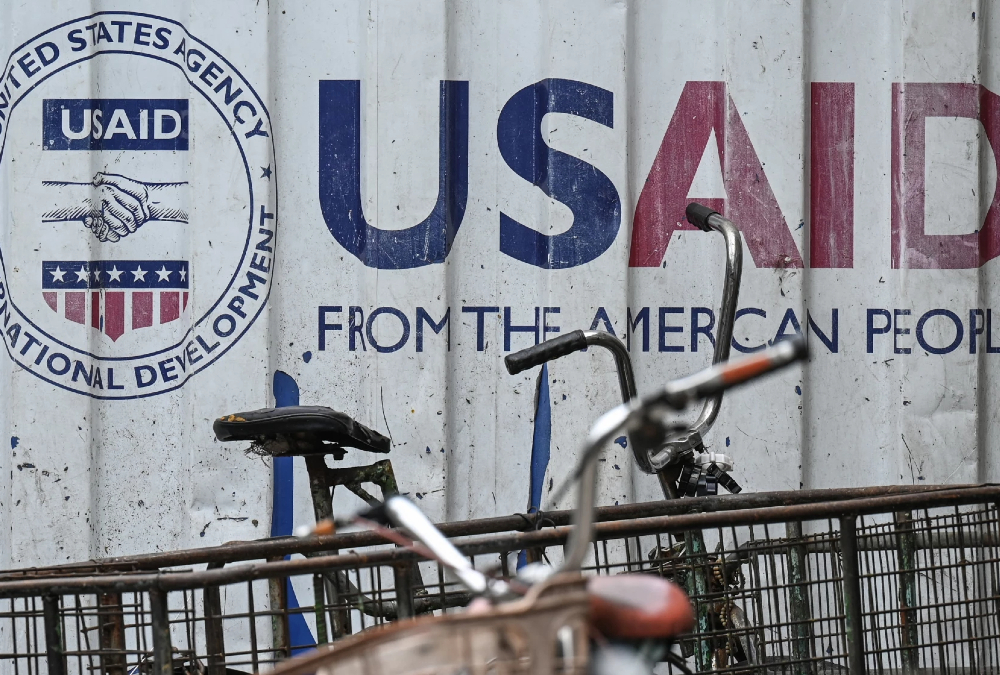
USAID, in particular, has borne much of the impact.
Businesses – like DefSEC – are fundamentally built to generate profit, even if that goal takes time to realize. Governments, however, exist for different reasons.
Their responsibilities include safeguarding national sovereignty, protecting citizens, advancing economic interests, and projecting soft power and influence abroad.
This is why governing should not be approached like managing a balance sheet. As Oscar Wilde once wrote, “Knowing the cost of everything and the value of nothing” may work in some boardrooms, but it’s a dangerous philosophy when applied to statecraft.
Historically, both Republicans and Democrats have adjusted social spending based on shifting priorities. Some administrations expand welfare programs; others seek to reduce them.
But radical budgetary overhauls often lead to unintended consequences – consequences that can reverberate far beyond their immediate fiscal impact.
Global Repercussions of Domestic Decisions
Already, there are signs that other global powers are stepping into the void left by America’s retrenchment. Meanwhile, decisions such as cutting funding for missions addressing regional gang violence – close to U.S. shores – while proposing interventions in distant regions like the Gaza Strip raise questions about strategic consistency.
In diplomacy and governance, reliability matters. A nation must prioritize its national interests, yes – but it must also be seen as a predictable and trustworthy partner on the world stage.
Fidel Amakye Owusu is an International Relations and Security Analyst. He is an Associate at the Conflict Research Consortium for Africa and has previously hosted an International Affairs program with the Ghana Broadcasting Corporation (GBC). He is passionate about Diplomacy and realizing Africa’s global potential and how the continent should be viewed as part of the global collective.
