
Owusu on Africa
Soft Power in Africa: How Rising Powers Are Building Influence – One Project at a Time

By Fidel Amakye Owusu
In the early 2000s, Ghana faced a symbolic dilemma: its seat of government was still housed in a colonial-era trading post – a relic of imperial rule ill-suited for a modern, independent republic. As officials debated the need for a new presidential palace that reflected the nation’s dignity and aspirations, a critical obstacle emerged: funding.
With competing priorities like healthcare, education, and infrastructure, a costly new administrative complex risked public backlash in a democratic society. Enter India.
In a landmark gesture of bilateral cooperation, India extended US$84.84 million to construct Ghana’s new presidential palace. While Ghana later contributed additional funds, the building remains widely recognized as a product of Indian support.
The symbolism was cemented when India’s Prime Minister visited Accra and held high-level talks with his Ghanaian counterpart – inside the very building his country helped build.
This is more than diplomatic optics. It’s soft power in action.
The Architecture of Influence: Infrastructure as Diplomacy
Over the past three decades, rising global powers – including China, India, Türkiye, and others – have increasingly turned to infrastructure development as a strategic tool of influence in Africa. From government ministries to cultural landmarks, these projects are not merely bricks and mortar – they are instruments of diplomacy, signaling partnership, respect, and long-term engagement.
Take Ghana’s Ministry of Defence and Ministry of Foreign Affairs: both housed in modern facilities funded entirely by the Chinese government. Or the striking Ottoman-style National Mosque in Accra, gifted by Türkiye as part of its broader outreach to West Africa.
Each structure carries not just functional value but geopolitical weight – quietly reshaping perceptions and alliances.
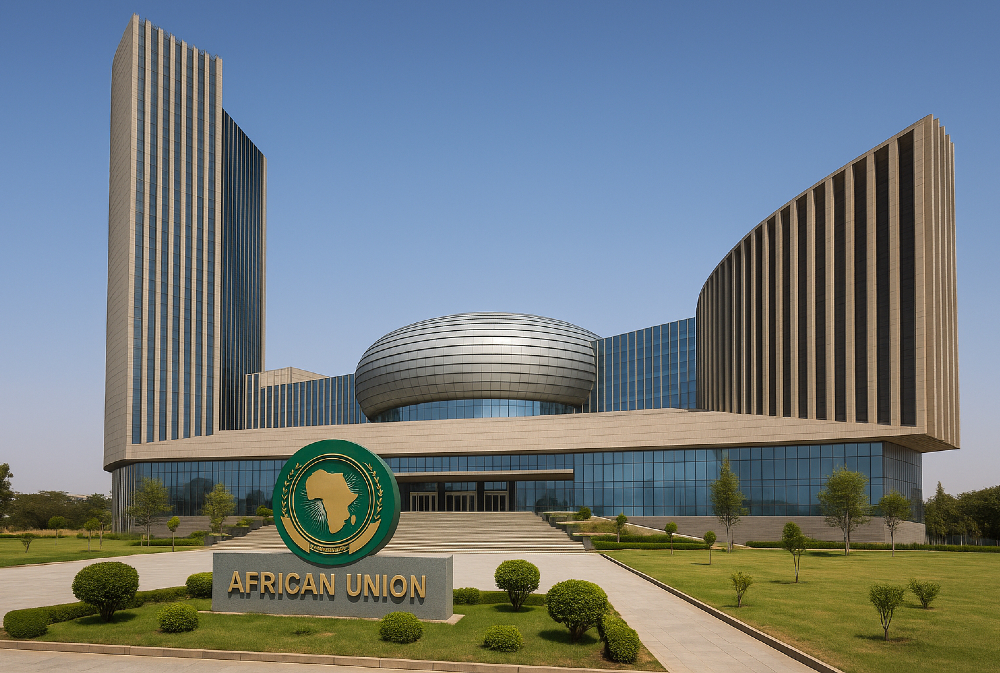
Perhaps the most emblematic example came in 2012, when the African Union (AU) needed a new headquarters in Addis Ababa. China stepped in, fully financing the US$200 million state-of-the-art complex.
The building now stands as both a symbol of African unity and a testament to China’s growing diplomatic footprint on the continent.
These investments fall under the umbrella of “soft power” – a concept coined by political scientist Joseph Nye to describe a nation’s ability to shape preferences and build influence through attraction rather than coercion. For rising powers, Africa has become a key theater for this kind of strategic engagement.
Beyond Bricks and Mortar: The Strategic Returns of Soft Power
Unlike traditional aid models, which can carry connotations of dependency, infrastructure projects are often framed as partnerships. They generate jobs, boost local economies, and leave behind visible legacies.
But they also come with subtle strings attached – shaping trade relationships, defense cooperation, and voting patterns in international forums.
Critics rightly raise concerns. When foreign governments fund sensitive installations – such as presidential palaces, military headquarters, or communications hubs – questions about data security, surveillance, and sovereignty inevitably follow.
Could a building funded by a foreign power contain embedded technological vulnerabilities? Might donor nations expect political favors in return?
These are not hypotheticals. As African nations embrace foreign investment to bridge infrastructure gaps, they must also navigate the fine line between partnership and dependency.
Yet, the appeal of these projects is undeniable. For many African governments, such support offers a pragmatic solution to chronic underinvestment.
For rising powers, it’s a chance to build goodwill, expand economic ties, and position themselves as alternatives to Western-dominated institutions.
Sovereignty in the Balance: Navigating the Future of Development Partnerships
The result is a shifting geopolitical landscape – one where influence is measured not just by military might or economic sanctions, but by who builds the buildings where decisions are made.
As Africa’s strategic importance grows, so too will competition among global powers to shape its future. The race is no longer just about ports and pipelines; it’s about palaces, parliaments, and places of worship.
In this new era of diplomacy, soft power isn’t just supplementary – it’s central.
What does this mean for Africa’s sovereignty? And how should recipient nations balance opportunity with oversight? The answers will shape the continent’s role in the 21st-century world order.
Fidel Amakye Owusu is an International Relations and Security Analyst. He is an Associate at the Conflict Research Consortium for Africa and has previously hosted an International Affairs program with the Ghana Broadcasting Corporation (GBC). He is passionate about Diplomacy and realizing Africa’s global potential and how the continent should be viewed as part of the global collective.
