
Owusu on Africa
Why Africa Still Lacks a Permanent Seat on the UN Security Council
By Fidel Amakye Owusu
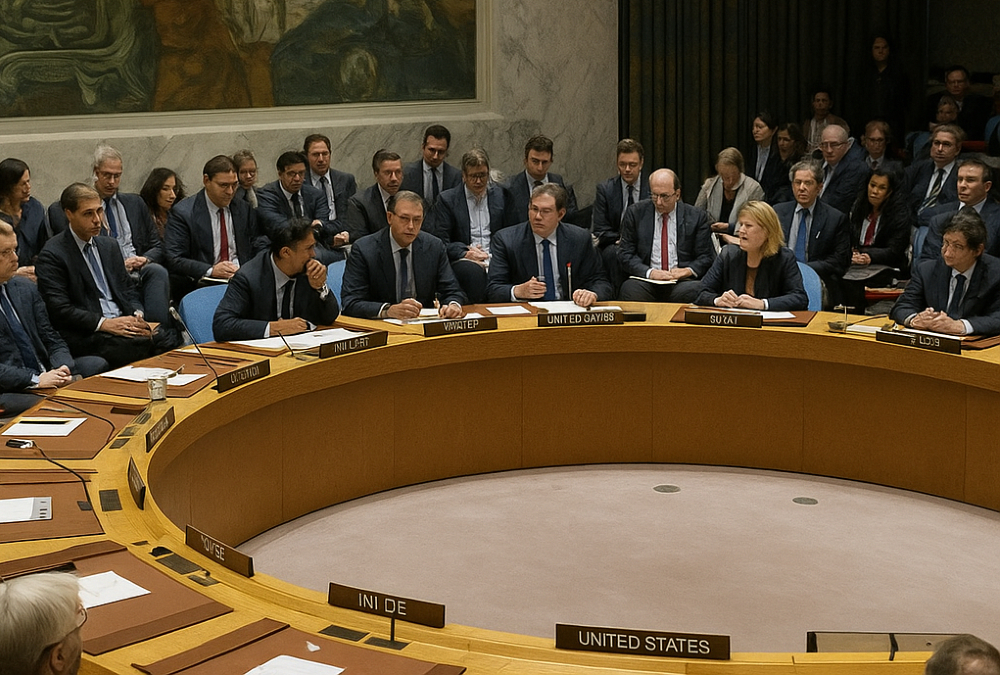
For decades, Africa – the world’s second-most populous continent, home to 54 nations, 1.4 billion people, and a quarter of all UN member states – has been the only region without a permanent voice at the table where global security is decided. While Europe, North America, and Asia each hold multiple permanent seats on the United Nations Security Council (UNSC), Africa remains conspicuously absent.
Presidents John Mahama of Ghana and William Ruto of Kenya have recently reignited the debate with impassioned appeals for reform. But their calls echo a decades-long chorus – one that has met not with consensus, but with institutional inertia, geopolitical self-interest, and, most painfully, Africa’s own internal divisions.
The External Wall: “Don’t Fix What Isn’t Broken”
The most formidable barrier to African representation lies not in Africa’s capacity – but in the reluctance of the current permanent five (P5): the United States, United Kingdom, France, Russia, and China. These powers, armed with veto authority, have long argued that the UNSC’s core mission – preventing global war – has been fulfilled since 1945.
“The system works,” they say. “Why change it?”
This logic is not just outdated – it’s dangerous. It treats the UN as a relic of Cold War power structures, not a living institution meant to reflect 21st-century realities.
Today, over 60 percent of UNSC resolutions concern Africa. Yet African nations, which bear the brunt of global instability – from the Sahel to the Horn – have no permanent say in how those crises are addressed.
Critics also warn that expanding the permanent membership with additional veto-wielding states would paralyze the Council further. But this argument is a smokescreen.
The P5 already routinely deadlock on critical issues – from Syria to Ukraine to Gaza – using their vetoes to shield national interests over global justice. Adding a single African seat wouldn’t break the Council; it would force it to evolve.
And yet, there is a glimmer of hope. In 2021, the Biden administration signaled a historic shift by publicly endorsing Africa’s claim to at least two permanent seats – a rare moment of moral clarity from a P5 member.
If the U.S. follows through, it could catalyze broader reform. But rhetoric alone is not enough. Action is overdue.
The Internal Chasm: Who Speaks for Africa?
Even if the world agreed, Africa cannot yet agree with itself.
The continent’s bid is fractured by competing ambitions. Egypt, Nigeria, South Africa, Ethiopia, and even Algeria all lay claim to the prize.
Each makes a compelling case:
- Egypt argues it uniquely bridges Africa and the Arab world, offering geopolitical reach and diplomatic heft.
- South Africa, with its advanced institutions, democratic legacy, and economic heft, claims to be the natural voice of Sub-Saharan Africa.
- Nigeria, Africa’s most populous nation and largest economy, points to its demographic destiny and regional leadership.
- Ethiopia, the continent’s oldest independent state and a hub of pan-African diplomacy, highlights its historical weight and rising influence.
But these claims are not merely about merit – they are about power. And power, in Africa as elsewhere, breeds rivalry.
The Nile River dispute between Ethiopia and Egypt is not just a water rights issue – it’s a proxy for future influence. If either holds a veto, will they use it to block action against their rivals?
Could a permanent African seat become a tool of regional dominance rather than continental solidarity?
Worse still, the fear of one nation monopolizing influence has paralyzed consensus. No African country wants to be seen as “selling out” to a neighbor.
No regional bloc wants to risk alienating others. The result?
A continent that speaks with many voices but no unified song.
The Path Forward: Unity, Not Just Ambition
Africa’s case for a permanent seat is not just morally just – it is strategically essential. The UNSC cannot claim legitimacy while ignoring the continent most affected by its decisions.
Climate change, terrorism, migration, and resource conflicts – all are increasingly African crises with global consequences.
To move forward, Africa must do three things:
- Forge a Unified Candidacy – The African Union must lead a transparent, consensus-driven selection process – not a contest of ego. A rotating African seat, or a dual-seat model (e.g., one for North Africa, one for Sub-Saharan Africa), could break the deadlock while preserving equity.
- Leverage Global Allies – The U.S., India, Brazil, and even Germany have signaled openness to reform. Africa must build a coalition beyond its borders, framing its bid not as a zero-sum demand, but as an essential upgrade to global governance.
- Demonstrate Institutional Readiness – African nations must collectively strengthen their peacekeeping contributions, diplomatic coherence, and conflict-resolution capacity. A permanent seat isn’t a reward – it’s a responsibility. Africa must prove it can wield it with integrity.
The Time for Silence Is Over
Africa does not need permission to be heard. It needs allies – and a strategy.
The world’s refusal to grant Africa a permanent seat isn’t a reflection of Africa’s weakness. It’s a mirror of global power’s stubbornness.
The UN Charter was written in 1945. The world it was meant to serve has changed beyond recognition.
Africa’s absence on the Security Council is not just an injustice – it’s a systemic flaw that undermines the very legitimacy of the institution.
The question is no longer whether Africa deserves a seat. It’s whether the world still believes in the multilateral system it claims to uphold.
The answer must be: yes. And the time to act is now.
Fidel Amakye Owusu is an International Relations and Security Analyst. He is an Associate at the Conflict Research Consortium for Africa and has previously hosted an International Affairs program with the Ghana Broadcasting Corporation (GBC). He is passionate about Diplomacy and realizing Africa’s global potential and how the continent should be viewed as part of the global collective.
