
Owusu on Africa
Why the Latest DR Congo-Rwanda Talks May Finally Break the Cycle
For once, both Kigali and the rebels are negotiating under genuine pressure – and that changes everything.

By Fidel Amakye Owusu
Past rounds of diplomacy over the conflict in eastern Democratic Republic of the Congo have a dispiriting common thread: they have produced agreements on paper and little else on the ground. The Angola-led process collapsed despite sustained effort by Luanda. The Togo mediation stalled. The Doha process evaporated. Even the Washington agreement between Kinshasa and Kigali – a deal hailed with some fanfare – failed to halt hostilities.
The pattern is so familiar it risks becoming a cliché.
The reasons for these repeated failures are structural. The M23 rebel movement has been determined not merely to fight, but to hold and govern territory.
The Congolese government, for its part, has been equally determined not to concede an inch of sovereignty. And Rwanda has been unwilling to sever its ties with the rebellion – ties that Kigali has long denied but that Western governments, UN investigators, and most dispassionate observers consider well-established.
Layer over all of this the staggering mineral wealth of North and South Kivu, which gives every actor a powerful incentive to keep the conflict alive, and you have a diplomatic puzzle that has defeated some of Africa’s most capable mediators.
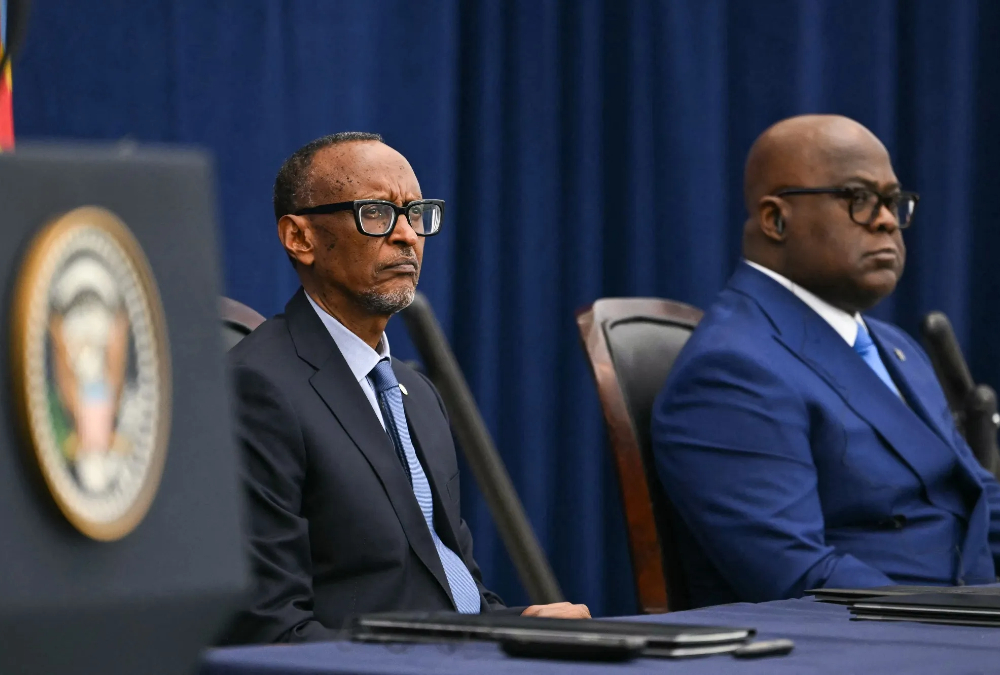
So why should the meeting held in Washington on March 17–18 – the latest attempt to agree on “concrete steps” toward de-escalation – be viewed as anything other than another entry in a long ledger of disappointment?
The Battlefield Has Shifted
The most important answer is that the military situation has changed in ways that matter. Rebel forces that appeared, not long ago, to be advancing with near impunity are now on the defensive.
The Congolese army, bolstered by drone capability reportedly linked to contractors connected to Erik Prince, has conducted a series of lethal strikes that have eliminated several senior rebel figures. There are credible indications that the pace and lethality of those strikes may intensify.
For the first time in recent memory, the M23 is absorbing costs it cannot easily absorb.
Rwanda Is Feeling The Squeeze
More significant still is the pressure bearing down on Kigali. The Trump administration, rarely inclined toward multilateral restraint, reacted with notable sharpness when rebel forces pushed toward the South Kivu town of Uvira shortly after the Washington agreement was signed – an advance that Washington attributed, with evident displeasure, to Rwandan encouragement.
The response was swift: sanctions on the Rwandan military and its leadership followed.
Simultaneously, several of Rwanda’s most consequential European partners – Germany, the United Kingdom, and Belgium among them – have suspended aid over Kigali’s alleged role in eastern DR Congo. The financial pain extends to Rwanda’s counterterrorism operations in Mozambique, a mission that has served as an important source of both revenue and international legitimacy for President Paul Kagame’s government.
Rwanda is not facing collapse, but it is facing a convergence of external pressure that is genuinely unusual.
Reasons For Cautious Optimism – With Emphasis On “cautious”
None of this guarantees a breakthrough. History demands humility. The M23 has never been a perfectly unified actor; factions within the rebellion have, at various moments, operated with considerable independence from Rwandan direction. Should those internal divisions resurface – as they well might – the conflict could continue even if Kigali disengages.
Spoilers have a long history of outlasting their patrons.
Yet the strategic calculus has shifted in ways that were not present during any previous round of talks. Rwanda is bearing real costs.
The rebels are under military pressure. A Trump administration with little patience for equivocation has demonstrated a willingness to act. And the Congolese army, for the first time, has a meaningful edge in one critical domain of the battlefield.
Diplomacy tends to succeed not when the parties want peace in the abstract, but when the costs of continued conflict outweigh the costs of compromise. For the first time in this long and miserable war, that calculation may be tipping – slowly, imperfectly, but perceptibly – in the direction of a deal.
Fidel Amakye Owusu is an International Relations and Security Analyst. He is an Associate at the Conflict Research Consortium for Africa and has previously hosted an International Affairs program with the Ghana Broadcasting Corporation (GBC). He is passionate about Diplomacy and realizing Africa’s global potential and how the continent should be viewed as part of the global collective.
