
Owusu on Africa
Why the Words of the U.S. President Matter – Especially in Times of Global Uncertainty
By Fidel Amakye Owusu
In May 2011, I was a Political Science student at the University of Ghana when news broke that Osama bin Laden had been killed by U.S. special forces in Abbottabad, Pakistan. As an avid follower of international affairs, the event marked a pivotal moment in my academic and personal understanding of global politics.
I still remember watching CNN on September 11, 2001, as the first plane struck the World Trade Center. That day shaped my early interest in geopolitics – and a decade later, bin Laden’s death felt like a historic resolution to a chapter of fear and uncertainty.
The jubilation across the United States after then-US President, Barack Obama announced the successful operation underscored the gravity of the moment. After nearly ten years of evading justice, the leader of al Qaeda was finally brought to account.
Yet, almost immediately, skepticism emerged. Conspiracy theorists questioned the veracity of the U.S. government’s claims.
Some argued that the man killed wasn’t bin Laden. Others insisted he was too cunning to be found.
To many, the entire operation was staged. Despite these doubts, I stood firm in my belief that bin Laden was indeed dead.
When asked why I was so certain, I simply replied: “Because President Obama said so.”
To some, this explanation seemed overly simplistic. But I believed then – and still do – that the president of the United States carries a unique responsibility: to speak truthfully to the nation and the world.
The credibility of the office depends on it. And as someone who now works as a security analyst, I understand the importance of reliable public statements from leaders – especially those in positions of global influence.
The Erosion of Trust in Public Discourse
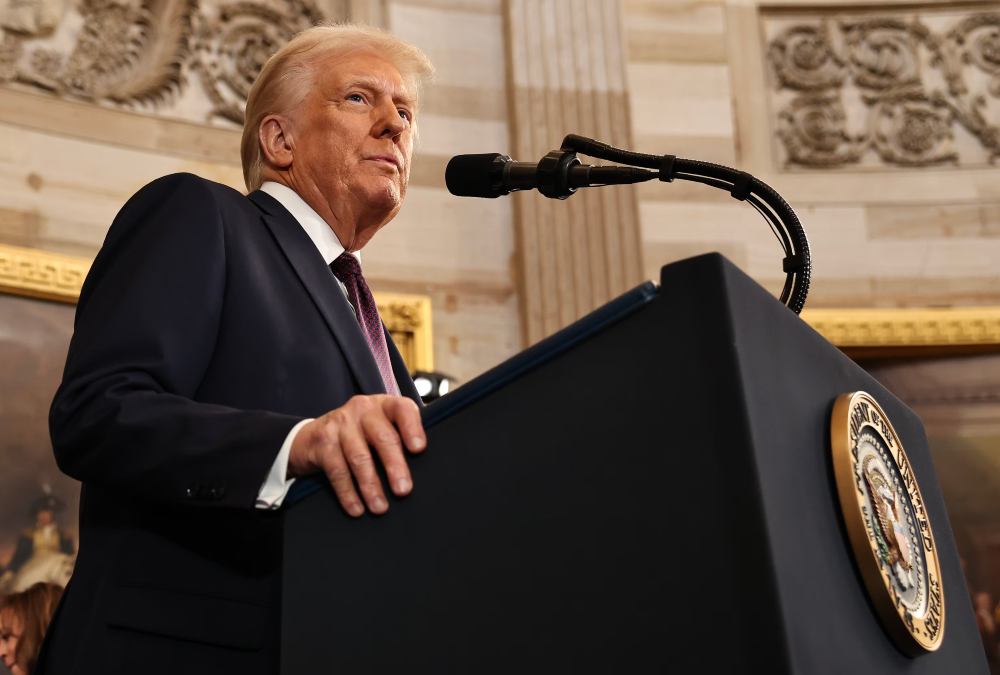
It is precisely this standard of integrity that makes recent rhetoric from U.S. President Donald Trump concerning to professionals, academics, students, and observers of global politics alike.
Consider, for example, the discrepancy over U.S. aid to Ukraine. While the administration has reported contributions totaling US$300 billion, the actual figure stands closer to US$180 billion.
Similarly, President Trump publicly referred to Ukrainian President Volodymyr Zelenskyy as a “dictator” – a label that not only misrepresents the facts but also undermines democratic values. He also claimed that Zelenskyy’s approval rating among Ukrainians was a mere 4 percent, a number with no credible backing.
Despite repeated corrections, such claims have continued to circulate – perhaps with the hope that repetition might transform them into accepted truths.
More recently, President Trump expressed surprise that he had called Zelenskyy a dictator – a statement his supporters were quick to defend. This pattern raises serious concerns about how factual discourse is being reshaped in political narratives.
When Truth Becomes a Casualty
As I once told a fellow analyst, one of the most reliable ways to confirm a terrorist attack is when the group behind it publicly claims responsibility. Terrorist organizations may commit atrocities, but they rarely lie about their actions.
If even rogue actors can be honest about their deeds, how much more should we expect transparency and accuracy from legitimate world leaders?
In a world increasingly shaped by misinformation and polarized narratives, the words of the U.S. president matter – not just for domestic audiences, but for global stability, diplomacy, and security.
Truth matters. And when the leader of the free world speaks, the world listens.
Fidel Amakye Owusu is an International Relations and Security Analyst. He is an Associate at the Conflict Research Consortium for Africa and has previously hosted an International Affairs program with the Ghana Broadcasting Corporation (GBC). He is passionate about Diplomacy and realizing Africa’s global potential and how the continent should be viewed as part of the global collective.
