
Owusu on Africa
Patrice Lumumba and Africa’s Precarious Position in the “New Cold War”
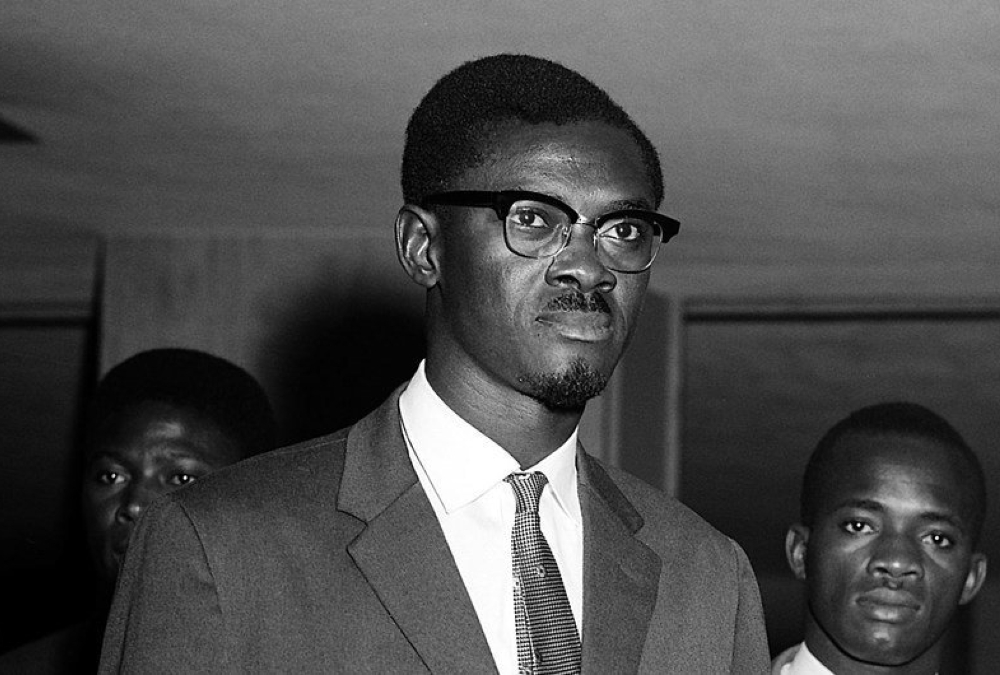

By Fidel Amakye Owusu
Last week, Belgian prosecutors reignited a decades-old wound by announcing they are pursuing a 92-year-old former diplomat in connection with the assassination of Patrice Lumumba, the iconic Congolese independence leader. The allegations accuse him of involvement in Lumumba’s unlawful detention, forced transfer, and the cruel treatment that preceded his execution.
Lumumba was arrested under dubious circumstances, then executed by firing squad in 1961. His body was buried in a shallow grave, only to be later exhumed, dismembered, and dissolved in acid – a grotesque attempt to erase not just his life, but his legacy.
For over six decades, Europe remained largely silent while the Democratic Republic of Congo (DR Congo) endured political instability, exploitation, and violence tied directly to this pivotal moment in its history.
Now, as some semblance of accountability emerges, the question remains: What does it mean today?
A Cold War Assassination with Lasting Consequences
The murder of Patrice Lumumba was not an isolated act of violence – it was a geopolitical event. It unfolded amid the height of the Cold War, when Africa became a battleground for ideological supremacy between East and West.
The United States and its allies feared Soviet influence spreading across newly independent African states, while the USSR sought footholds in a continent rich in both strategic potential and natural resources.
Congo, in particular, held immense value. Decades before its independence, uranium mined from the Lubumbashi region in the south had fueled the atomic bombs dropped on Hiroshima and Nagasaki.
This growing competition – often referred to as the “New Cold War” – poses a critical challenge for African leaders. If not navigated carefully, this renewed scramble for Africa could replicate the tragedies of the past, including the destabilization and external manipulation that followed Lumumba’s death.
As the Cold War intensified, Lumumba’s push for true sovereignty – and refusal to align blindly with Western interests – marked him as a threat.
His eventual downfall was orchestrated not only by foreign powers but also by domestic rivals who were manipulated into playing their roles. Joseph Kasavubu, Lumumba’s presidential counterpart, became a pawn in a larger game of international intrigue and intervention.
Echoes of History in a New Global Contest
Fast-forward to today: Africa is once again at the center of a global contest for influence and resources. This time, the players have changed – but the stakes remain high.
China and the United States are aggressively courting African nations through economic and security agreements. In the DR Congo, China has secured access to cobalt – an essential component for modern technology – in exchange for infrastructure development.
Meanwhile, the U.S. is reportedly finalizing a deal focused on regional stability and counterterrorism. Across the continent, similar pacts are being negotiated or expanded.
Russia has reasserted itself in the Sahel, offering military support in exchange for political leverage. At the same time, so-called “middle powers” like Türkiye, India, Brazil, the Gulf States, and Israel are carving out their own spheres of influence, each pursuing distinct agendas.
This growing competition – often referred to as the “New Cold War” – poses a critical challenge for African leaders. If not navigated carefully, this renewed scramble for Africa could replicate the tragedies of the past, including the destabilization and external manipulation that followed Lumumba’s death.
The lesson is clear: African countries must assert their agency. They must prioritize national and continental interests over short-term gains offered by foreign actors.
Strategic partnerships can bring development and opportunity – but only if built on principles of fairness, transparency, and mutual respect.
As the world turns its gaze back to Africa, the continent must ensure that this time, it writes its own future.
Fidel Amakye Owusu is an International Relations and Security Analyst. He is an Associate at the Conflict Research Consortium for Africa and has previously hosted an International Affairs program with the Ghana Broadcasting Corporation (GBC). He is passionate about Diplomacy and realizing Africa’s global potential and how the continent should be viewed as part of the global collective.
