
Opinion
Ethiopia’s Bible Was Never Just a Book
The Ethiopian Orthodox canon runs to 81 books, and Christianity took root in Aksum centuries before it settled in Scandinavia. Yet parchment is not what kept the tradition alive. People were.
The Living Canon, Part 1 of 3
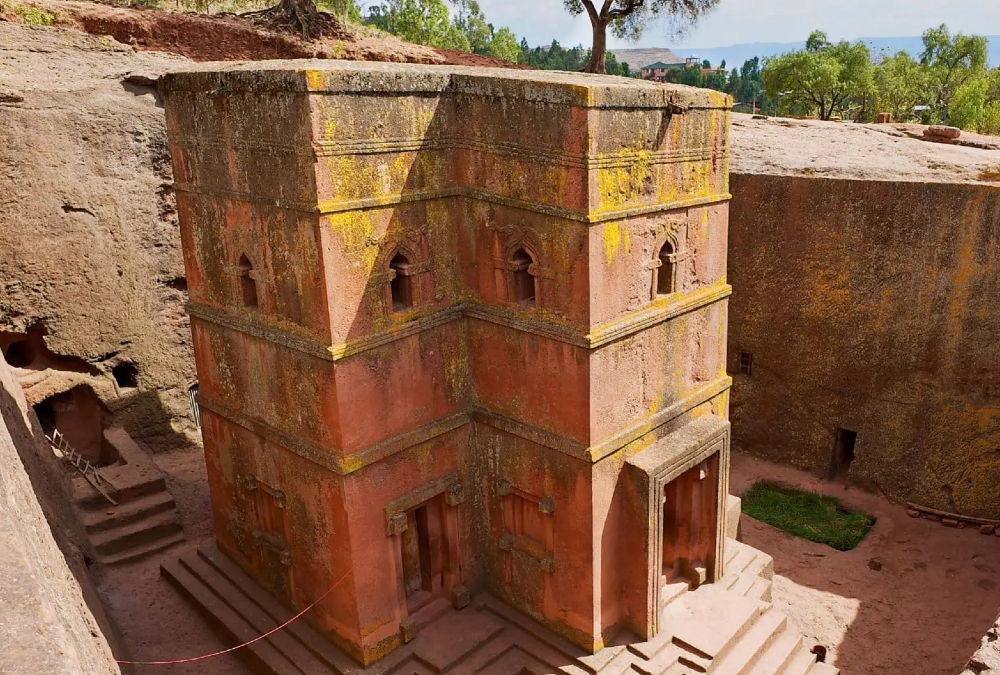
Ask most Western Christians how their faith reached Africa and you will hear a story with a European accent: missionaries, steamships, a mission station on a hill. It is a tidy tale. In Ethiopia’s case, it is also wrong by well over a thousand years.
Christianity took root in the ancient Kingdom of Aksum during antiquity, in roughly the same broad period that it was transforming the Roman world and long before it became deeply established in places such as Scandinavia. The Ethiopian Orthodox Tewahedo Church then did something remarkable. It kept hold of biblical manuscripts, theology and liturgy across centuries, and it preserved works that vanished from, or stopped being canonical in, many other branches of the faith.
The headline figure is the size of its Bible. The Protestant canon has 66 books and the Catholic has 73. The Ethiopian Orthodox canon officially has 81. But to fixate on the number is to miss the point, and Deacon Dr. Dawit Muluneh is happy to explain why.
Muluneh is a biblical scholar, author and founder of Yibel Academy. He holds a Ph.D. in African Studies from Howard University and an M.A. in Semitics-Christian Near East from the Catholic University of America. He teaches Africana Studies at Georgia State University and has taught graduate-level Gəʿəz, the classical language of the Ethiopian tradition. In a wide-ranging conversation with the editorial team of The Habari Network, he offered a phrase that organizes this three-part series: the “lived canon.”
A Canon You Can Hear
How did one church guard such a broad collection of scripture for so long? Part of the answer is that Ethiopia developed a Christian literary tradition early. By the fourth century there is already evidence of biblical writing and Christian textual culture in the region. Yet Muluneh insists that preservation was never only a matter of copying manuscripts.
There was also an oral tradition and, as he puts it, an aural one. “Oral” describes what is spoken. “Aural” describes what is heard. Certain genres were created precisely so that communities could hear the word rather than read it alone. That demands a different kind of writing, one that works on a listening audience.
The result is a society in which scripture seeped into speech. Even today, Muluneh says, you can hear Ethiopians use the language of Psalms, Genesis or Paul in ordinary conversation, often without citing chapter and verse. The biblical vocabulary simply lives inside the way they talk.
Here is the first lesson for outsiders. Western habits of mind tend to credit councils and codices for what survives. Ethiopia suggests a humbler explanation. “Traditions are not always sustained simply because a council sits down and defines them,” Muluneh says. “Sometimes traditions survive because communities continue living them.” The canon did not sit on a shelf. It was sung, chanted, spoken and obeyed.
Eighty-one, or Eighty-eight?
Anyone who has browsed the internet for the Ethiopian Bible will have met a second number: 88. The confusion, according to Muluneh, is mostly arithmetic. Officially the count is 81. But traditions divide and group writings differently. One system treats a text as a single work; another splits it into several. Count the second way and the total climbs. A larger figure does not mean that somebody has unearthed seven forgotten books. It means the counting system matters.
A subtler misunderstanding concerns where the additional books came from. Were Ethiopian writers busily composing new scripture and slipping it into the canon? The answer is no. Ethiopians are proud of their tradition, Muluneh says, but they know Christianity did not begin in Ethiopia, and it would be misleading to say Ethiopian authors invented biblical books. These are texts from the broader Jewish and early Christian world that continued to be read and preserved in Ethiopia.
Consider the Book of Enoch. It circulated in the religious environment of early Christianity, and the New Testament Letter of Jude draws upon it. Ethiopians did not invent Enoch centuries later. They kept using what had been in circulation all along.
This inverts the usual framing. Seen from Addis Ababa, the puzzle is not why the Ethiopian Bible has “extra” books. It is why other traditions are missing books that were still being read and preserved in Ethiopia.
A Continuum, not an Arrival
If the texts are shared, the Ethiopian Church’s character is not. Visitors often notice practices that look Jewish in flavor: circumcision, certain dietary customs, reverence for the Ark. What explains them?
Ethiopian tradition, Muluneh explains, understands its religious history as a continuum rather than a sudden arrival. The foundational story concerns the Queen of Sheba and King Solomon. First Kings records her visit. Ethiopian tradition expands the account, names their son Menelik I and associates him with bringing the Ark of the Covenant to Ethiopia. From this perspective, a relationship with the biblical world predates Christianity at the Aksumite court.
Then comes Acts 8, where an Ethiopian official meets the apostle Philip. He is already reading Isaiah. Philip explains the passage and baptizes him. For Ethiopian Christians, the detail matters: the official possessed and studied scripture before the encounter.
Hence a caution that Ethiopians often voice when told that Christianity “came to Ethiopia” in the fourth century. The fourth century is enormously important. It is when King Ezana established Christianity at the royal level. But the formal adoption of a faith by a state is a different thing from its presence in a society. Muluneh’s point is that the tidy chronology (nothing, then suddenly Christianity) does not fit the way Ethiopians remember their own past.
What “Tewahedo” Means
One more term deserves unpacking, because it appears in the Church’s very name. The Ethiopian Orthodox Church belongs to the Oriental Orthodox family, alongside the Eritrean, Coptic and Armenian churches, among others. These churches accept the first three ecumenical councils of the early Church. The great parting of the ways came at the fourth, the Council of Chalcedon, over how to speak of the divine and human natures of Christ.
“Tewahedo” means unity. The Church teaches that Christ’s humanity and divinity are united in the one person of Christ. This, Muluneh notes, is not peculiar to Ethiopia. It belongs to the wider Oriental Orthodox tradition. The name is a creed in a single word.
The Trouble with a Tidy Tale
Put these threads together and the old European-accented story looks thin. Christianity did not originate in Ethiopia, but Ethiopian Christianity is ancient. Aksum was part of the early Christian world. Its canon is not a quirk but a record of what many others set down. And its endurance owes less to institutions than to ordinary people who spoke the scriptures aloud.
That raises an awkward question. If a tradition is lived, then those who live it are its best guides. What happens when outsiders arrive with a product to sell and a story to tell? An entire industry has sprung up around the promise of the “complete” Ethiopian Bible in English. Muluneh has a word for many of its claims, and it is not flattering.
Next in the series, Part 2: Who gets to translate Africa?
