
Owusu on Africa
Why Democracy Still Matters for Africa: Debunking the Myth of “Western Democracy”
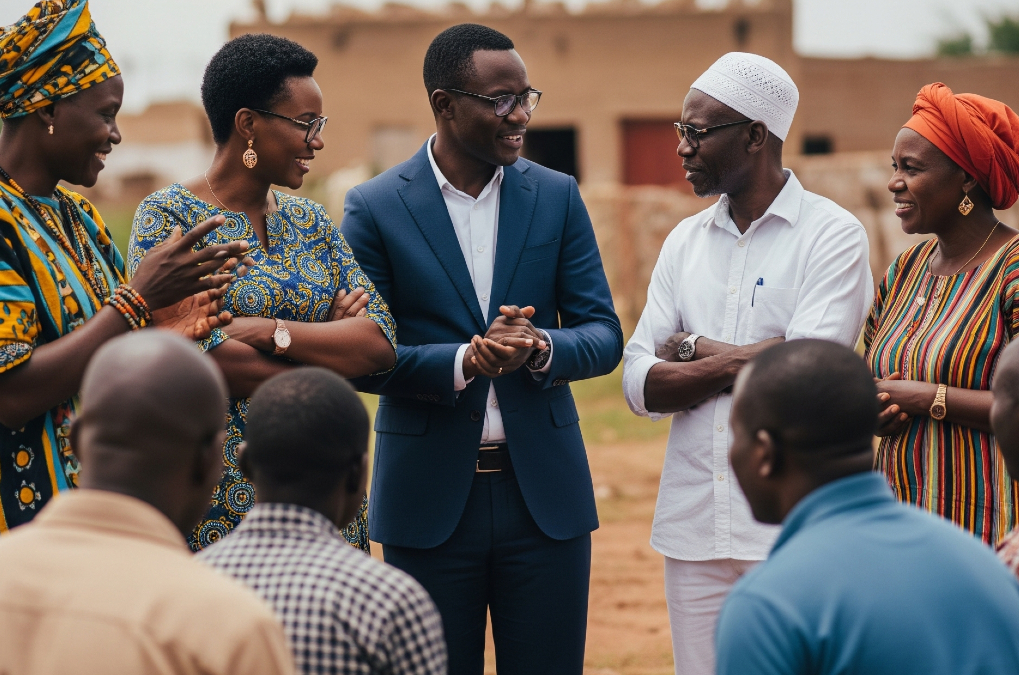

By Fidel Amakye Owusu
“Democracy is not good for Africa.” This statement, often repeated by critics and even some African leaders, deserves closer scrutiny.
During an international conference last year, the foreign ministers of Mali and Burkina Faso echoed this sentiment in their respective speeches – perhaps more as a rhetorical challenge than a definitive conclusion.
Under my previous posts on African governance, many readers have attempted to justify why democracy may not work on the continent. Some reject it outright, while others clarify that they are specifically critical of what they call “Western democracy.”
Indeed, the term “Western democracy” itself is vague and problematic. There is no single model of democracy in the West.
The United States operates under a federal-presidential system with an electoral college, while Germany uses a federal parliamentary structure. France’s semi-presidential system differs from the unitary-parliamentary framework of the United Kingdom.
These distinctions matter.
Democratic Roots in Pre-Colonial Africa
More importantly, democratic values such as human rights, consensus-building, and checks on power are not exclusive to the West. In fact, long before European colonialism, many African societies practiced forms of governance rooted in collective decision-making and accountability.
Take, for example, the Akan people of present-day Ghana. Unlike French King Louis XIV – who famously declared, “L’État, c’est moi” (“I am the state”) – Akan rulers were chosen through consensus, with significant input from councils and elders.
Leadership was never absolute; it was always tempered by tradition, community, and shared responsibility.
Democracy does not mean blindly copying Western models. It means crafting a system that reflects Africa’s rich traditions, cultural diversity, and contemporary realities.
Across the continent, indigenous political systems often included mechanisms for balancing power, ensuring accountability, and resolving disputes through dialogue. These structures were disrupted – not created – by colonial rule.
The arbitrary borders drawn during the Scramble for Africa in the late 19th century forced diverse ethnic groups into newly formed nations. In Ghana, the Akan, Ewe, and Mole-Dagbani were united under one flag.
Kenya became home to the Kikuyu, Luo, and many other communities. Such diversity raised urgent questions about how leadership should be structured and who gets to lead.
Reimagining Democracy for African Contexts
Should one ethnic group dominate? Should every group secede to form its own nation?
That would lead to chaos and fragmentation. The only viable solution is a democratic system – one that allows all voices to be heard, all groups to participate, and all citizens to choose their leaders freely.
Democracy does not mean blindly copying Western models. It means crafting a system that reflects Africa’s rich traditions, cultural diversity, and contemporary realities.
It means embracing inclusivity, transparency, and accountability – not as foreign imports, but as foundational principles for sustainable governance.
In short, democracy – when adapted to local contexts – remains not just relevant, but essential for Africa’s future.
Fidel Amakye Owusu is an International Relations and Security Analyst. He is an Associate at the Conflict Research Consortium for Africa and has previously hosted an International Affairs program with the Ghana Broadcasting Corporation (GBC). He is passionate about Diplomacy and realizing Africa’s global potential and how the continent should be viewed as part of the global collective.
