
Owusu on Africa
Religion and the State: A Delicate Balance in Modern Geopolitics

By Fidel Amakye Owusu
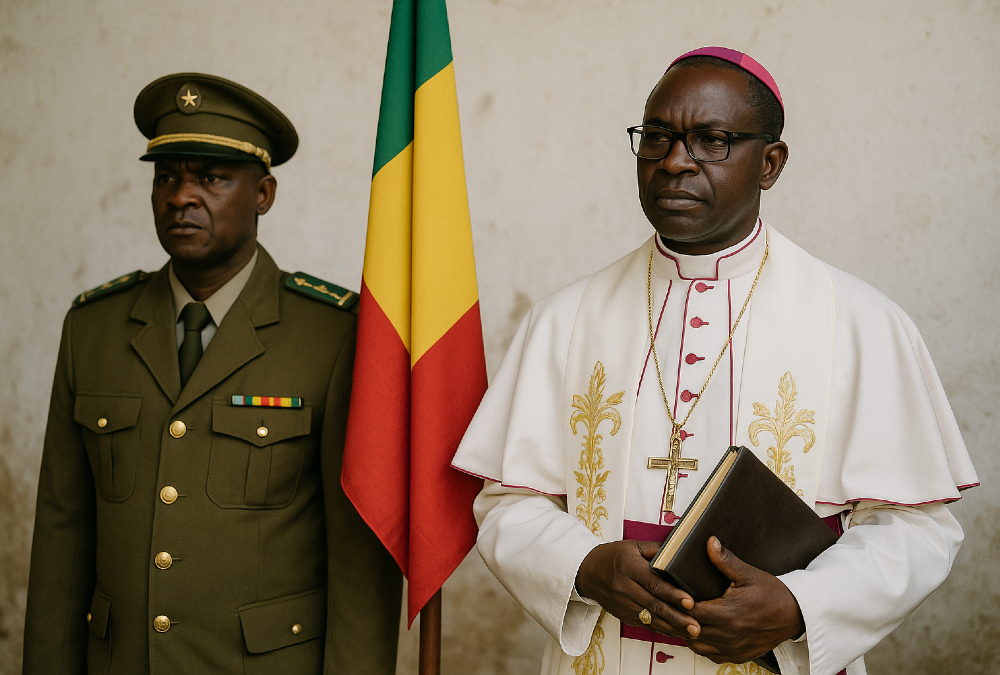
The Thirty Years’ War between Catholics and Protestants in 17th-century Europe not only devastated the continent but also gave rise to a new political order – the modern nation-state. The Treaty of Westphalia, signed in 1648 after decades of bloodshed, marked a turning point.
It granted states the authority to determine their own religious orientation, effectively placing secular governance above ecclesiastical control.
This was a dramatic shift from the centuries-long dominance of religious institutions. For the first time, the state emerged as the central arbiter of religious affairs – a development that brought a measure of stability to Europe’s sectarian tensions.
Since then, with few exceptions – such as the Vatican or ideologically religious states like Iran and Afghanistan – governments across the world have exerted considerable influence over religious institutions. Many have even used religion as a tool to serve national interests.
Clerics and Criticism: The Gulf States Under Scrutiny
So what does this mean today?
Earlier this year, Saudi Arabia deported Nigerian cleric Sheikh Gumi, reportedly due to his outspoken views on geopolitical matters involving Saudi Arabia and the broader Middle East. While the specifics of his position remain outside the scope of this discussion, Sheikh Gumi is known for his active commentary on global issues, unafraid to assign blame where he sees fit.
His case, however, is part of a larger trend. Across Africa and beyond, religious leaders are increasingly voicing criticism against the foreign policies of Gulf States, particularly Saudi Arabia.
The Israeli-Palestinian conflict has become a focal point, with many clerics condemning what they view as Riyadh’s passive or inconsistent stance. Some demand a severing of ties with Israel; others advocate for a more assertive regional posture.
Even more sensitive for the Gulf monarchies is the growing disapproval of their domestic reforms. Religious figures argue that Saudi Arabia – home to Islam’s two holiest sites – should preserve its conservative identity.
While Saudi leadership and its Wahhabi clerical establishment may agree in principle, external Islamic scholars are growing impatient with the pace and direction of change emanating from Riyadh.
A recent announcement that Saudi Arabia will permit alcohol sales at 600 tourist venues by 2034 – as part of its Vision 2030 strategy to boost tourism and host the World Cup – has further rattled conservative circles.
Statecraft vs. Theology: Understanding Diverging Priorities
Herein lies the challenge: Clerics must recognize that while a state may officially align with a particular religion or sect, it remains distinct from it. Governance involves navigating complex domestic and international realities that often extend beyond theological doctrine.
Understanding this distinction could help religious leaders better grasp why many Gulf States view conflicts in Gaza and Lebanon not solely through the lens of Israeli aggression, but also as extensions of Iranian influence in the region.
For these monarchies, containing Iranian power is often seen as a greater existential threat than the ongoing Arab-Israeli disputes. Internally, their focus is on economic diversification and modernization – objectives they see as vital to long-term stability and sovereignty.
In an era of rapid transformation, the relationship between religion and the state remains as intricate as ever. But one truth endures: while faith inspires values, it is the state that must manage the world as it is – not merely as some might wish it to be.
Fidel Amakye Owusu is an International Relations and Security Analyst. He is an Associate at the Conflict Research Consortium for Africa and has previously hosted an International Affairs program with the Ghana Broadcasting Corporation (GBC). He is passionate about Diplomacy and realizing Africa’s global potential and how the continent should be viewed as part of the global collective.
