
Owusu on Africa
Africa’s New Bargaining Power: Resource Sovereignty Meets Geopolitical Realignment

By Fidel Amakye Owusu
Strategic equity demands and infrastructure investments signal a new era of African economic sovereignty.
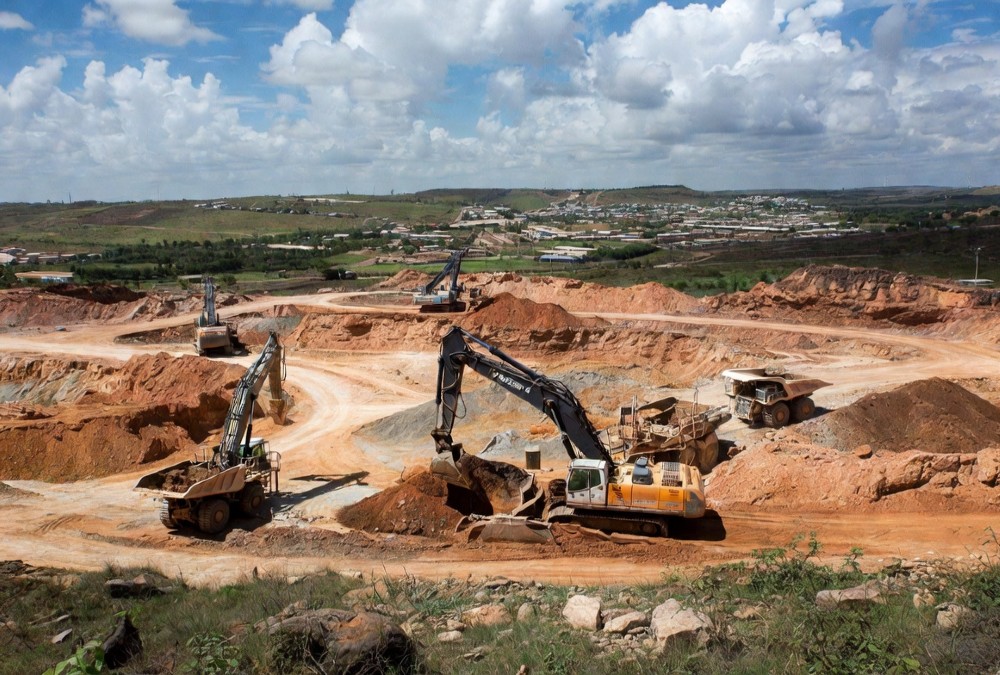
The landscape of African resource control is undergoing a fundamental transformation. No longer content with passive royalty arrangements, governments across the continent are demanding – and securing – meaningful ownership stakes in the assets extracted from their soil.
This shift represents more than mere economic policy; it constitutes a reassertion of sovereignty that will reshape global commodity markets for decades to come.
Angola’s Diamond Gambit: Pursuing Strategic Influence in De Beers
Angola’s pursuit of a 20-30 percent stake in De Beers exemplifies this recalibration of power. Alongside Botswana, Africa’s premier diamond producer has set its sights on substantial equity in the century-old mining conglomerate, signaling that resource nationalism extends far beyond familiar demands for local content requirements, enhanced royalties, or shortened concession periods.
The timing merits scrutiny. Despite depressed market conditions – driven partly by laboratory-grown diamonds flooding the market – Luanda views increased influence in the diamond sector as strategically imperative.
This calculation reflects a broader economic diversification strategy. While petroleum has long dominated Angola’s export portfolio, the government has pivoted decisively toward other minerals, particularly copper, as it seeks to reduce dependence on hydrocarbon revenues.
History explains this urgency. Throughout Angola’s devastating civil war, which raged from the 1970s until the early 2000s, rebel forces controlled vast diamond fields while the government financed its operations almost exclusively through oil.
Now, with stability restored, Angola is positioned to realize the full potential of its extractive sector – and determined to ensure that this wealth accrues to the nation rather than foreign shareholders.
The implications extend beyond Angola’s borders. As African governments observe Luanda and Gaborone successfully negotiating enhanced stakes in major mining operations, the precedent will encourage similar demands across the continent’s resource-rich nations.
Ethiopia’s $400 Million Power Play: Building the Grid for Economic Transformation
Ethiopia’s energy sector presents a compelling counterpoint to extractive industries, demonstrating how infrastructure investment can catalyze broader economic transformation. The country has secured US$400 million to expand its power grid, critically linked to the Grand Ethiopian Renaissance Dam – a project that has generated both hydroelectric potential and geopolitical friction.
Ethiopia’s economic trajectory, despite persistent security challenges involving non-state actors and regional tensions, has been remarkable. The government’s watershed reforms opening the economy to foreign investment have coincided with sustained growth.
Addis Ababa has emerged as Africa’s premier aviation hub, while the continent’s largest port currently takes shape along the country’s borders.
Yet infrastructure remains the binding constraint. With a population exceeding 120 million, improving educational access, and accelerating infrastructure development, a fully integrated national grid system would fundamentally enhance productive capacity.
More critically, it would bridge the persistent urban-rural divide that has characterized Ethiopian development – and potentially address the socioeconomic conditions that fuel regional insecurity.
The logic is straightforward: many of Ethiopia’s security challenges stem directly from economic marginalization and uneven development. Sustained infrastructure investment, particularly in power distribution, could help mitigate these structural grievances while unlocking the country’s considerable economic potential.
The Scramble for Congolese Cobalt: Great Power Competition in the Digital Age
Nowhere is the intensity of contemporary resource competition more evident than in the Democratic Republic of Congo’s cobalt-rich regions. China, the United States, and India are locked in a fierce contest for access to this critical mineral – essential for batteries powering everything from smartphones to electric vehicles.
The stakes transcend commercial advantage; they encompass technological supremacy and energy transition dominance.
Yet African governments must navigate this competition with strategic acuity. The decisions made today will fundamentally shape development trajectories for generations.
The DR Congo’s predicament illustrates the risks of passive engagement.
Despite high-profile peace agreements signed in Washington and Doha among the DR Congo government, Rwanda, and M23 rebels, civilians in North and South Kivu provinces remain profoundly insecure. Rebel forces continue securing supply routes, establishing buffer zones, and – most tellingly – capturing mineral-rich mines throughout the region.
This has triggered ongoing clashes with pro-government Wazalendo militia across multiple districts and chiefdoms.
The human cost is staggering. Civilian casualties and systematic human rights abuses persist even as local and international politicians celebrate peace documents that exist primarily on paper.
The disconnect between diplomatic ceremony and ground reality could scarcely be starker – or more damaging to Congo’s long-term stability and development prospects.
The Saudi Pivot: Strategic Realignments Across the Horn and Sahel
Recent developments across the Horn of Africa and Sahel region reveal a clear pattern of Saudi Arabia expanding its influence as the United Arab Emirates faces strategic setbacks.
Sudan has terminated its gold business arrangements with the UAE. Remarkably, Khartoum generated US$1.8 billion from gold exports in 2025 alone – despite ongoing civil conflict.
Saudi Arabia has now secured a gold agreement with Sudan’s government.
Somalia has ended all cooperative arrangements with the UAE. Saudi Arabia has simultaneously concluded a military cooperation agreement with Mogadishu.
These developments are not coincidental. They represent a calculated Saudi strategy to fill vacuums created by Emirati retrenchment, extending Riyadh’s economic and security footprint across strategically vital African territories.
Türkiye and Egypt’s Stabilization Challenge: The Limits of Bilateral Engagement
Türkiye and Egypt’s efforts to promote stability in Libya, Sudan, and Somalia face inherent limitations. Sustainable peace in these fractured states cannot emerge solely from vertical relationships between governments or factions and external powers like Ankara or Cairo.
Success demands pragmatic engagement with diverse factions and, critically, with neighboring countries embedded within relevant regional security complexes.
In Libya, competing governments and militia brigades must forge working arrangements. As long as armed groups make security decisions independently of governmental authority, instability will persist. Only sustained dialogue among Libyan actors can break this cycle.
Sudan’s peace process cannot exclude the Rapid Support Forces, despite Egypt’s known pro-government alignment. Building confidence and facilitating meaningful negotiations requires more balanced engagement.
Moreover, regional actors – Ethiopia, South Sudan, Chad, and Libya – possess decisive influence over Sudan’s trajectory. Any viable peace process must incorporate these neighboring states.
Somalia presents perhaps the most complex challenge. Egypt and Türkiye must engage with an increasingly intricate constellation of security actors. Eventually, this means bringing Israel, Ethiopia, and Somaliland’s political leadership into substantive discussions.
The current support that Ankara and Cairo provide to Mogadishu, while valuable, will prove insufficient for achieving durable stability without this broader diplomatic architecture.
Sovereignty, Strategy, and the New African Assertiveness
The developments across Angola, Ethiopia, the DR Congo, Sudan, and Somalia illustrate a continent increasingly determined to exercise agency over its resources and security arrangements. Whether through equity stakes in mining conglomerates, infrastructure investments that enhance productive capacity, or strategic realignments among external partners, African governments are reasserting sovereignty in ways that will fundamentally reshape international relations.
The question confronting both African leaders and their international partners is no longer whether this transformation will occur, but how skillfully all parties navigate the transition. For African nations, the challenge lies in converting resource leverage and strategic positioning into sustainable development and genuine security.
For external powers – whether established players or emerging competitors – the imperative is recognizing that the era of passive African participation in global resource markets has definitively ended.
The continent’s future will be determined not by those who extract its wealth, but by those who govern its trajectory. That realization, more than any individual deal or agreement, represents the most significant shift in African political economy since decolonization.
Fidel Amakye Owusu is an International Relations and Security Analyst. He is an Associate at the Conflict Research Consortium for Africa and has previously hosted an International Affairs program with the Ghana Broadcasting Corporation (GBC). He is passionate about Diplomacy and realizing Africa’s global potential and how the continent should be viewed as part of the global collective.
