
Opinion
The Lande Opus On A Transformational AGOA
Basis for Proposal Amendments
Paul Ryan, Orin Hatch and Michael Froman are saying things that could mean that the 114th Congress and the two last years of the Obama presidency are the most productive in U.S. trade policy history. That the powerful chairs of the House Ways and Means, and Senate Finance Committees, and United States Trade Representative respectively are, somewhat coordinating on trade in a white-hot partisan climate says more about how much both Republicans and Democrats have in common than not.
There are, actually, strong indications that the trade promotion authority (TPA) will be passed, giving President Obama the opportunity to conclude two mega trade deals; the Trans-Pacific Partnership (TPP) with 12 Pacific nations, and Transatlantic Trade and Investment Partnership (TTIP) with Europe.
With signs that activity in the World Trade Organization (WTO) is picking up, whether there the long-enduring Doha Round of trade negotiations is concluded or not, a whole host of multilateral agreements covering environmental and ICT goods, trade in services and the nearly concluded Trade Facilitation Agreement (TFA) could have a huge impact on global trade. Congress could also pass lingering legislation in renewing (and improving) AGOA, the Generalized System of Preferences (GSP), Customs Modernization Act (CMA) and the Miscellaneous Tariff Bill (MTB).
But for all these opportunities, if the excerpt from President Barack Obama’s 2015 – 2016 budget is anything to go by, then the journey towards a truly transformational AGOA is off to a great start! Conceivably impelled by lobbying from the African Union and the U.S. private sector, Obama’s budget proposal extends AGOA for another fifteen years – from September 2015 until September 2030. This would allow much more investment in various AGOA industries.
While heavy lifting may be required for legislation to take its ideal shape over the next few weeks, the elements are there for the Obama Administration and Congress to agree on an ideal AGOA as envisaged by its founders. Today, AGOA could mean a lot for the legacy of both Obama and 114 Congress. Fortunately, unlike the free trade agreements such as TPP and TTIP that are largely negotiated by the Executive, improving AGOA rests squarely in the hands of trade committees who hold responsibility for almost all U.S. preference programs.
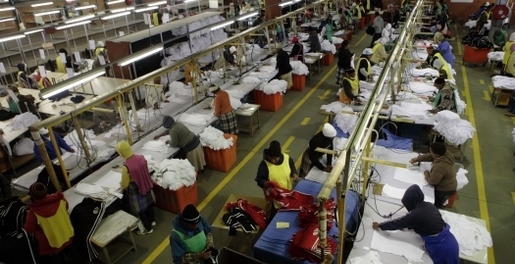
Starting with past House Ways and Means giants like Archer, Rostenkowski, Gibbons, Thomas and Rangel, and soon Ryan, it was this particular committee and not the Administration that took the lead in the Caribbean Basin Initiative (CBI) and AGOA in the 1980s and 1990s respectively. House Ways and Means developed AGOA’s most effective provision – the third country fabric origin rule for apparel.
Affirmatively, third country fabric is the most successful provision in any unilateral preferential program ever created. But this should not come as a surprise since Ways and Means specializes in rules of origin.
At this stage, it is important for us to note that AGOA must be updated to catch up with the times. Ever since the original AGOA was enacted in 2000, other countries such as China have introduced ever more aggressive programs in their dealings with Africa. As a result, China has not only displaced the United States as Africa’s leading trade partner; it is now displacing U.S. influence and investment on the continent.
The European Union is even more aggressive with its Economic Partnership Agreements (EPAs) not only put American goods at a competitive disadvantage, but much are worse in that they have created stumbling blocks to an economically integrated Africa, which is not just a requirement for American companies to operate their world class distribution chains in Africa, but also to create a stable Africa free of political unrest. Palliatives measure can alleviate the impact from EPAs on U.S. exports, but a more effective AGOA is required for overriding geopolitical reasons in a region that, in possessing the fastest growing middle class, may be the last frontier for global economic expansion.
In suggesting this, I remain positive that countless Africans will welcome an assertion of U.S. creativity since these aspects, for the most part, support a more-progressive-than-China presence of Americans; oftentimes, accompanied by an emphasis on good governance, state of the art management techniques and a transfer of labor and technology skills that China does not seem to have a nark for, and may not even care for in the dynamic between two powers.
