
Opinion
Africa’s “Image Problem” Is a Myth – Global Indifference Is Its Strategic Advantage
A global perception map reveals an inconvenient truth for the companies avoiding the continent – the obstacle they cite doesn’t exist.

By John Kourkoutas
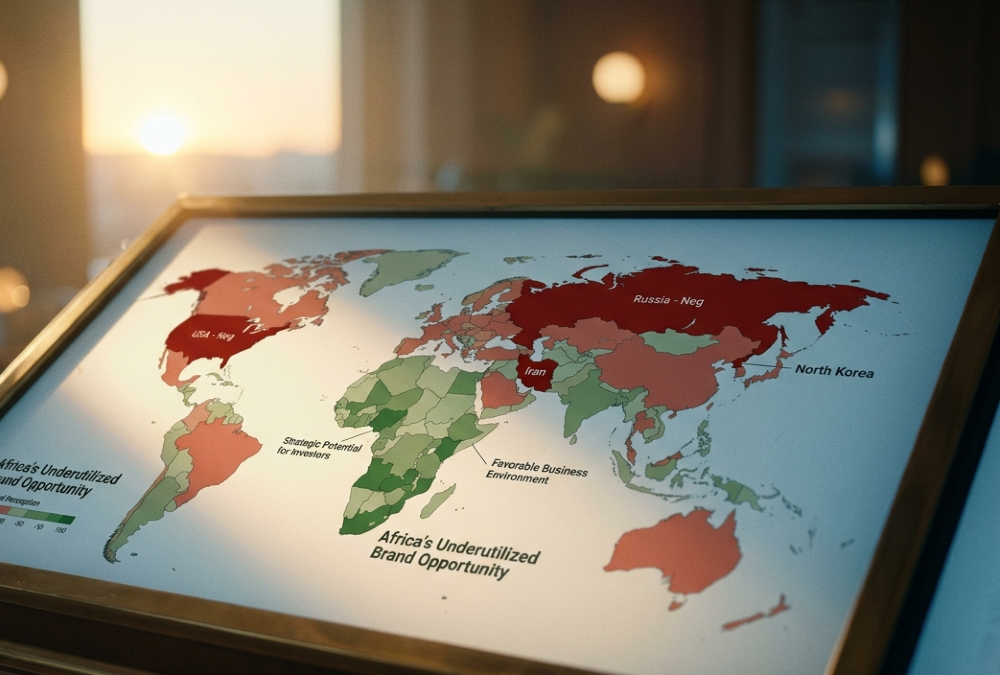
Study a world map of net perception – positive opinion minus negative opinion, country by country – and a striking pattern emerges. The deepest red, signifying genuine international dislike, is concentrated not in Africa but among a small club of major powers. The United States sits in negative territory. So do Iran, North Korea, Russia, and China. Most of Africa, by contrast, rests in calm, neutral-to-positive green.
That single image dismantles one of the most persistent excuses in international business.
For decades, multinational corporations have cited Africa’s “reputation” as justification for avoiding the continent. The data does not support them. The world does not dislike Africa. It simply does not think about it very much. That is not hostility – it is a blank space. And a blank space is, arguably, the most valuable brand position on earth.
Reputational Baggage Is a Real Cost – Most of Africa Carries None
When a company enters a market where its home country is viewed negatively, the first two years of operation are spent apologizing for a reputation it did not choose and cannot easily change. The product takes a back seat to the politics. Resources that should fuel growth are redirected into perception management.
The calculus looks entirely different when the canvas is clean. A market viewed warmly, if vaguely, by the rest of the world offers something rare: narrative freedom. Brands and partners operating from that position get to define the story rather than fight an existing one. African producers and exporters, in particular, carry far less reputational baggage into international deals than the headlines about the continent would suggest.
This is not a minor operational footnote. In a global economy where country-of-origin effects shape consumer preference, investor sentiment, and partnership decisions, entering a relationship unburdened by geopolitical antagonism is a genuine structural advantage.
Indifference Is cheaper To Convert Than Hostility
There is a further point that strategists routinely miss. Reputational indifference and reputational damage are not the same problem – and they do not carry the same price tag to fix.
Overcoming active distrust requires years of expensive, consistent counter-messaging, often in the face of entrenched media narratives. Converting indifference into preference, by contrast, simply requires showing up with something worth noticing. The audience is not hostile; it has not yet formed a view. That is the easier sale by an order of magnitude.
For any company building a brand on the African continent, or sourcing from it, or structuring a partnership within it, the neutral-and-liked baseline is not a problem to be managed. It is a gift to be used.
The Risk Is Not The Continent – It Is The Misconception
The companies most likely to capture long-term value in African markets are not those waiting for the perception environment to improve. They are those that recognize the perception environment is already favorable – and that the real risk lies in competitors reaching the same conclusion first.
Africa’s image is not the obstacle. The obstacle is the outdated assumption that it is.
The world is not opposed to Africa. It is not watching yet. For the executives, investors, and entrepreneurs willing to act before the rest catch on, that distinction represents one of the more compelling commercial opportunities of the coming decade.
John Kourkoutas is business development expert that specializes in helping companies, export teams, and business leaders succeed in Africa’s dynamic and emerging markets.
