
Opinion
The Road to Automotive Market Expansion in Sub-Saharan Africa
A regional blueprint for scaling automotive brands across Southern, East, West, and Central Africa.

By Des H Rikhotso
For decades, global automakers have treated Sub-Saharan Africa as an afterthought – a continent to be serviced from afar rather than built into. That calculus is now obsolete. With the African Continental Free Trade Area (AfCFTA) dismantling intra-regional tariffs, a rising middle class hungry for mobility, and governments actively courting industrial investment, the region has quietly become one of the most compelling growth frontiers in global manufacturing. The brands that succeed will not be the ones that simply export more vehicles southward. They will be the ones that build with Africa, region by region, hub by hub.
The opportunity is not theoretical. It is structural. The AfCFTA gives manufacturers a legal and logistical pathway to treat the continent less like fifty-four separate markets and more like a handful of interconnected regional economies. Combined with South Africa’s Automotive Master Plan 2035 (SAAM 2035), which sets out a clear, long-term policy runway for local manufacturing and export, the pieces are finally in place for a genuine multi-country expansion strategy – provided automakers are willing to localize rather than merely ship.
Below is a hub-by-hub blueprint for how that expansion should unfold.
Southern Africa: The Manufacturing Anchor
Hub: South Africa (Gauteng and the Eastern Cape)
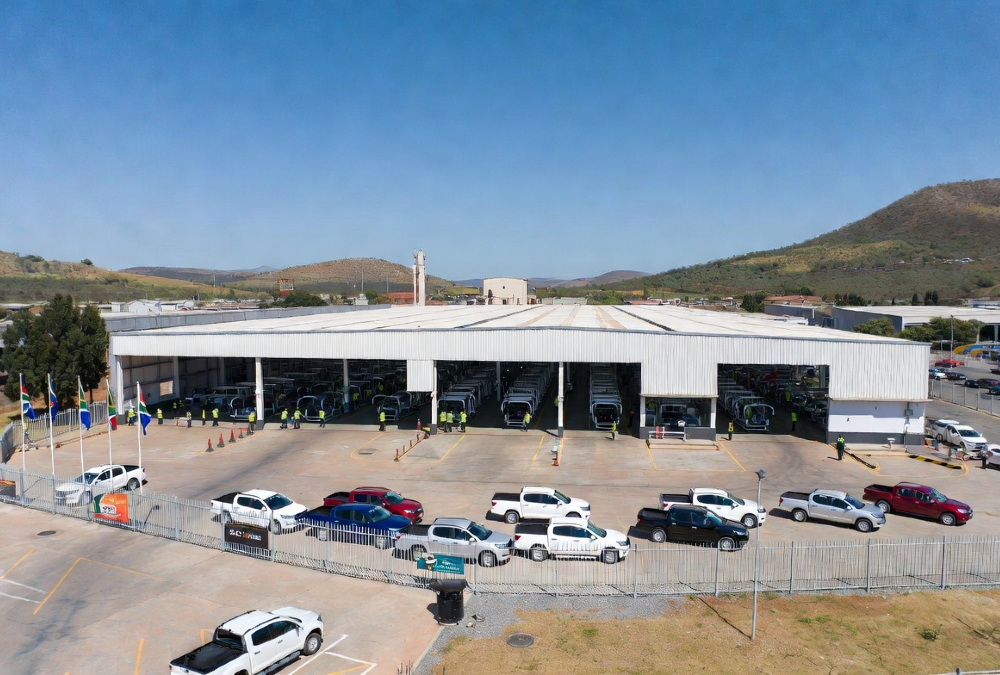
South Africa remains the continent’s only mature, export-grade automotive manufacturing base, and its Automotive Master Plan 2035 gives investors a rare commodity in African industrial policy: predictability. Brands should use the country as a platform for both Completely Built Up (CBU) and Completely Knocked Down (CKD) production, feeding not just the domestic market but the entire Southern African Customs Union (SACU) and Southern African Development Community (SADC) trade blocs. InvestSA, the government’s dedicated investment facilitation agency, offers a practical entry point for automakers seeking incentives, land, and regulatory guidance in Gauteng’s established industrial corridors and the Eastern Cape’s port-linked assembly clusters.
East Africa: Assemble Local, Sell Smart
Hub: Kenya (Nairobi and Mombasa)
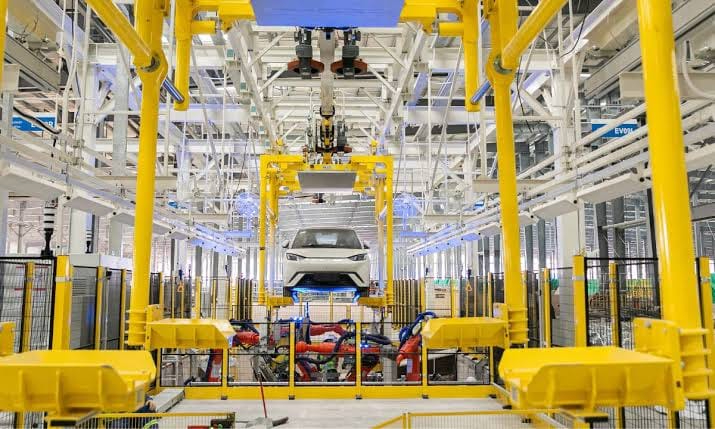
East Africa rewards patience and pragmatism over brute-force exporting. High CBU import tariffs across the East African Community (EAC) make fully built imports uneconomical for all but the most premium segments. The smarter play is Semi-Knocked Down (SKD) assembly on the ground in Kenya, which sidesteps the steepest duties while building local jobs and political goodwill – both currency that matters when governments hand out incentives.
Nairobi and the port city of Mombasa form a natural logistics spine, and manufacturers should tailor their lineups to what the market actually wants: affordable light commercial vehicles for the fleet and logistics sector, paired with offerings structured to take full advantage of Kenya Revenue Authority (KRA) tax incentives for commercial fleet operators.
West Africa: Partner or Pay the Price
Hub: Nigeria (Lagos) and Ghana (Tema)
West Africa is the region where going it alone is least likely to pay off. Import duties are steep, bureaucracy is dense, and market knowledge is hard-won – which is precisely why the region’s established concessionaires exist, and why ignoring them is a mistake.
Automakers should pursue joint ventures with proven local players such as Stallion Motors in Nigeria and Kantanka in Ghana, structuring deals around Nigeria’s National Automotive Design and Development Council (NADDC) policy framework to establish genuine local assembly rather than glorified warehousing. Lagos and Tema offer the port infrastructure; local partners offer the market access. Brands that try to skip that partnership step tend to discover, expensively, why it exists.
Central Africa: Build for the Field, Not the Showroom
Hub: Angola (Luanda)
Central Africa is not a mass-market play – it is a resource-economy play. Demand here is driven by mining, oil, and heavy extraction operations that need rugged, serviceable vehicles far more than they need brand prestige.
Success depends less on showroom presence and more on distribution muscle: robust dealer partnerships aimed squarely at the extraction sector, backed by a maintenance and spare-parts supply chain built through the Central African Economic and Monetary Community (CEMAC) framework. Luanda is the logical anchor, but the real product here is uptime, not styling.
The Common Thread
Strip away the regional specifics and a single principle emerges: fragmentation is the enemy, and localization is the antidote. Automakers that treat Sub-Saharan Africa as one undifferentiated export market will keep bleeding margin to tariffs, logistics costs, and mismatched product lines. Those that build regional hubs – manufacturing in South Africa, assembling in Kenya, partnering deeply in Nigeria and Ghana, and distributing ruggedly in Angola – stand to capture a market that is only going to grow more valuable as the AfCFTA matures and intra-African trade accelerates.
The brands that move first, and move with genuine local commitment rather than opportunistic exporting, will not just sell more vehicles. They will help write the rules for how the entire continent’s automotive future gets built.
Des H Rikhotso is a seasoned C-Suite Multi-Industry (Automotive – OEM + Retail, Logistics, Oil & Gas, etc) business executive with 25+ years of Business Leadership Experience across the South, East and Western Sub-Sahara Africa Region. Based in Kampala, Uganda he serves as East Africa Region Country Director and Business Executive, driving Business Strategic Growth and Operational Excellence – contributing his Business Leadership Experience to the Region. Des has held Business Leadership roles at BMW Group Africa, Volkswagen Group Africa, Peugeot Motors South Africa, Toyota/Lexus South Africa, Lexus East Rand (Unitrans/CFAO), Nissan Group of Africa, G.U.D Holdings (Africa Exports Operations Division),The HDR Group of Companies and The Ezra Group of Companies (a Leading Uganda & East Africa Conglomerate). He holds Under-Graduate and Post-Graduate business degrees from the University of the Western Cape, Wits University (Wits Business School) and the University of South Africa.
