
Opinion
Africa’s Brand Deficit Is Its Greatest Untapped Asset
The continent’s under-branded economy is not a sign of weakness – it is an invitation to build the next generation of global champions.

By Dishant Shah
Africa is home to 54 countries and more than 1.5 billion people. Yet the combined brand value of its most recognized companies remains strikingly modest relative to the continent’s population, resource endowment, and economic potential.
That disparity is not a cause for alarm. It is, rather, one of the most compelling opportunities in global business today.
A powerful brand is typically the final layer of value creation – the capstone that crowns decades of institution-building. It emerges only after countries have laid the harder groundwork: infrastructure, financial systems, manufacturing capacity, distribution networks, and digital connectivity.
Africa, in large and consequential ways, is still building those foundations. The relative scarcity of globally recognized African brands is, therefore, less a reflection of failure than a marker of where the continent stands in a longer and still-unfolding arc of development.
Why the Brand Gap Is a Feature, Not a Bug
Several patterns in the current landscape are worth noting. Telecommunications, banking, and financial services dominate Africa’s most valuable brands – sectors where scale, regulation, and capital intensity create natural advantages for early movers.
Consumer brands, by contrast, remain conspicuously underrepresented, despite Africa being among the world’s fastest-growing consumer markets. Few African companies have achieved truly continental reach, let alone global recognition, and most countries still lack the depth of nationally dominant brands that characterizes more mature economies.
What this means, in practical terms, is that Africa’s brand-building story is only in its early chapters.
The Sectors Poised to Produce the Next Generation of Champions
The next decade may well witness the emergence of entirely new categories of African champions. The sectors most worth watching include digital payments and financial technology, e-commerce and logistics, renewable energy and distributed power, electric mobility, agricultural technology and food processing, healthcare and pharmaceuticals, education technology, data centers and cloud infrastructure, industrial manufacturing, consumer packaged goods, and travel and hospitality platforms.
Across each of these domains, the conditions for brand creation – growing middle classes, expanding digital access, and entrepreneurial ambition – are converging with unusual speed. What is most striking, however, is not the brands already on the list. It is the ones that do not yet exist.
The Next MTN or Safaricom May Already Be Operating in Stealth
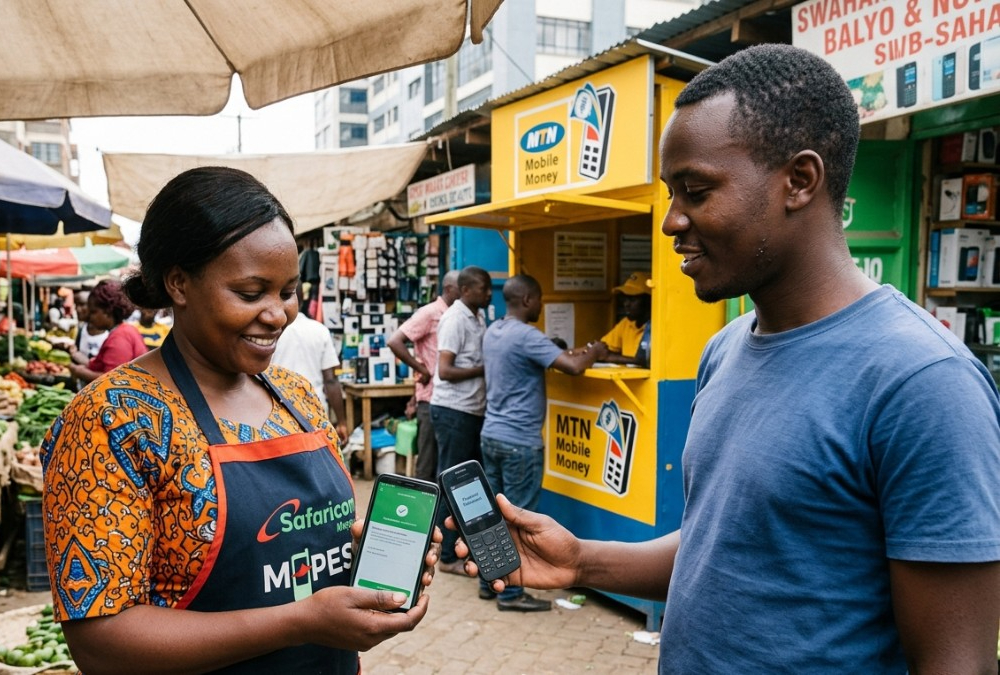
The next MTN, Safaricom, Dangote, or Equity Bank may at this moment be a startup operating out of Lagos, Nairobi, Kigali, Accra, Cairo, or Johannesburg – or from a city that most institutional investors are not yet watching. Africa’s entrepreneurial ecosystems are maturing rapidly, and the combination of demographic scale, digital leapfrogging, and unmet demand creates conditions that have historically produced category-defining companies in other parts of the world.
When a continent of 1.5 billion people remains under-branded relative to its potential, the opportunity is not merely to invest in existing leaders. It is to participate in the creation of entirely new ones.
Africa’s most important brand story may not be behind us. It may not even have been written yet.
Dishant Shah is a partner at Legion Exim, a company specializing in facilitating the export of high-quality engineering products directly sourced from manufacturers in India to Africa. His areas of expertise include new business development and business management.
