
Opinion
The Lande Opus On A Transformational AGOA
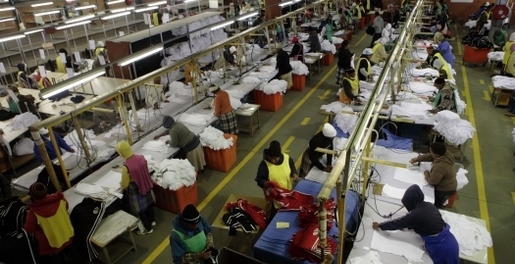
For its suggestion for rules of origin, the AU alludes to a more ambitious modification, which could even go much bigger than the positive impact third country fabric has had. By recommending that this origin rule apply to all sectors outside just apparel, I would like to emphasize that if we’re to go further and achieve more success with this origin rule, the key would be to reduce duties on products not finished in Africa, but with identifiable African value added. The duties applied on such goods would be reduced by the percentage of African content in the final product. Hence, the greater the percentage of African input, the greater the duty reduction. There would be built-in inducements to increase African value-added so as to reduce duty assessments. We have already praised the third country fabric provision. However this modification would even be more transformative since it could induce shifts in the investment of light manufacturing from other parts of the world to Africa.
As for the introduction of a new and more aggressive regime of origin rules, the timing could not be any more perfect. Value chains are on the lookout for alternative locations due to currency appreciation and labor rights challenges. Can you imagine the number of global value chains that would consider Africa as awareness spread of the existence of such tariff incentives? Initially, the value chains may be limited to free trade areas located close to seaports and to a limited extent, airports. Eventually as infrastructure improves, these centers of light manufacturing should spread deeper and deeper inland. If this proposal were combined with the Obama Administration’s proposal to allow unlimited U.S. content into products finished in Africa, it should benefit U.S. producers and jobs.
3. Updating Eligibility Reviews and Criteria
We support Ambassador Froman’s proposal of adding considerations of unwarranted sanitary and phyto-sanitary (SPS) barriers and employment discrimination to reviews on eligibility. In addition, his idea to replace current annual country reviews – which are based on an “all or nothing” principle – is brilliant. Countries must not completely lose benefits or remain eligible for another year. In its place, Froman suggests GSP procedures that are more flexible in allowing for partial withdrawal of benefits as well as time for countries to correct inadequacies. This is a much better, more tailored and nimble approach to dealing with preference program beneficiaries.
Additionally, better suited for AGOA than the unilateral withdrawal or limitation of benefits in a number of cases could be the use of multilaterally coordinated diplomatic tools deemed effective at avoiding collateral damage to innocent parties. For instance, mobilizing peer pressure from neighboring countries and/or members of the same regional economic communities could work in the place of the unilateral withdrawal of AGOA benefits from a country. The United States could also cooperate with 3rd countries to implement arms embargoes, human rights complaints, a travel ban, and asset seizures and/or travel restrictions. Such collective action worked in the “Arab Spring”.
Conclusion: Africa Must Do Its Part as Well
In his August 4th remarks to the 2014 AGOA Forum, USTR Ambassador Froman expressed a need for the United States to assess and revise preference programs to take into account the rise of emerging economies. There’s a chance that the EU’s economic partnership agreements (EPAs) were on his mind as they, require African countries to phase in duty-free treatment for somewhere between 75 and 80 percent of European products and thus ensure a competitive advantage over U.S. exports.
Instead of working to integrate Africa like AGOA does, and could go even further if updated, EPAs also work to further delay Africa’s regional integration. In juxtaposition, Froman is keen on preparing the path for an eventual free trade agreement with Africa as a continent. Negotiating with Africa as a whole rests in a continental free trade agreement, and perhaps an Africa-wide customs union, which could be even further hobbled by EPAs.
Interpretively, although the United States should continue with support for the East African Community. But it must also provide support for the African Union’s building bloc regional economic community (REC) approach towards continent-wide integration. Importantly, premature negotiation of an FTA between individual or smaller groups of African countries would negatively impact the pace of economic integration on the continent. The United States can work with Africa to assure that national and regional AGOA strategies, which assure market liberalization, continue to work.
They can develop a host of agreements based on the acceptance of a common approach to investment promotion and service liberalization as well as full implementation of the WTO Trade Facilitation Agreement (TFAs). Trade and Investment Facilitation Agreements (TIFAs) could be the avenues via which we deal with trade irritants such as SPS barriers to agricultural exports to and from Africa. As for discrimination against U.S. exports as a result of Africa’s EPA commitments, the extended tariff reduction schedule in a number of the agreements should delay serious discrimination for a number of years. In other cases,
the U.S. and EPA members may have to engage in discussions about alleviating measures. South Africa has already indicated a willingness to engage the U.S. in cases where it’s EPA with the EU seriously impacts U.S. exports.
Seminally, where EPA negatives are overwhelming, the U.S. may have to prevail upon the EU for exceptions since there are still negotiations on TTIP to consider.
With writing by John Luther, Mina Kim and Young-Hoon Kim
