
Opinion
Patrice Lumumba at 101: The Unfinished Pan-African Vision
A century after his birth, the assassinated Congolese leader’s warnings about resource sovereignty read less like history and more like prophecy.

By Mark-Anthony Johnson
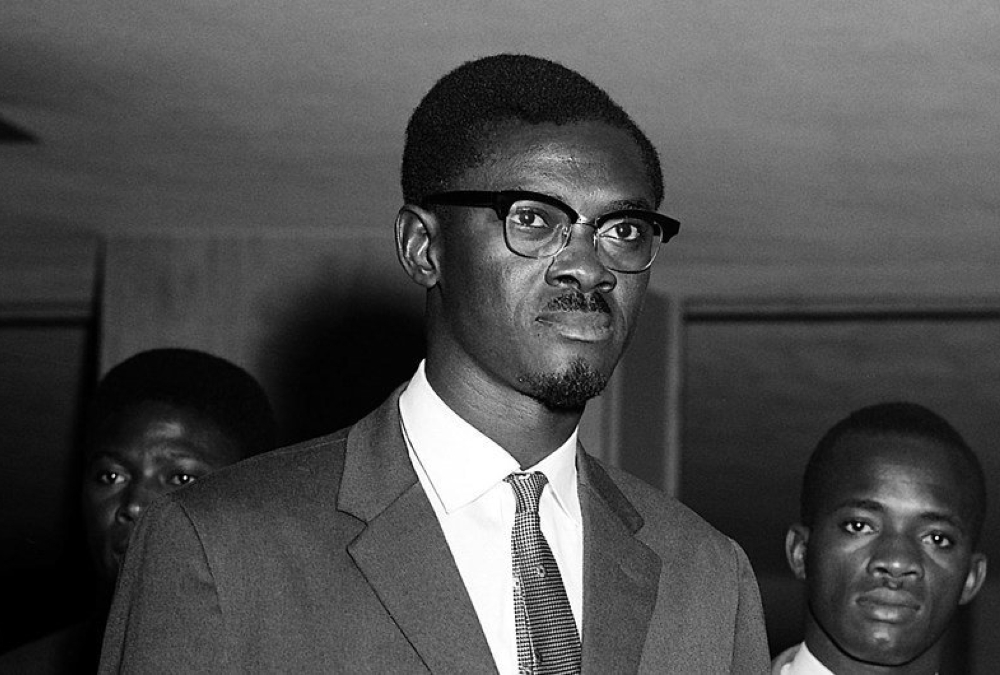
One hundred and one years ago this week, on July 2, 1925, a man was born in a small village in what was then the Belgian Congo who would go on to haunt the conscience of a continent. Patrice Lumumba lived only 35 years. He served as prime minister for barely ten weeks before he was deposed, and he was dead within six months of that. By any conventional measure of political achievement, his career was a failure. And yet no African leader of the twentieth century, save perhaps Nkrumah, casts a longer shadow.
That paradox is worth sitting with, especially now. Lumumba’s centenary arrives at a moment when the questions he raised – who controls Africa’s resources, and on whose terms – have lost none of their urgency. If anything, they have sharpened.
The Speech That Sealed His Fate
Lumumba’s most famous moment came on June 30, 1960, the day the Congo became independent. King Baudouin of Belgium had just delivered a paternalistic address praising his own country’s “civilizing mission.” Lumumba, not originally scheduled to speak, took the podium anyway and delivered an unflinching account of colonial brutality – the forced labor, the humiliation, the violence dressed up as benevolence.
It was a career-defining act of defiance, and it was also, in retrospect, a death sentence. Belgium and its Western allies never forgave him for it. Within months, Lumumba would be ousted in a coup, handed over to secessionist forces in the mineral-rich province of Katanga, and executed by firing squad in January 1961 – with, historians have since established, direct involvement from Belgian officials and complicity from the CIA.
Sovereignty Meant More Than a Flag
What made Lumumba dangerous to the old colonial order was not rhetoric alone. It was his insistence that political independence without economic control was a hollow gift. “Political independence has no meaning if it is not accompanied by rapid economic and social development,” he argued – a line that could be lifted, almost unchanged, into any contemporary debate about resource-backed loans, mining concessions, or the terms on which foreign capital enters African economies today.
Congo’s cobalt, copper, and uranium made it one of the most strategically vital territories on earth in 1960. They still do. The country now supplies most of the world’s cobalt, a mineral essential to the batteries powering the global shift to electric vehicles. That Congo remains one of the poorest nations on the planet despite sitting atop this wealth is precisely the contradiction Lumumba tried, and failed, to break.
An Unfinished Argument
It is tempting to treat Lumumba as a martyr frozen in amber – a face on a stamp, a name on a boulevard. That does him a disservice. His real legacy lies in an argument he left unfinished: that dignity, justice, and independence are not separable goods to be doled out in sequence, but a single condition that either exists or does not. “Without dignity there is no liberty, without justice there is no dignity, and without independence there are no free men,” he wrote – a formulation that reads today less like nostalgia and more like a checklist still being worked through.
His vision was continental, not merely national. He saw Congolese independence as a means, not an end: a single move in a much larger project of African unity that Nkrumah, Nyerere, and others were pursuing simultaneously. That project remains, at best, half-built. The African Union exists; a genuinely integrated African economy, able to set terms rather than accept them, largely does not.
Why He Still Matters
Lumumba’s final letter, smuggled out of prison shortly before his death, contains the line for which he is best remembered: “Africa will write its own history and it will be, both north and south of the Sahara, a history of glory and dignity.” It was an act of faith made by a man who had every reason to abandon it.
Six decades on, that history is still being written, often by others. The debates roiling African capitals today – over mining contracts, over debt-for-resource deals, over whether the continent will be a rule-taker or a rule-maker in the industries built on its own minerals – are the same debates Lumumba died fighting. Commemorating him with statues and street names is easy. Reckoning with what he actually demanded is not.
That is the uncomfortable inheritance of his centenary: not a celebration of a life cut short, but a reminder of a case never fully answered.
Mark-Anthony Johnson is the founder and CEO of JIC Holdings, a global asset and investment management firm founded in 2009. With over 30 years of experience and strong ties to Africa, his investments span mining, infrastructure, power, shipping, commodities, agriculture, and fisheries. He is currently focused on developing farms across Africa, aiming to position the continent as the world’s breadbasket.
