
Opinion
Botswana’s Solar Future: From Power Access to Energy Ownership
As Botswana prepares to build its first large-scale solar plant, the country faces a choice that goes well beyond electricity: whether to rent power for the next 25 years, or to spend those 25 years building something it owns.

By Farhia Noor
Botswana is about to switch on its first utility-scale solar power plant. That much is settled. What is not yet settled – and what matters far more – is what the country will have to show for it a generation from now.
A US$100 Million Bet on Sunlight
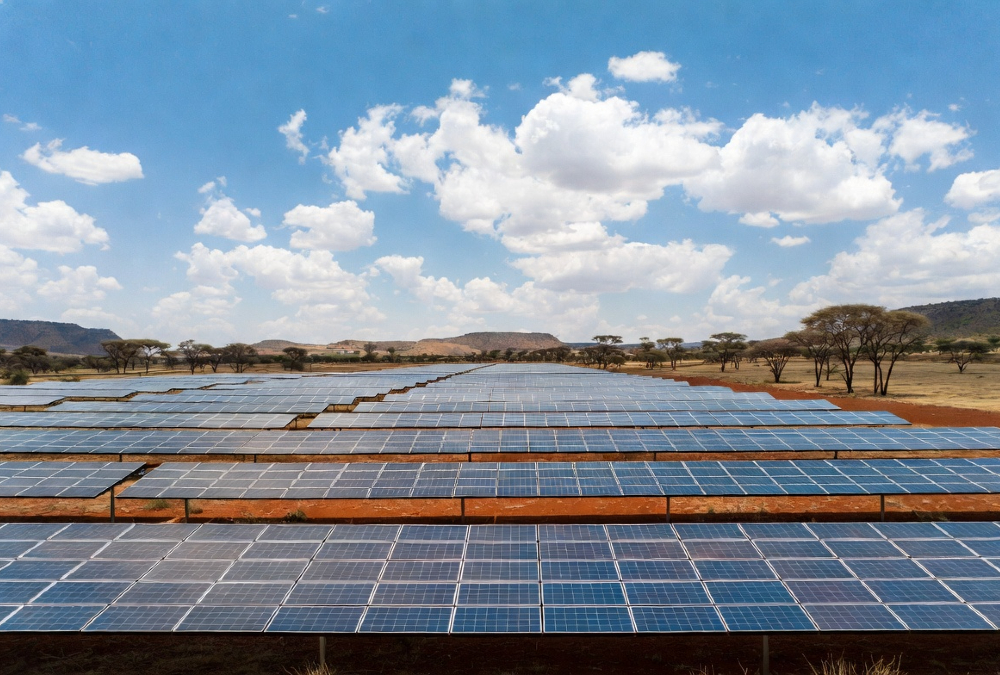
Developers have secured US$100 million in financing to build the 100-megawatt Tati Solar Project, led by Etavi Renewables, a Botswana-based developer partly owned by Shumba Energy Ltd. Construction is set to begin soon, with commercial operations expected by 2027. The plant will feed electricity into the Southern African Power Pool, the regional market that lets utilities and independent producers trade power across borders.
On paper, this is good news, and useful news. Botswana has spent years grappling with an unreliable power system: aging coal plants, generation shortfalls, and increasingly unpredictable imports from South Africa, its traditional supplier. Tati offers a way to ease that pressure, diversify the country’s generation mix, and even position Botswana as a net exporter of power in a region that is hungry for it. Few would argue against any of that.
But electricity is the easy part of this story. Ownership is the hard part – and the more important one.
Solar plants are not unusual in Africa anymore. Nearly every country on the continent now has one, financed by some combination of foreign capital, development banks, and private equity. What is unusual is a solar plant that leaves behind more than megawatts. That is the test Botswana should set for itself with Tati, and for every project that follows it.
The Questions That Actually Matter
Ask the harder questions. Do young Batswana gain real skills from this project, or just temporary jobs during construction? Do local companies win meaningful contracts, or are they relegated to subcontracting scraps? Do nearby communities gain genuine confidence in what they can build themselves? Do Botswana’s own institutions – its pension funds, its state utility, its private developers – end up holding a stake in the asset, or does the equity quietly flow abroad once the ribbon is cut?
These are not sentimental questions. They are the difference between a country that merely hosts energy infrastructure and a country that builds an energy industry.
The African Lens Test
Call it the African Lens test: a project should not simply enter a country. It should leave capability behind. A solar plant should not just power homes – it should power ownership. The formula is straightforward, even if achieving it rarely is:
Local capital → local energy assets → local capability → local ownership → national sovereignty → continental leadership.
None of this is an argument against foreign financing or foreign expertise – Botswana needs both, and the $100 million behind Tati is a case in point. It is an argument for structuring these deals so that capital flowing in today translates into capability that stays behind tomorrow: equity stakes for local investors, training pipelines for local engineers, contracts for local firms, and a clear path for Botswana’s own institutions to eventually own more of the assets sitting on its own land.
Get this right, and Tati becomes more than a power plant. It becomes a template. One project can become the proof of concept. One district can become the model. One country can become the example the rest of the region follows – not just for how to add megawatts, but for how to convert sunlight into sovereignty.
A Choice That Outlasts the Project
Botswana’s leaders, its energy institutions, its businesses, and its citizens now face a choice that will outlast any single project. They can spend the next 25 years buying power. Or they can spend the next 25 years building something that is unmistakably theirs.
The most valuable light Botswana can generate from Tati is not the one that flips on in a village tonight. It is the one that keeps shining – through skills, through ownership, through the generations who inherit what gets built now.
That is the national conversation Botswana needs to have. The clock on it has already started.
Farhia Noor is a seasoned business consultant based in Dar es Salaam, Tanzania. With a proven track record in developing enterprises and executing turnkey projects across both government and private sectors, she brings deep expertise to the table. Farhia is also a committed advocate for community-led development and is passionate about advancing sustainable, intra-African growth.
