
Opinion
Africa’s Fertilizer Paradox Is Finally Ending
A continent sitting atop the world’s richest agricultural inputs has long paid others to turn them into food security. That is beginning to change – and the implications are enormous.

By Dishant Shah
For decades, Africa has exported the raw ingredients of agricultural prosperity and imported the finished product. The continent holds the world’s largest phosphate reserves, vast deposits of potash, and enough natural gas to supply fertilizer plants for generations. Yet African farmers have long depended on shipments from Russia, China, and the Middle East to feed their soils. The result: exposure to volatile global commodity prices, chronic supply disruptions, and a structural drain on foreign exchange that no developing economy can comfortably sustain.
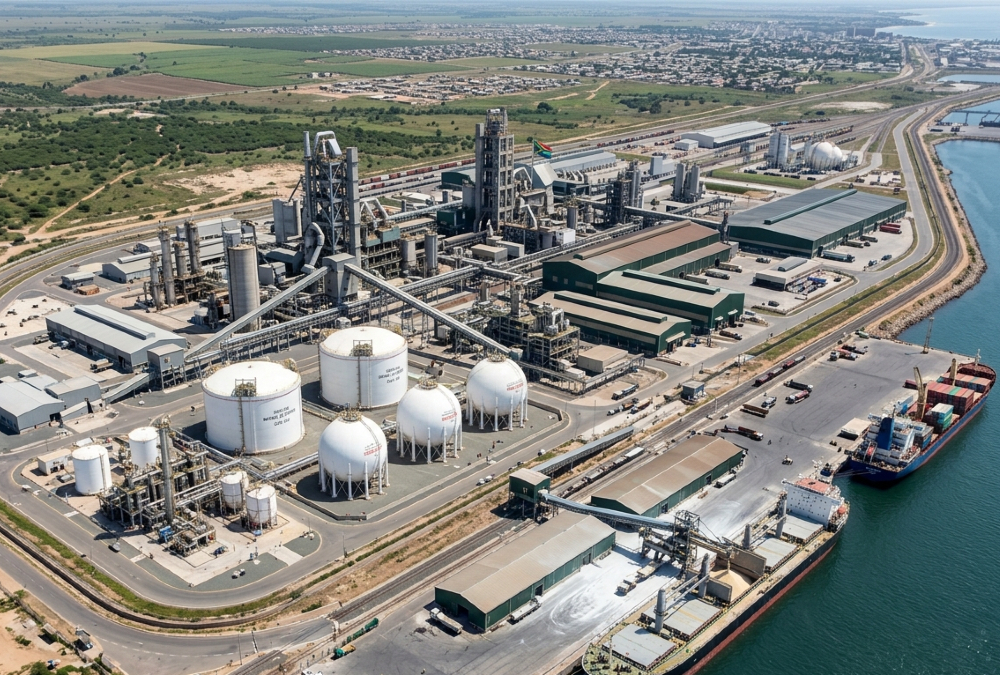
That calculus is shifting. Across the continent, governments and private investors are betting heavily on domestic fertilizer manufacturing – not merely as an exercise in import substitution, but as the foundation of a globally competitive chemical industry. The stakes extend well beyond agriculture.
The Case for Manufacturing at Home
The argument for local production is, on its surface, straightforward. Africa spends billions of dollars each year importing fertilizers that it possesses the natural resources to manufacture itself.
Every ton of urea purchased from a foreign supplier represents a missed opportunity: foregone industrial employment, foregone value-added export revenue, and a degree of food-price vulnerability that smallholder farmers – the backbone of African agriculture – can least afford to bear.
Local manufacturing addresses all three problems simultaneously. It reduces logistics costs and improves supply reliability in regions where port congestion, poor road networks, and erratic shipping schedules routinely delay the arrival of inputs during critical planting windows.
It creates dense demand for complementary infrastructure – ports, rail links, storage terminals, and downstream chemical processing – that strengthens entire regional economies. And it produces the kind of stable, high-wage industrial employment that can anchor the structural transformation African economies urgently need.
There is a trade dimension as well. The African Continental Free Trade Area (AfCFTA), now the world’s largest free-trade zone by number of participating countries, creates a natural market for intra-African fertilizer commerce.
A producer in Nigeria or Morocco that can supply farmers in landlocked Burkina Faso or Mali at competitive prices, without the delays and currency costs of intercontinental shipping, holds a structural advantage that no amount of freight subsidies from distant exporters can fully neutralize.
The Emerging Champions
Several countries have already moved from aspiration to execution.
Nigeria has emerged as one of Africa’s most significant fertilizer producers, underpinned by world-scale urea plants and – critically – privileged access to natural gas feedstock. The Dangote fertilizer complex, one of the largest urea facilities in the world, represents precisely the kind of anchor investment that can catalyze an entire industrial ecosystem.
Morocco occupies a category of its own. Home to roughly 70 percent of the world’s known phosphate reserves, the country – through the state-owned OCP Group – has spent years climbing the value chain: from raw rock exports toward phosphoric acid, diammonium phosphate, and compound fertilizers destined for markets across Africa, Latin America, and beyond. Morocco is not simply a domestic producer; it is positioning itself as a global fertilizer power.
Ethiopia is pursuing integrated fertilizer projects designed to reduce the import dependence that has long strained its agriculture ministry’s budget. With one of Africa’s largest farming populations and some of its most ambitious development targets, Ethiopia’s success or failure in this domain will matter far beyond its own borders.
Angola is investing in ammonia and urea production with an eye toward serving Central and Southern African markets – a geographic positioning that, if backed by adequate infrastructure, could make it a key regional supplier.
Tanzania is exploring gas-based fertilizer manufacturing to monetize its substantial offshore natural gas discoveries. The opportunity is real; the execution challenge, in a country still building out its gas infrastructure, is equally real.
Senegal is expanding phosphate-processing capacity, with the ambition to move further up the value chain rather than continue shipping unprocessed rock to overseas refineries.
The Obstacles Are Not Trivial
None of this is foreordained. The challenges confronting African fertilizer investment are structural, persistent, and not easily resolved by political will alone.
World-scale fertilizer plants are capital-intensive to an extraordinary degree. A single urea facility of meaningful scale can cost well over a billion dollars to build, requires years of lead time, and demands a reliable, affordable feedstock supply – whether natural gas, phosphate rock, or potash – that is not disrupted by pipeline politics, royalty disputes, or infrastructure failures.
Power supply, a chronic constraint across most of sub-Saharan Africa, must be both dependable and competitively priced; energy is a dominant input cost in fertilizer production.
Financing such projects in markets that global lenders often still perceive as high-risk remains genuinely difficult. Development finance institutions and multilateral banks have a critical role to play, but their capital is finite and their processes slow.
Private capital requires bankable contracts, creditworthy off-takers, and political risk mitigation that not every African government can credibly provide.
Perhaps the most underappreciated challenge, however, is distribution. Building a large plant is one thing. Getting its output to a smallholder farmer in a remote rural district – through fragmented wholesale networks, poor roads, and absent rural finance – is another challenge entirely. Without investment in the last mile, a domestic fertilizer industry risks simply substituting one source of supply for another without materially improving access for the farmers who need it most.
A Bigger Ambition Than Food Security
There is something important in how the framing of Africa’s fertilizer story has evolved. For much of the past half-century, the conversation was narrowly defensive: how does Africa feed itself? That question remains urgent, but it is no longer the only one being asked.
The more ambitious vision now in circulation sees fertilizer manufacturing not as an end in itself but as the nucleus of a broader industrial transformation. Countries that successfully integrate natural-resource endowments with manufacturing capacity, regional logistics, and downstream value chains could find themselves occupying a genuinely strategic position in global commodity markets – suppliers not just to African farmers, but to Brazil, India, and the rest of a world where food security is becoming an increasingly fraught geopolitical question.
That ambition is achievable. Africa’s resource endowments are not in doubt. Its demographic trajectory – the youngest and fastest-growing population on earth – provides both the agricultural demand and the labor force that industrial development requires. The policy environment, while uneven, is improving in critical markets.
The question now is execution: which countries will build the plants, lay the rail lines, train the workforce, and cultivate the regional commercial relationships necessary to turn abundant natural inputs into globally traded finished goods? The race is already underway. The continent’s next industrial champions are being determined right now – and the world would do well to pay attention.
Dishant Shah is a partner at Legion Exim, a company specializing in facilitating the export of high-quality engineering products directly sourced from manufacturers in India to Africa. His areas of expertise include new business development and business management.
