
Opinion
From Border Controls to Quality Ecosystems: Africa’s AfCFTA Lesson from Europe
Why the African Continental Free Trade Area will stall unless the continent moves quality control from the border to the marketplace, the way Europe did.

By Danilo Desiderio
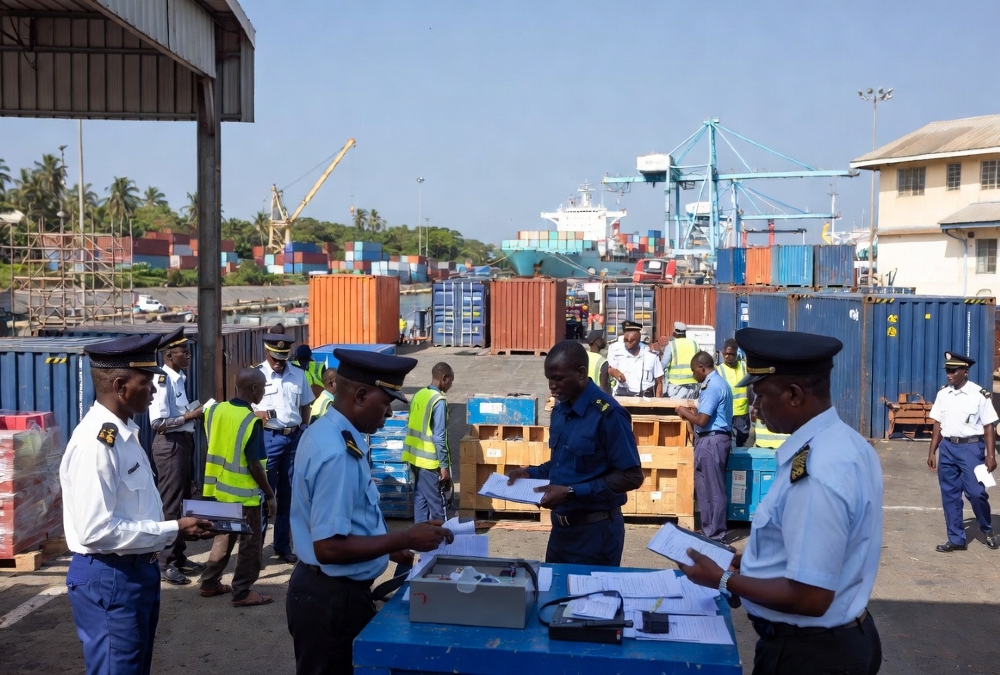
For decades, product quality control in much of Africa has meant one thing: the border. National Bureaus of Standards typically wear several hats at once – writing standards, testing products, certifying conformity, and inspecting imports at ports and crossings. This all-in-one model grew out of real and reasonable concerns: counterfeit goods, thin domestic regulatory capacity, and consumers in markets with little post-sale oversight. It made sense for a world of separate national markets.
But that world is disappearing. As the African Continental Free Trade Area (AfCFTA) pushes the continent toward deeper economic integration, the border-centric model is running out of road. A continental market cannot function if every frontier operates as its own quality checkpoint, demanding repeat inspections, retesting, recertification, and re-registration of the same goods. The more trade AfCFTA generates, the more this system buckles under its own weight.
Follow the Money
The persistence of border inspections is not merely a matter of regulatory philosophy. It is also a matter of institutional self-interest. In many African countries, standards bureaus are partly or fully self-financed, drawing a significant share of their budgets from Pre-Export Verification of Conformity (PVoC) programs, import inspection fees, and similar border charges.
Herein lies the catch. A European-style system – one in which conformity is verified before goods ever reach the market, and governments no longer profit from inspecting imports – would strip these agencies of a core revenue stream. Unless national treasuries step in to replace that money, standards bodies have every structural incentive to keep the border gates as they are, regional trade benefits notwithstanding. Reform, in other words, runs headlong into budgetary reality.
Harmonized Standards Are a Start, Not a Solution
To its credit, the African Organisation for Standardisation (ARSO), working with Regional Economic Communities and national standards bodies, has been harmonizing standards in priority sectors – an essential first step toward a common technical language across the continent.
Yet shared standards alone do not make a single market. They must be paired with mutual recognition of conformity assessments, interoperable accreditation systems, trusted testing laboratories, coordinated market surveillance, and digital certification. That is a tall order, requiring years of sustained political will and institutional investment.
What Europe Got Right
The European Union offers a preview of what a mature system looks like. Rather than piling every function onto the border, the EU spreads quality control across a specialized ecosystem: national bodies set standards, accredited private laboratories run tests, independent certifiers verify conformity, customs authorities manage borders, and dedicated market surveillance agencies watch over products already in circulation. Decades of regulatory convergence and institutional trust have gradually shifted the center of gravity from border checkpoints to lifecycle supervision.
Copying this model, however, takes more than copying its rulebook. Europe’s system rests on a dense network of privately owned, internationally accredited testing labs and certification bodies – technical capacity built up over generations. Across much of Africa, that private conformity-assessment industry barely exists. Outside a handful of countries, such as South Africa, Egypt, and Kenya, accredited labs and certifiers remain scarce. Strip away border inspections in countries that lack this capacity, and they would simply become dependent on foreign testing facilities – raising costs rather than cutting them. Building a competitive private quality infrastructure, in short, is a precondition for loosening border controls, not a byproduct of it.
Food Is Different
The gap between the African and European approaches is really a gap in risk management. Within the EU, goods move freely because compliance is trusted system-wide; border checks give way to accreditation, digital traceability, risk-based enforcement, and vigilant post-market surveillance.
That logic holds up reasonably well for manufactured goods – cement, electrical equipment, household appliances – where conformity assessment and mutual recognition can do much of the work. It holds up far less well for food. Agricultural products account for a large share of both formal and informal cross-border trade in Africa, and the risks – pests, animal disease, aflatoxin contamination, food-borne illness – are severe. Most agricultural supply chains still lack farm-to-fork traceability capable of pinpointing exactly where contamination occurred. In that environment, the border inspection is often the last reliable line of defense. Europe’s model works because its integrated supply chains allow rapid tracing. Africa, for now, does not have that luxury.
Europe’s advantage extends beyond pre-market checks, too. The EU runs continent-wide rapid-alert systems – RAPEX for dangerous non-food products, RASFF for food and feed safety – that flash a warning across all member states the moment a dangerous product turns up anywhere in the bloc, allowing for swift recalls. Africa has no equivalent. Without a real-time, continent-wide alert and recall mechanism, national authorities have little choice but to keep leaning on the border as their primary safeguard.
The Cost of Doing It the Old Way
None of this is to say Africa’s current system has failed. It has protected consumers reasonably well. But within a continental free-trade area, it increasingly works against the very integration it was meant to support. Multiple inspections, duplicated conformity assessments, and fragmented national certification regimes all raise trade costs, slow regional supply chains, and discourage companies from scaling across borders. A manufacturer selling an identical product in several African countries may still have to prove compliance again and again, even where standards have already been harmonized.
This is not a hypothetical problem. Africa’s Non-Tariff Barriers reporting mechanisms are full of complaints from businesses tripped up by divergent standards and conformity requirements. In one case, a product accepted in one African country still required fresh conformity assessment to enter another – despite already meeting harmonized standards. In another, Rwanda’s food and drug regulator demanded additional testing and registration from a Kenyan manufacturer of household cleaning products, even though the goods already carried certification from the Kenya Bureau of Standards. Cutting tariffs, these cases make clear, accomplishes little if mutual trust between regulators remains thin.
A Political Problem Wearing a Technical Disguise
These disputes point to something deeper: Africa’s challenge is not just technical, but institutional and political. Regional blocs – the East African Community, ECOWAS, SADC – have each built their own standards-harmonization programs and their own degrees of mutual recognition. Yet friction persists even within these blocs. Recurring trade disputes between Kenya and Rwanda, fellow EAC members, show how political interests can override technical agreements.
AfCFTA is, in effect, attempting to construct a continental quality infrastructure on top of regional systems that are themselves incomplete and, at times, politically fraught. Real continental integration will depend on building trust not only between national regulators, but among Africa’s overlapping regional institutions as well.
The Path Forward Is Long, but It Exists
None of this means Africa should try to copy Europe overnight. The EU’s quality ecosystem is the product of decades of institution-building, sustained public investment, and hard-won regulatory trust. Africa’s own path will be slower and will look different.
Harmonizing standards is merely the opening move. What comes next matters more: reforming how standards agencies are financed so they are not held hostage to border-fee revenue, expanding accredited private conformity-assessment capacity, strengthening agricultural traceability, building continent-wide rapid-alert systems, deepening cooperation among Regional Economic Communities, and steadily earning the confidence of regulators across borders.
The real challenge facing AfCFTA, then, is not tariff schedules or technical standards documents. It is institutional trust – the kind that lets quality itself circulate as freely as the goods it certifies. Africa will achieve the seamless movement of goods that AfCFTA promises only when it builds the institutions that make border inspections progressively unnecessary. Until then, the free-trade area will remain freer on paper than in practice.
Danilo Desiderio serves as the CEO of Desiderio Consultants Ltd in Nairobi, Kenya, specializing in African customs, trade, and transport policies and is a senior associate to the Horn Economic and Social Policy Institute (HESPI).
