
Opinion
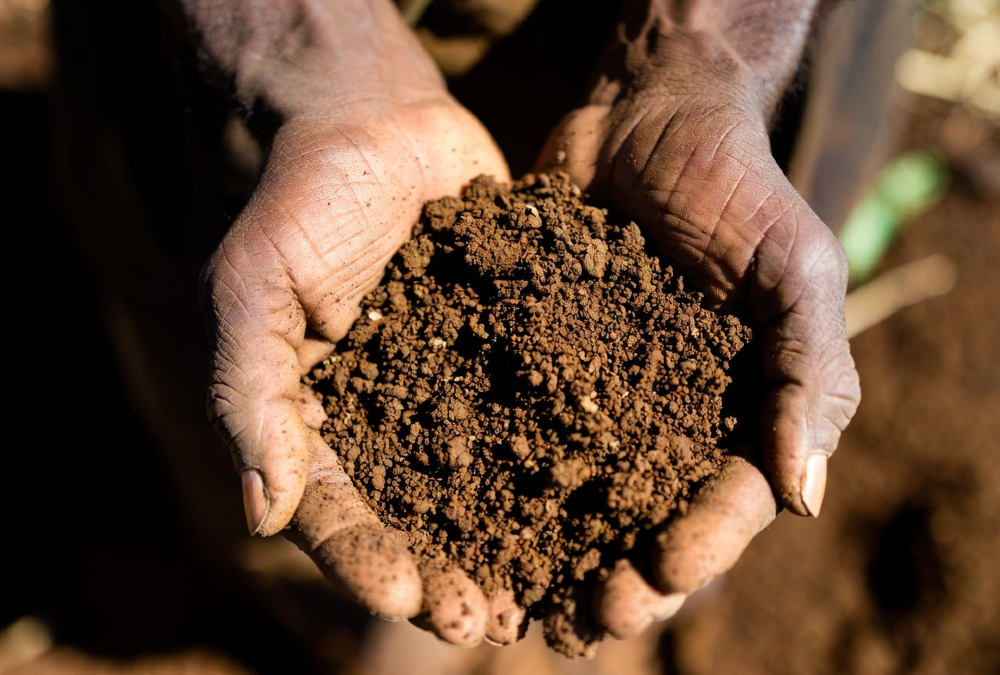
Why African Agriculture Demands Dirt Under the Nails
A week in the fields teaches what no lecture can, as data and drones transform farming but cannot replace the wisdom gained in the furrow.

By Jean Claude Niyomugabo
I have always believed that agriculture is best understood up close – in the dirt, under the sun, among the rows of crops rather than the rows of a textbook. This week reaffirmed that conviction more forcefully than any semester of study could.
Across much of Africa, agriculture is not an abstraction. It is the region’s largest employer, occupying roughly half the continent’s workforce and underpinning food security for hundreds of millions of people. Yet for all its economic weight, the sector is too often taught – and too often designed for – from a distance: in classrooms, policy papers, and spreadsheets far removed from the soil itself. This week, I had the chance to close that distance, and the experience reshaped how I think about the future of farming on this continent.
Where Theory Meets Soil
Irrigation, crop production, water management, and agricultural technology all read differently on a page than they feel in a field. In lecture halls, these are variables to be optimized. Standing among the crops, they become something more urgent: a series of daily judgment calls made by real producers under real constraints.
When should water be applied? How much is enough? How do soil type, weather patterns, crop growth stage, equipment limitations, and hands-on management come together in a single decision? These are not merely technical puzzles to be solved with a formula. They are choices that ripple outward – shaping yields, driving costs, determining how labor is deployed, and ultimately deciding whether a farming system is sustainable for another season, let alone another generation.
This matters enormously in the African context, where smallholder farmers – who produce the bulk of the continent’s food – often work with limited access to irrigation infrastructure, credit, and climate data. A miscalculation on when to irrigate is not an academic error; it can mean the difference between a harvest and a loss.
Agriculture as a System, Not a Sector
For me, agriculture has never been simply about production totals or yield curves. It is a living system that connects people, land, water, science, engineering, and responsibility. Every field visit reinforces a simple but often overlooked truth: good agricultural solutions must work under real conditions, not just in a research paper or a boardroom presentation.
This is especially true as African agriculture stands at an inflection point. Rising urban food demand, a growing youth population entering the labor market, and mounting climate pressures are forcing the sector to modernize quickly. Digital agriculture, precision irrigation, and mobile-based advisory tools are increasingly presented as solutions – and they can be. But their success hinges entirely on whether they are designed with the realities of the field in mind, not merely the elegance of the algorithm.
Building Solutions Farmers Will Actually Use
As someone drawn to irrigation systems, digital agriculture, and farmer-centered technology adoption, weeks like this one carry particular weight. They sharpen the connection between research, technology, and the daily realities producers navigate – realities that no dataset fully captures. A soil-moisture sensor is only as valuable as a farmer’s trust in it; a mobile advisory app is only as useful as its fit with how smallholders actually make decisions.
Too many promising innovations have stalled not because the science was flawed, but because they were built without listening to the people meant to use them. The future of African agriculture will not be determined solely in research institutions or technology hubs. It will be determined by whether those institutions and hubs stay connected to the field.
The Case For Getting Your Boots Dirty
The future of agriculture – in Africa and everywhere else – will depend on people willing to learn directly from the field: to listen to producers, apply science judiciously, and build practical solutions that make farming more efficient, resilient, and sustainable. That is not a romantic notion; it is a practical necessity for a sector facing climate volatility, resource constraints, and a rapidly growing population to feed.
I am grateful for every opportunity to stand where agriculture actually happens. It is, and will remain, the truest classroom there is.
Jean Claude Niyomugabo is an entrepreneur and digital communication specialist with a strong passion for Africa’s development. He is dedicated to harnessing the power of social media to drive positive change and enhance livelihoods. With diverse interests and a strategic approach to digital engagement, he strives to create meaningful impact through innovation and connectivity.
