
Zina’s Youth View on Africa
Sudan’s Silent War Is Making Headlines Again – For All the Wrong Reasons
Gold, not just geopolitics, is what keeps Sudan’s civil war burning.

By Godfred Zina
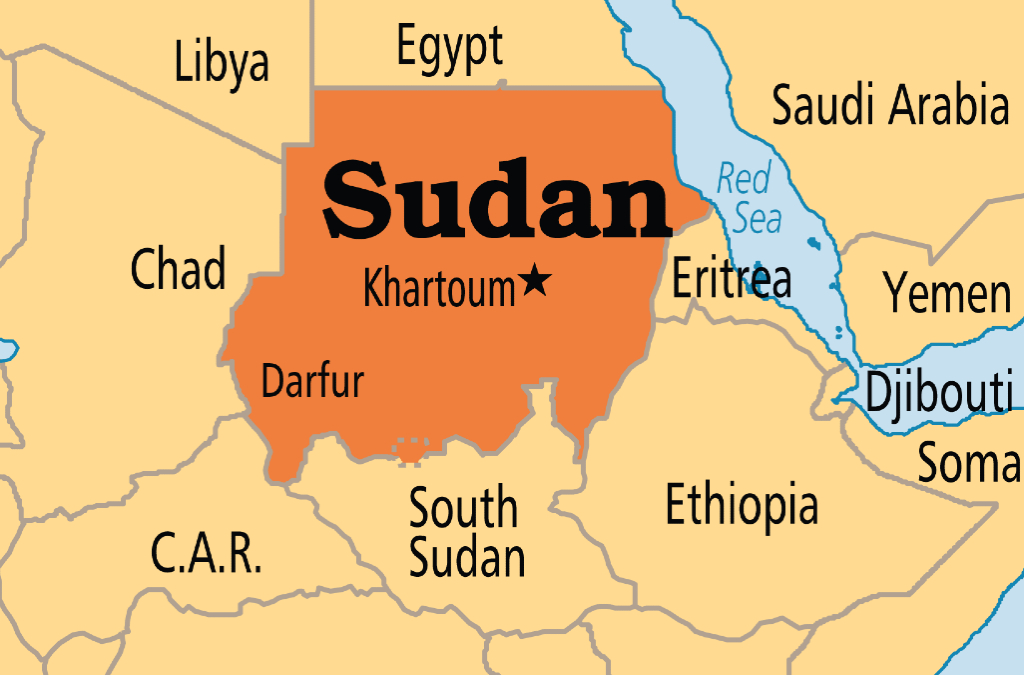
For more than two years, Sudan’s civil war has ground on largely outside the world’s field of vision, even as it has displaced millions and killed tens of thousands. That changed this month. A major new report from Amnesty International accusing the Rapid Support Forces (RSF) of crimes against humanity and ethnic cleansing during its siege and capture of El-Fasher has thrust the conflict back into international headlines – and forced a reckoning with just how badly the world has neglected it.
The report is damning. Amnesty documented a pattern of killing, torture, and forced displacement in and around El-Fasher, the capital of North Darfur, concluding that the RSF’s campaign to root out non-Arab communities – particularly the Zaghawa people – amounts to ethnic cleansing. The findings echo an earlier conclusion from a United Nations fact-finding mission, which found that the assault on El-Fasher bore the “hallmarks of genocide.” Both the RSF and the Sudanese Armed Forces (SAF) stand accused of serious abuses, a reminder that this war offers no clean narrative of villain and victim.
A Conflict Without Simple Heroes
That absence of a tidy storyline is precisely why Sudan has struggled to hold the world’s attention. Years of political instability, entrenched ethnic divisions, hollowed-out state institutions, and a naked power struggle between two military factions have produced a conflict too complicated for easy headlines. There is no clear aggressor and no clear victim – only competing armed camps, both willing to visit atrocities on civilians, and a population caught between them.
The UN Human Rights Council has an investigation into the alleged violations underway. But investigations move slowly, and wars do not wait for them. Sudan’s return to the front pages is a warning: conflicts that fall out of the news cycle do not stop; they simply continue unwatched, and often unchecked.
Follow the Gold
Strip away the geopolitical rivalries, the foreign patrons, and the outside financing, and one asset explains more about why this war persists than almost any other: gold.
Control over Sudan’s gold mines has become the economic engine of the conflict. Smuggling networks, illicit financial flows, and arms pipelines all draw on gold revenue, giving both the SAF and the RSF the means to keep fighting – while starving the Sudanese state of resources it desperately needs and locking the country deeper into instability. Gold, by some estimates, accounts for roughly 70 percent of Sudan’s government revenue, yet more than half of what the country produces is thought to leave illegally, never touching the formal economy at all.
Much of that smuggled gold makes its way through Egypt before reaching the United Arab Emirates. Cairo has recently signaled a harder line: a major operation along its southern border with Sudan led to 223 arrests, part of a broader push to choke off the smuggling routes financing the war. It is a notable move, but a narrow one – a single crackdown against a smuggling economy that spans borders, armed factions, and international buyers.
So What?
The uncomfortable truth is that diplomacy and humanitarian aid, however well-intentioned, will not end this war on their own. As long as the financial networks bankrolling both the SAF and the RSF remain intact, the incentives to keep fighting remain intact too. Civilian displacement, atrocities, and regional instability are likely to continue regardless of how many resolutions are passed or how much aid is pledged.
The cost of looking away would be steep. Continued fighting threatens to deepen an already dire humanitarian crisis, push refugee flows further into neighboring states, and destabilize a region that can ill afford new shocks. Renewed media coverage and UN scrutiny are welcome, but they are unlikely to shift the battlefield calculus unless paired with something harder-edged: real enforcement against arms trafficking, the illicit financial flows that sustain both sides, and the sanctions evasion that lets them operate with impunity.
Sudan’s war has never lacked in horror. What it has lacked is sustained attention – and a serious effort to cut off the money that keeps the guns firing. Until that changes, expect this “silent war” to keep forcing its way back into the headlines, one atrocity at a time.
Godfred Zina is a freelance journalist and an associate at DefSEC Analytics Africa, a consultancy specializing in data and risk assessments on security, politics, investment, and trade across Africa. He also serves as a contributing analyst for Riley Risk, which supports international commercial and humanitarian operations in high-risk environments. He is based in Accra, Ghana.
