
Opinion
Africa Is Rewriting the Rules of Influence – And the World Isn’t Watching Closely Enough
Power in Africa is no longer measured only in treaties and troop deployments. From Burkina Faso’s break with Paris to South Sudan’s bid to turn a wildebeest migration into a UNESCO asset, the continent is demonstrating that leverage can be built, lost, and relocated in more ways than traditional diplomacy ever allowed.

By Gregory September
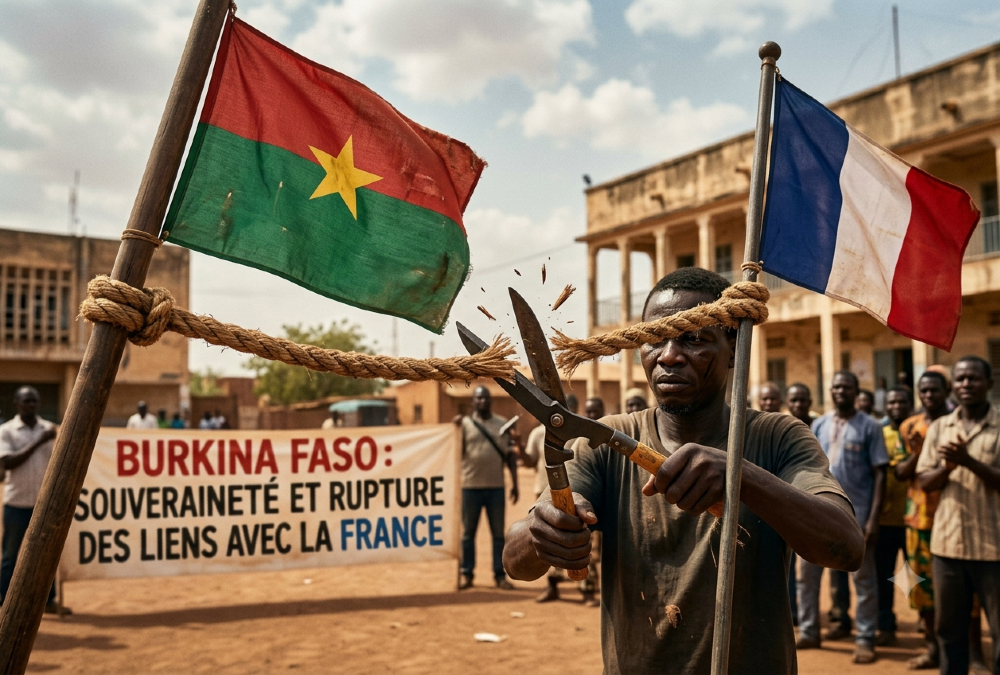
Burkina Faso’s decision to sever diplomatic relations with France made headlines as a rupture. It was treated, predictably, as another chapter in the unraveling of French influence in West Africa. But that framing misses the more important story: when a dominant power exits, influence does not vanish. It relocates.
This is not an isolated diplomatic event. It is a structural shift unfolding across the Sahel, where external partnerships are no longer stable by default. They are being actively renegotiated under pressure, and what looks like a clean break is more often a redistribution of leverage – not simply between states, but between competing external systems vying to fill the space France leaves behind.
Three forces explain why this matters and where it is headed:
- Geography. The Sahel’s strategic relevance is geographic before it is political. Whoever controls access to its trade routes, borders, and resource corridors inherits a structural advantage that outlasts any single government.
- Incentives. Not every external power wants to stay engaged once the political cost rises. The actors who remain are the ones whose incentives – economic, security, or ideological – survive the turbulence.
- Institutional capacity. Access alone does not produce influence. Only actors with the institutional machinery to convert presence into leverage actually capitalize on the vacuum.
The result is layered competition, not a power vacuum. France was one actor within this system – never the system itself. Understanding the Sahel’s next decade requires asking a sharper question than “who left”: when diplomatic ties break, what fills the void first – states, markets, or rival external powers? And who builds influence durable enough to outlast the next rupture?
The Asset Nobody Is Counting: South Sudan’s Wildlife Gambit
While the Sahel renegotiates old-style geopolitical influence, South Sudan is quietly testing a different model of leverage altogether – one built not on minerals or military alliances, but on biodiversity.
The world’s image of South Sudan is dominated by conflict and, where attention turns to economic potential, by what lies beneath its soil. Almost nobody is looking at what moves across its surface. Yet one of Africa’s largest natural assets crosses South Sudan every year: the Boma-Badingilo migratory landscape, home to the largest land-mammal migration on Earth – larger, by some measures, than East Africa’s famous Serengeti crossing.
South Sudan has now advanced a bid for UNESCO World Heritage status for this landscape. Most coverage treats this as a conservation story. It is better understood as a political economy story – an exercise in converting natural capital into international legitimacy, conservation finance, tourism revenue, and stronger state capacity.
Three structural shifts make this bid more consequential than it first appears:
- Reputation. A successful UNESCO designation reframes how the world perceives South Sudan, shifting the narrative from fragility toward stewardship.
- Legitimacy. International recognition of this scale confers a form of soft power that traditional diplomacy struggles to manufacture from scratch.
- State capacity. Managing and protecting a UNESCO-listed landscape requires – and therefore builds – the institutional muscle that fragile states are so often accused of lacking.
Soft power does not always begin with an embassy or a trade deal. Sometimes it begins with a landscape, and with a government astute enough to recognize what it is worth before global markets catch up.
The Common Thread: Influence Is Being Redefined, Not Removed
These two stories – a diplomatic rupture in the Sahel and a conservation bid in South Sudan – appear unrelated on the surface. They are not. Both reveal the same underlying truth: Africa’s strategic value is no longer confined to oil, minerals, or military basing rights. It is increasingly built from assets that generate influence before they generate exports – geography, institutional resilience, ecological heritage, and the diplomatic capital that comes with controlling a globally significant resource.
Investors and policymakers spend years hunting for hidden value. Often, it has been in plain sight – crossing a floodplain, or filling the space left by a departing ambassador. The numbers will eventually matter. But incentives, capacity, and timing matter more, because they determine who actually converts opportunity into lasting leverage.
The question worth asking is not who is losing influence in Africa. It is who is positioned – structurally, institutionally, and strategically – to gain it. And which African assets, beyond the ones we already track, are global markets still failing to value?
Gregory September is a South African academic, author, and geopolitical analyst with extensive experience in government and Parliament. He is the founder and CEO of SAUP (Sustainability Awareness and Upliftment Projects NPC), which focuses on sustainability education and community development. He previously served as Head of Research and Development for the Parliament of South Africa. His work centers on sustainability, African geopolitics, and economic development, and he regularly contributes to analysis of global political and economic affairs.
