
Owusu on Africa
Why Nigeria’s “Infrastructure Fund” is critical and must succeed

By Fidel Amakye Owusu
Years ago, I read a report highlighting how South Korea’s economy experienced significant growth through infrastructure development, contributing about 3 percent to the country’s total growth rate. In many nations, including advanced ones, infrastructure is recognized as a critical driver of economic progress.
Even in the world’s largest economy, the United States, experts have emphasized that upgrading infrastructure is crucial for competing with China. The argument is that while America’s infrastructure is overstretched, its competitors are expanding theirs. Politicians in Washington have taken this matter seriously.
So, what’s the relevance?
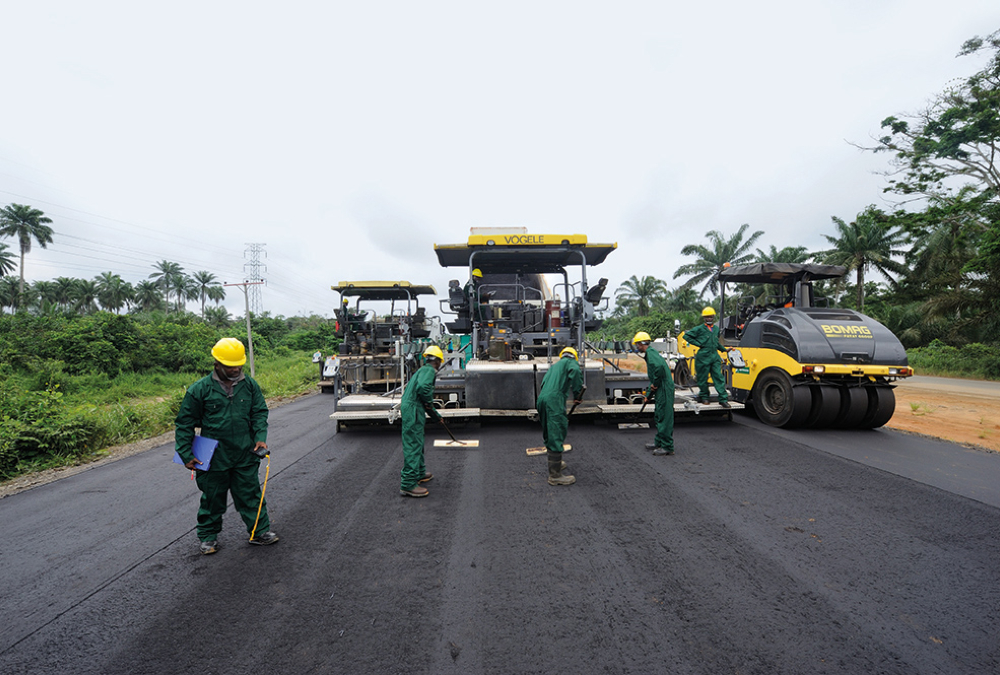
Last year, the president of Nigeria approved the establishment of an Infrastructure Support Fund (ISF), aimed at boosting the agriculture, education, healthcare, water, and energy sectors. Despite being Africa’s largest economy, Nigeria lags significantly in infrastructure.
The urban-rural gap in infrastructure is especially stark. Many rural communities in Nigeria remain unconnected to the national grid. Despite the irrigation potential of the Niger-Benue basin, the country still struggles with food production and has declared an emergency on food security. Robust infrastructure is essential for strong agricultural output.
Moreover, much of Nigeria’s security issues arise from socioeconomic problems worsened by the significant infrastructure deficit. Essential services like schools, hospitals, and potable water are lacking, and extremists have exploited these deficiencies as propaganda tools.
In recent decades, many Nigerians have sought higher education in Ghana, generating significant financial benefits for Ghana. Interestingly, under President Jerry Rawlings in the 1990s, Ghana established an education fund for infrastructure development in the sector. Successive governments have utilized this fund to build new schools and expand existing ones, making Ghanaian schools among the best in West Africa. Other funds have been established in recent years to develop additional sectors in the country.
Investing in infrastructure could also create jobs in Nigeria’s economy. With a growing youthful population, this would be beneficial. Improved and extensive road networks could enhance trade within the sub-region, positively impacting neighboring states.
What’s the path forward?
While the idea and establishment of the fund are positive steps, the key to success lies in the transparent and efficient management of the fund. Corruption must be eliminated to ensure its effectiveness.
Fidel Amakye Owusu is an International Relations and Security Analyst. He is an Associate at the Conflict Research Consortium for Africa and has previously hosted an International Affairs program with the Ghana Broadcasting Corporation (GBC). He is passionate about Diplomacy and realizing Africa’s global potential and how the continent should be viewed as part of the global collective.
