
A Diaspora View of Africa
South Sudan Remains a Troubled State

By Gregory Simpkins
At first glance, South Sudan’s macroeconomic trajectory appears almost implausible. The International Monetary Fund projected GDP growth of 24.3 percent for last year – figures that would typically signal a rapidly expanding, high-growth frontier economy.
Yet by the fourth quarter of 2024, the economy had contracted sharply by 27.6 percent, underscoring a far more complex reality shaped by political volatility, institutional fragility, and recurring conflict.
Having visited South Sudan several times in recent years – both in an official capacity with the U.S. House of Representatives and as a private consultant – I have been struck by a consistent contradiction. On one hand, there is undeniable economic promise; on the other, a governance and security environment that repeatedly undermines it.
Conversations with senior government officials, lawmakers, and regional business leaders – including entrepreneurs from neighboring countries seeking opportunity – paint a picture of an economy that could be transformative, but remains structurally constrained.
Geographically and geopolitically, South Sudan occupies a position of outsized importance. It sits at the hydrological heart of the Nile Basin.
The White Nile gathers waters from across East and Central Africa – including Uganda, Rwanda, Kenya, and Burundi – before converging with the Blue Nile in Sudan to form the Nile River system. This network has supported agricultural civilization for millennia and remains central to the economic life of northeastern Africa today.
Within South Sudan itself lies the Sudd, one of the world’s largest wetlands. In a region increasingly defined by water stress, this vast hydrological system represents a strategic asset.
With effective governance and investment in water management infrastructure, it could support large-scale agricultural expansion and even contribute to regional energy production through hydropower potential.
Oil Wealth And External Dependence
South Sudan’s most immediate economic lifeline remains its hydrocarbons sector. The country has produced as much as 170,000 barrels of oil per day in the past, though current output is closer to 149,000 barrels per day.
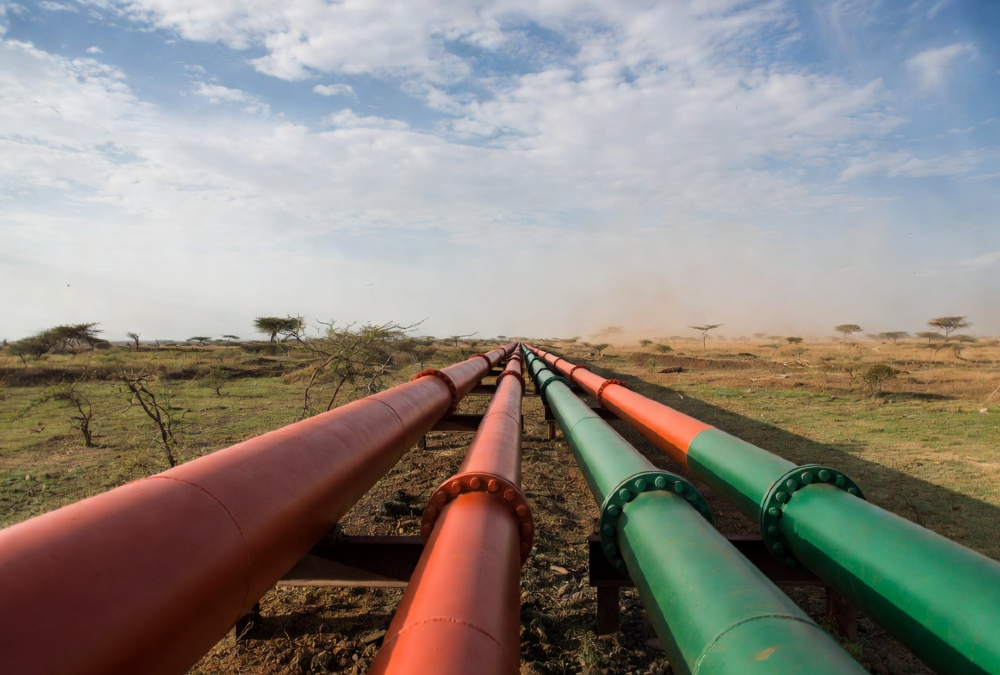
Critically, this production does not translate into full domestic value capture. Instead, crude oil is transported north through Sudan via pipeline infrastructure to Port Sudan, from where it is exported to international markets and refined in regional hubs such as Mombasa, Kenya, before returning in processed form for domestic consumption.
This arrangement underscores a defining feature of South Sudan’s economy: resource abundance paired with logistical and geopolitical dependence. Control over production does not equate to control over the value chain, leaving the country exposed to external transit risks and regional political dynamics.
Despite ongoing instability since independence in 2011, South Sudan continues to attract entrepreneurial activity. Regional investors from Ethiopia, Somalia, and Kenya have established profitable ventures in sectors ranging from trade to logistics and construction.
Some local firms have also scaled significantly, demonstrating that returns can be substantial even in high-risk environments.
However, these successes remain the exception rather than the rule. The broader investment climate is constrained by political uncertainty, weak regulatory institutions, and persistent security challenges.
As a result, many major international investors have remained on the sidelines, wary of exposure to systemic risk despite the country’s clear resource endowments and strategic location.
South Sudan, in this sense, embodies a familiar paradox in global development: exceptional natural and geographic advantages paired with fragile governance structures. The gap between potential and performance remains vast.
Closing it would require not only capital investment but also sustained institutional stabilization and regional cooperation – conditions that have so far proven elusive.
Business Insider Africa reported on April 14 that in a statement following a meeting with South Sudan’s Mining Minister Lasuba Lodoro, U.S. Ambassador Adler said the embassy had expressed “grave concerns” about opaque decision-making within the ministry, particularly in the mining sector. According to the embassy, while the United States is keen to support and expand its private sector presence in South Sudan, current conditions make it difficult to encourage further investment.
“The reason we are not in a position to successfully encourage more U.S. investment is because of the lack of transparency and security,” the statement said, noting that both issues are closely tied to how public revenue and offices are managed. The embassy added that these concerns extend beyond mining to the broader economy, reflecting systemic governance challenges that continue to undermine investor confidence.
The Republic of South Sudan became the world’s youngest nation and Africa’s 54th country on July 9, 2011. Since then, as described in a World Bank report, the country has faced significant challenges, including outbreaks of civil war (2013, 2016), subnational violence, and political contestation.
Destroying the Future of the South Sudanese People
According to World Bank estimates, more than 10 million people, two-thirds of the population, are projected to require some form of humanitarian assistance this year. The humanitarian situation is characterized by acute food insecurity, widespread displacement, fragile health and education systems and severe protection risks, particularly for women, children, people with disabilities and other vulnerable groups.
The conflict in Sudan, now entering its third year, continues to place immense pressure on South Sudan’s humanitarian and socio-economic systems.
South Sudan’s military and opposition forces are restricting humanitarian access and issuing sweeping evacuation orders that have forced hundreds of thousands of civilians from their homes, Human Rights Watch said recently. Since late 2025, both sides have issued multiple directives – at least three each – ordering civilians to leave populated areas, often without clear justification.
“Repeated pressure from both South Sudanese authorities and opposition forces on civilians to evacuate populated areas is placing hundreds of thousands of people in harm’s way,” said Nyagoah Tut Pur, South Sudan researcher at Human Rights Watch. “Warring parties should not force people to flee toward further danger and destitution and are obligated to protect civilians whether or not they evacuate areas of military operations.”
Fighting between government forces – including the South Sudan People’s Defense Forces (SSPDF) – and the Sudan People’s Liberation Army in Opposition (SPLA-IO), along with allied groups, has intensified since December 2025 in Jonglei state. At least 280,000 people have been displaced, according to the rights group.
Many have fled government bombardments, feared abuses by both sides or complied with evacuation orders. Hundreds of thousands of South Sudanese have fled to Uganda, Ethiopia and the Democratic Republic of Congo.
Human Rights Watch, citing humanitarian agencies, UN experts and media reports, said government forces carried out indiscriminate aerial bombardments in areas where evacuations had been ordered. Both sides have allegedly committed abuses, including killings, rape, looting and the destruction of civilian property – acts that may amount to war crimes or crimes against humanity.
The Republic of South Sudan became the world’s youngest nation and Africa’s 54th country on July 9, 2011. Since then, as described in a World Bank report, the country has faced significant challenges, including outbreaks of civil war (2013, 2016), subnational violence, and political contestation. These factors, along with weak management of public resources, have hindered development and intensified humanitarian needs.
The Revitalized Agreement on the Resolution of the Conflict in the Republic of South Sudan (R-ARCSS), signed in September 2018 and the formation of a Transitional Government of National Unity in February 2020 have contributed to relative stability. The transitional period was extended to February 2027, providing additional time for the government to implement provisions in the R-ARCSS and prepare the country for elections.
In discussions with the government and the armed opposition in South Sudan, my colleagues and I got the impression that the two sides were contesting for the greatest monetary benefit from the country’s resources rather than making efforts to safeguard the country’s population. There is precious little over the last several years to alter that assessment.
Many people thought independence for South Sudan came before it was fully prepared to handle it. The country has all the genuine potential to succeed as a nation, but that would seem to be a difficult task with the current government and main opposition leadership in place as no ceasefire or peace process can work unless they put aside their own interests in favor of their people, which they continue to refuse to do.
Gregory Simpkins, a longtime specialist in African policy development, is the Principal of 21st Century Solutions. He consults with organizations on African policy issues generally, especially in relating to the U.S. Government. He further acts as a consultant to the African Merchants Association, where he advises the Association in its efforts to stimulate an increase in trade between several hundred African Diaspora small and medium enterprises and their African partners.
