
Business
The Humility Premium: Competitive Advantage Beyond the Balance Sheet
The most consequential risk factor in any investment does not appear in a prospectus. It lives in the mind of the CEO.

By Ajay Wasserman
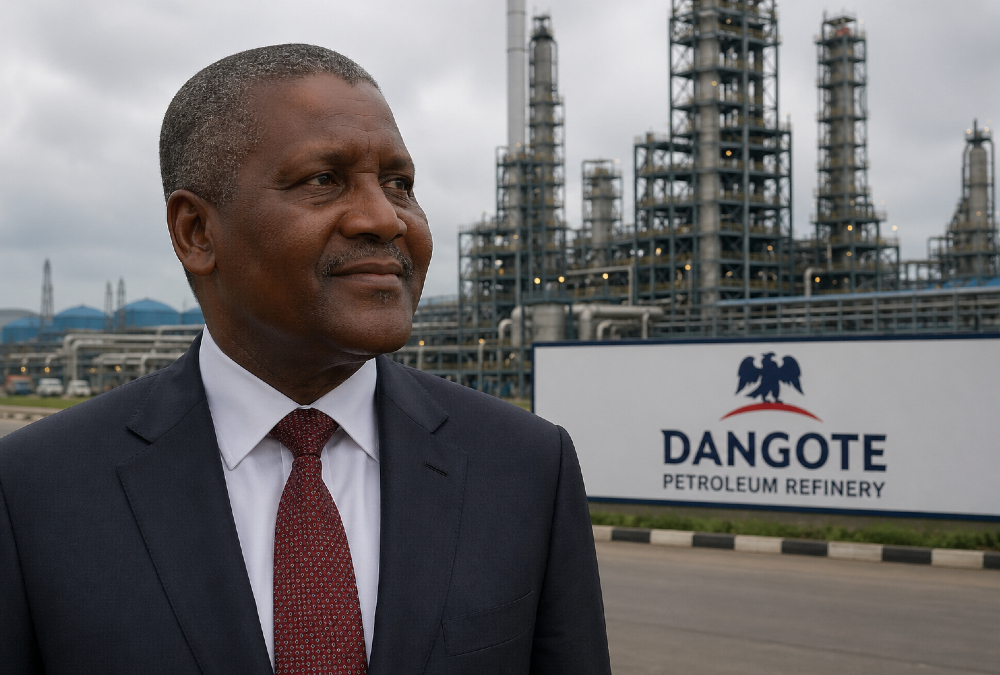
Early in his career, Aliko Dangote built a flourishing trading enterprise importing sugar, rice, and cement across Nigeria. By any conventional measure, the business was a success – and the logical next step would have been to scale what was already working.
He chose a harder path.
Dangote stepped back and asked a question that few successful operators dare to pose: What will make this business endure? That inquiry led him to Brazil, where manufacturing companies were thriving even amid broader economic distress.
The lesson he drew was not merely logistical – it was philosophical. A winning model, left unexamined, becomes a liability. The willingness to question it, even at the peak of its performance, is the rarest form of executive discipline.
This is precisely where investors routinely misread risk.
The Ego Problem No Spreadsheet Can Capture
Ego does not announce itself in quarterly earnings. It reveals itself slowly – in decisions that take too long, in feedback that goes unheeded, in market signals that are rationalized away rather than acted upon.
It shows up in the quiet departure of talented employees who concluded, before management did, that the organization had stopped listening. And it shows up, eventually, in declining returns.
The relationship between executive humility and organizational performance is not sentimental – it is structural. Leaders who listen adapt faster to market changes and surface blind spots earlier, generating better thinking across the organization as a compounding effect over time.
What Sophisticated Investors Should Be Evaluating
For investors who look beyond the strategy deck to the posture of the leadership behind it, several diagnostic questions become essential:
Learning velocity. How quickly does the leadership team update its thinking when new data emerges? An organization’s speed of adaptation is often a more reliable predictor of long-term performance than the quality of its current plan.
Listening infrastructure. Does the company maintain robust customer feedback loops? Are internal communication channels genuinely transparent, or performatively so? Is cross-functional collaboration structurally encouraged or merely announced in values statements?
The response to being wrong. Defensiveness is expensive – it delays course correction and erodes the trust of the people closest to the problem. Adaptability, by contrast, compounds. Watch how a leader behaves in the aftermath of a visible mistake, and you will learn more about the organization’s durability than any financial model can tell you.
Confidence versus closure. The best executives are decisive without being inflexible. They hold convictions firmly enough to act and loosely enough to revise. That distinction – between confidence and ego – is where long-term winners are separated from one-cycle successes.
The Enduring Lesson
In complex, dynamic markets, no one is right for long. The companies that sustain outperformance are rarely those with the most sophisticated initial strategy.
They are the ones that learn the fastest – that build organizations capable of continuous revision, honest self-assessment, and strategic renewal.
That capacity does not emerge from process alone. It begins with the intellectual humility of the person at the top.
Dangote’s turn toward manufacturing was not an act of desperation. It was an act of curiosity – a leader choosing to be educated by the world rather than confined by his own prior success.
Decades later, it remains one of the most instructive examples in modern business of what it looks like when a founder refuses to let a winning formula become a ceiling.
For investors willing to look, leadership humility is not a soft variable. It is the variable – the one that determines whether everything else holds.
Ajay Wasserman is the Group CEO and Chief Investment Officer of Fio Capital Group, a private family office and investment holding company based in Pretoria. Focused on empowering entrepreneurs and fostering sustainable growth, he believes the future success of global economies depends on the innovation and leadership of private entrepreneurs and businesses.
