
Owusu on Africa
Is Africa Responding to Geopolitical Shifts on the Global Stage?
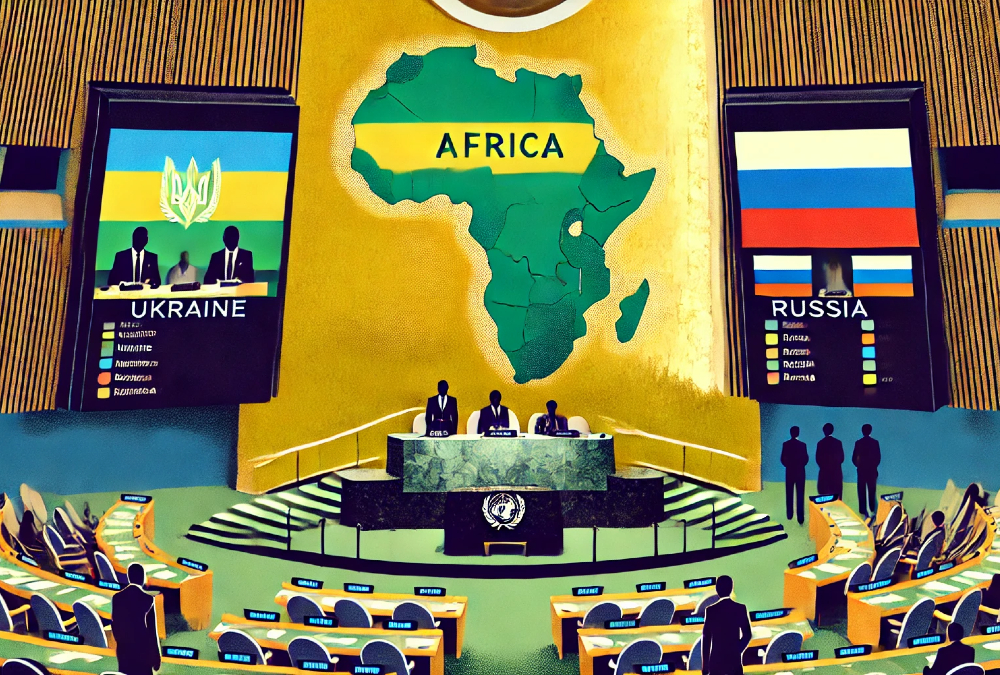

By Fidel Amakye Owusu
The current structure and regulations of the United Nations make it nearly impossible to pass an effective resolution against Russia in the Security Council. As a permanent member, Russia wields veto power, effectively blocking any such efforts.
This leaves the General Assembly (UNGA) as the only forum where resolutions against Russia can be put to a vote.
Since the start of the Ukraine war, the UNGA has adopted multiple resolutions condemning Russia’s actions. The most recent, passed on Monday, February 24, 2025, closely mirrored the first resolution from March 2022.
That initial vote demanded that Russia cease its use of force, reaffirmed Ukraine’s sovereignty, and declared Russia’s so-called “special military operation” illegal.
Africa’s Shifting Stance
In 2022, Eritrea was the only African nation to vote against the resolution, standing in support of Russia. Meanwhile, 28 African countries voted to condemn Russia, 18 abstained, and 7 were absent.
At the time, Africa largely stood with Ukraine.
Since then, Ukraine has intensified its diplomatic outreach across the continent, recognizing the UNGA as the primary forum where discussions on the war continue. Russia, too, has ramped up its engagement, with Foreign Minister Sergey Lavrov visiting multiple African nations to solidify alliances.
As global power dynamics continue to evolve, Africa’s approach to the Ukraine conflict underscores a broader recalibration of its diplomatic alignments. Whether this trend will persist remains to be seen, but the latest vote suggests that African nations are increasingly weighing their positions with careful strategic consideration.
The latest UNGA vote, however, marks a notable shift in Africa’s response. Compared to the 2022 resolution, the voting pattern has changed significantly:
- Only 13 African countries voted in favor of the resolution.
- Eight voted against it.
- Twenty-four abstained.
- Nine countries were absent.
Notably, several countries that had previously supported Ukraine – such as Ghana, Botswana, Zambia, Gabon, Kenya, Rwanda, Libya, Mauritania, Lesotho, Malawi, São Tomé and Príncipe, and Chad – chose to abstain this time.
Among the eight nations that voted against the resolution, Niger was the only one that had previously supported the 2022 resolution, marking a clear reversal. Eritrea, meanwhile, remained consistent in its opposition.
On the other hand, all but one of the 13 African countries that supported the latest resolution had also backed the 2022 vote. This group includes Egypt, Tunisia, Liberia, Sierra Leone, Somalia, Côte d’Ivoire, Nigeria, Djibouti, and five island nations.
The only newcomer was The Gambia.
The Influence of Global Politics
Domestic political changes in several African countries may have played a role in shifting their positions. However, the most striking geopolitical factor is the unexpected shift in U.S. policy. With the United States now opposing the resolution, many African nations appear reluctant to take a definitive stance – especially on resolutions that, while symbolic, carry no legal weight.
As global power dynamics continue to evolve, Africa’s approach to the Ukraine conflict underscores a broader recalibration of its diplomatic alignments. Whether this trend will persist remains to be seen, but the latest vote suggests that African nations are increasingly weighing their positions with careful strategic consideration.
Fidel Amakye Owusu is an International Relations and Security Analyst. He is an Associate at the Conflict Research Consortium for Africa and has previously hosted an International Affairs program with the Ghana Broadcasting Corporation (GBC). He is passionate about Diplomacy and realizing Africa’s global potential and how the continent should be viewed as part of the global collective.
