
Owusu on Africa
My Presentation at the US Army War College: Security Issues in West Africa and the Sahel

By Fidel Amakye Owusu
On Tuesday, February 4, 2025, I had the distinct honor of being a guest speaker at the US Army War College Africa Regional Program in Carlisle, Pennsylvania. Though I joined remotely, the experience was both insightful and engaging.
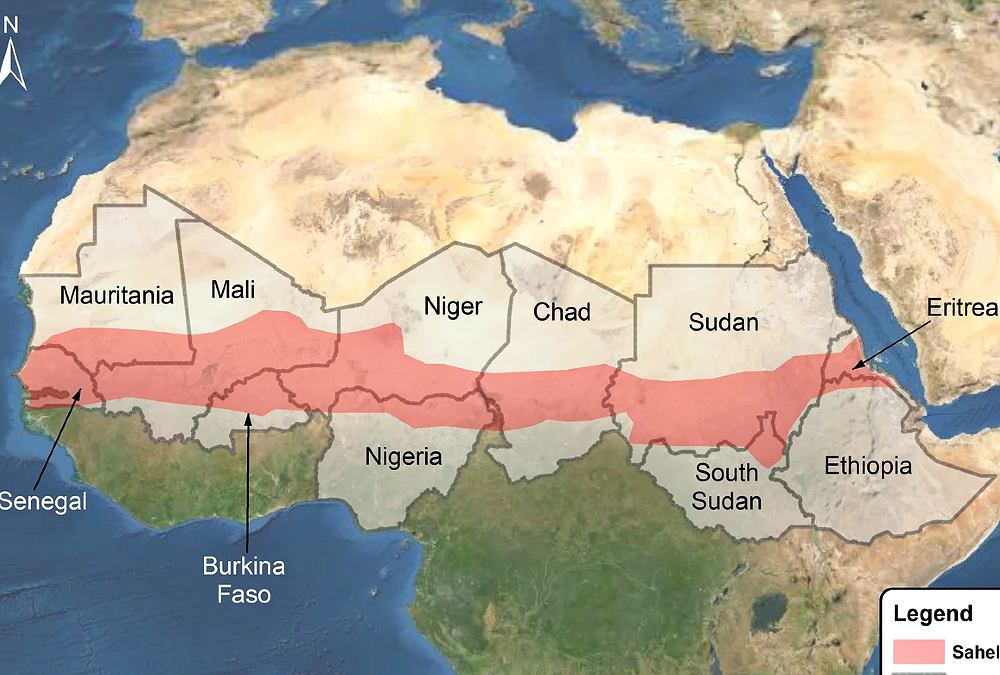
The session included 68 security professionals from the US and other nations, as well as esteemed faculty members. My presentation focused on the pressing security challenges in West Africa and the Sahel, followed by a dynamic Q&A session.
The participants, many of whom held the rank of Lieutenant Colonel or higher, asked thought-provoking questions that deepened our collective understanding of the region’s complexities.
The Shifting Security Landscape
The past year has been particularly challenging for the US military presence in the Sahel. Both Niger and Chad have formally requested the withdrawal of US forces from their territories.
While American military operations – ranging from surveillance to counterterrorism efforts – have played a significant role in combating extremism, shifting political dynamics have made continued engagement increasingly difficult.
Similarly, France, a long-standing ally of the US and a historically dominant military force in the region, has seen an unprecedented decline in its influence. French troops have been expelled from Mali, Burkina Faso, Niger, Chad, and, most recently, Senegal and Côte d’Ivoire (Ivory Coast).
These developments signal a broader geopolitical realignment with far-reaching implications.
Understanding the Driving Forces
During my presentation, I explored the key factors that draw global powers, including the US, to West Africa. These include economic interests, security concerns related to rising terrorism, the region’s vast natural resources, and its strategic coastline.
Partnerships do not always yield immediate or expected results, but they remain vital. Learning from past missteps and adapting to new realities is essential for charting a sustainable path forward.
One of the most debated topics during the Q&A was the efficacy of US military partnerships in West Africa and the Sahel. Some participants questioned whether these partnerships yield tangible results or if they merely represent a costly exercise in diplomacy with little return on investment.
I emphasized that the US should not be burdened by the legacy of post-colonial French policies that have, at times, proved counterproductive. Moreover, the expulsion of US forces from Niger and Chad should not lead to a wholesale disengagement from the region.
The US continues to maintain strong and beneficial security partnerships in coastal West Africa, which should not be underestimated or overlooked.
Coup Dynamics and the Future of Engagement
Another pressing topic was the wave of military coups in the region, often perceived as mere power grabs by ambitious officers. However, I argued that not all coups stem from military opportunism.
In some cases, they have been precipitated by civilian leaders who seek to entrench themselves in power, prompting public and military backlash. Notably, the rise of anti-Western sentiment in parts of the region has coincided with these military takeovers, adding another layer of complexity.
The strategic importance of West Africa cannot be overstated. When a power vacuum is created, other actors are quick to fill it.
A telling example is China’s growing military footprint – marked by the historic docking of three Chinese warships in Nigeria in mid-2023. This development underscores the urgent need for the US to reassess its engagement strategy in the region.
Looking Ahead
Partnerships do not always yield immediate or expected results, but they remain vital. Learning from past missteps and adapting to new realities is essential for charting a sustainable path forward.
The US must carefully balance its security interests, diplomatic relationships, and regional partnerships to ensure a stable and strategically advantageous presence in West Africa and the Sahel.
Fidel Amakye Owusu is an International Relations and Security Analyst. He is an Associate at the Conflict Research Consortium for Africa and has previously hosted an International Affairs program with the Ghana Broadcasting Corporation (GBC). He is passionate about Diplomacy and realizing Africa’s global potential and how the continent should be viewed as part of the global collective.
