
Owusu on Africa
Why empowering women is fundamental to ensuring food security in Africa
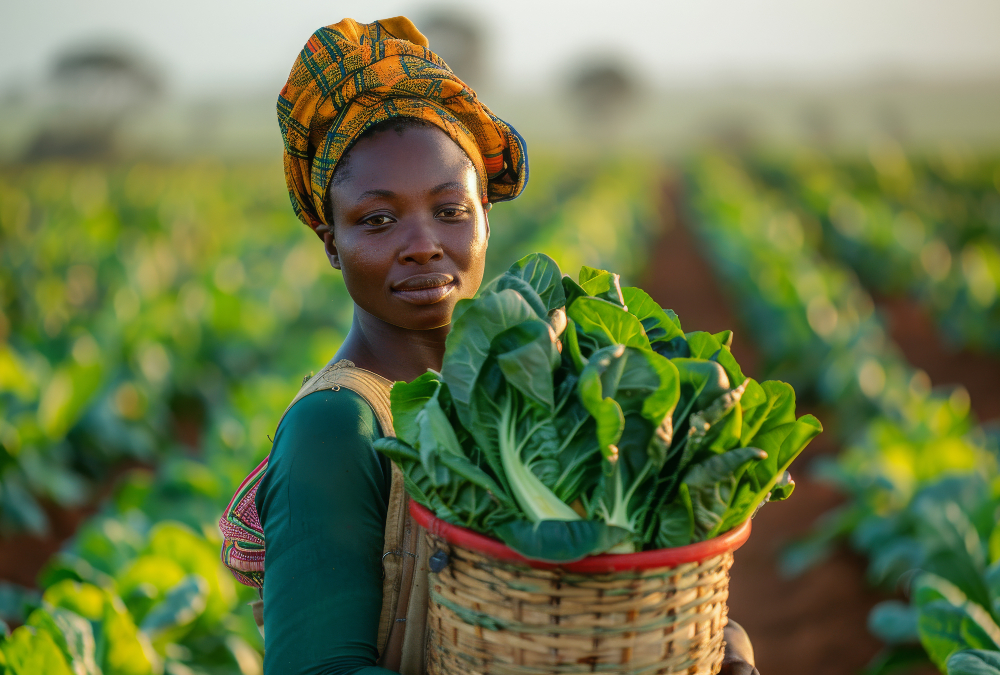

By Fidel Amakye Owusu
In recent years, food insecurity has emerged as a significant concern across Africa. Earlier this year, Nigeria declared a national emergency on food security.
As Africa’s largest economy and most populous country, Nigeria has committed to providing farmers with improved seeds and subsidized fertilizers as part of its efforts to address this crisis. These resources are crucial for the millions of smallholder farmers who form the backbone of the nation’s food production system, responsible for feeding tens of millions of people. Following the disruptions caused by the war in Ukraine, which had a global impact on food supplies, many African nations are reevaluating their food production strategies.
But what does this mean for Africa’s future?
One of the defining characteristics of agriculture across Africa is the land tenure system, which often results in food being produced primarily by smallholder farmers. This sub-sector contributes significantly to the continent’s food production.
A particularly important aspect of this system is the role of women, who make up the majority of the labor force in smallholder agriculture across Africa. In many regions, including Akan communities in Ghana, women are the traditional landowners. Even in predominantly patriarchal societies, women dominate food production, both in cultivating crops and in post-harvest activities.
After harvesting, women play a critical role in the supply chain by bringing produce to local markets, where urban traders, often women themselves, purchase and transport the food to cities.
What can governments do?
Since women are central to food production in Africa, any government-led effort to combat food insecurity must focus on empowering them. This could be achieved through training programs and workshops that teach modern farming techniques and best practices, which would help increase agricultural output and reduce pre- and post-harvest losses – key steps in addressing food shortages on the continent.
Moreover, providing financial support to the millions of women in the sector is crucial. Access to funding has long been a challenge, as financial institutions are often reluctant to offer loans to farmers due to the perceived risks. However, governments could leverage financial technology (FinTech) to offer financial support, potentially by transferring funds directly to mobile money wallets. Coupled with the provision of seeds and fertilizers, this approach could help reverse the current food insecurity crisis.
Africa’s vast expanses of arable land should prevent the continent from relying on external food sources. Strengthening the human resources driving food production, especially women, could make a significant difference in overcoming food insecurity.
Fidel Amakye Owusu is an International Relations and Security Analyst. He is an Associate at the Conflict Research Consortium for Africa and has previously hosted an International Affairs program with the Ghana Broadcasting Corporation (GBC). He is passionate about Diplomacy and realizing Africa’s global potential and how the continent should be viewed as part of the global collective.
