
Owusu on Africa
Why are Ethiopia and the DR Congo leading the arms race in Africa?
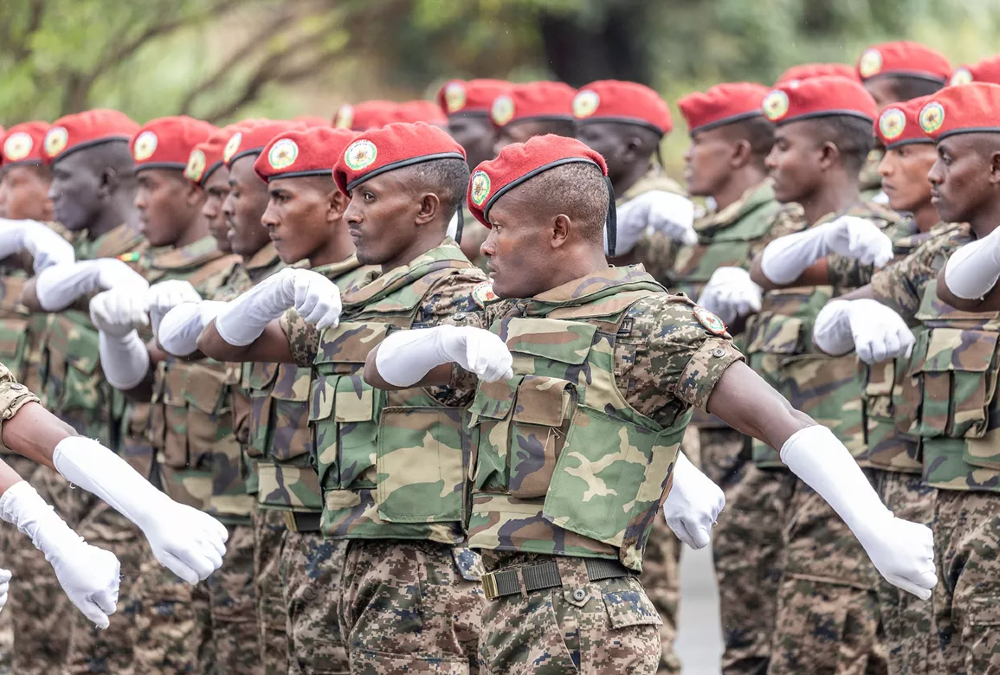

By Fidel Amakye Owusu
In junior high school, particularly in a subject called “social studies” under the Ghanaian curriculum, we were taught that the assassination of Austrian Archduke Franz Ferdinand wasn’t the direct cause of the First World War. Instead, the archduke’s unexpected murder served as a “spark” that ignited the conflict. The primary causes of this massive war lay in various tensions across Europe, including competition for influence in Africa.
The most critical factor was that two of Europe’s dominant powers at the time – Britain and Germany – had been preparing for war for years. Both nations were locked in a dangerous arms race, drastically boosting their naval and infantry forces, while air power began to emerge as a significant factor.
The scale of destruction and loss of life during the war reflected the intense preparations leading up to its outbreak.
So, what lessons can we draw from this today?
Recently, one of my esteemed connections, Colin Smith, a fellow advocate for African issues, tagged me in a post referencing an article that highlighted Ethiopia and the Democratic Republic of the Congo (DR Congo) as leading “the arms race” in Africa. Just a week earlier, I had summarized the key factors driving Africa’s growing defense budget.
Interestingly, unlike Britain and Germany in the late 19th and early 20th centuries, Ethiopia and the DR Congo are not in direct competition with one another. This raises important questions about why their military spending has increased so significantly, drawing the attention of experts.
What are the reasons behind this?
While interstate conflicts in Africa are relatively rare, both Ethiopia and the DR Congo are either experiencing, or may soon experience, such conflicts. Ethiopia, after years of tension and conflict with Eritrea, now faces a fragile situation with its neighbor Somalia, which could potentially worsen.
Meanwhile, the DR Congo is in a strained relationship with Rwanda, a smaller yet influential neighbor, particularly over issues in the eastern region of the DR Congo. Unfortunately, the possibility of a direct confrontation between the two countries has become more apparent.
Additionally, both nations are struggling to manage local armed groups and sub-state actors. Ethiopia is dealing with regional armed forces, while the DR Congo faces numerous militias. In addition, terrorism further complicates the security landscape in both countries.
Looking ahead, it’s important to understand that military power alone cannot address these threats, especially in the case of domestic conflicts. Diplomatic efforts often offer better solutions for resolving interstate disputes. Therefore, regional and continental organizations must take a proactive approach to conflict resolution. The opportunity cost of rising military expenditures is significant and must be carefully considered.
Fidel Amakye Owusu is an International Relations and Security Analyst. He is an Associate at the Conflict Research Consortium for Africa and has previously hosted an International Affairs program with the Ghana Broadcasting Corporation (GBC). He is passionate about Diplomacy and realizing Africa’s global potential and how the continent should be viewed as part of the global collective.
