
Owusu on Africa
To understand Africa, you should pay attention to ethnicity

By Fidel Amakye Owusu
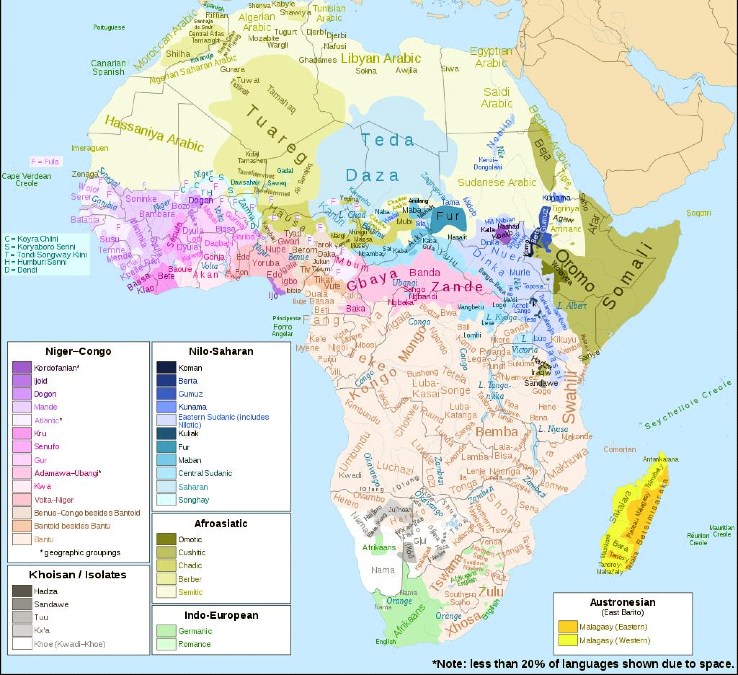
In his exploration of the “Regional Security Complex Theory,” British International Relations Professor Barry Buzan thoroughly analyzed Africa but noted that limited attention has been paid to sub-state actors, particularly ethnic groups, within the African context. Most research has primarily centered around state, regional, and some transnational actors.
Given Africa’s immense ethnic diversity – Nigeria alone is home to numerous ethnic groups – this represents a critical gap in understanding the continent’s political and social landscape. There has been insufficient exploration of how ethnicity interacts with Africa’s political, socio-economic, and religious spheres.
Why is this important?
Beyond the basic components of statehood – legal sovereignty, government, territory, and population – few African nations have achieved true “nation-state” status. While the concept of a “nation-state” is difficult to fully realize, several multi-ethnic countries worldwide have managed to integrate diverse national identities through strong institutions and inclusive governance.
In contrast, ethnic identity in Africa remains highly influential, often serving as the primary source of identity for many citizens across different states. Ethnicity frequently plays a more prominent role in African politics than other factors such as religion, gender, or ideology.
Although these dynamics are not unique to Africa, they are often overlooked in global discussions. Even decades after independence, the expectation persists that ethnic interests will not overshadow “state interests.” Unfortunately, the reality is often the opposite.
A close look at the upcoming elections across Africa over the next two years is likely to show that ethnicity will be a key driver of voting behavior. The recent elections in Nigeria have already illustrated this trend.
While similar voting patterns are observed in other parts of the world – such as among African Americans, Jewish Americans, and Cuban Americans – the presence of robust institutions and transparent electoral systems in these regions typically ensures that individuals from these groups have better opportunities in the aftermath of elections.
In contrast, Africa’s entrenched ethnic interests often result in zero-sum politics, where the winner takes all. This approach heightens tensions, often giving rise to conflicts with ethnic undertones.
Violent extremists also exploit these divisions to further their agendas. In countries like Mali, Burkina Faso, and Mozambique, groups such as the Tuareg, Fulani, and Mweni have been co-opted by extremists to fuel instability.
Much like colonial powers of the past, modern leaders who aim to consolidate power often rely on ethnic alliances, prioritizing short-term political gains over long-term peace.
For individuals, businesses, international organizations, and others interested in understanding Africa, it is essential to recognize the significant role ethnicity plays in shaping the continent’s political and social dynamics.
Fidel Amakye Owusu is an International Relations and Security Analyst. He is an Associate at the Conflict Research Consortium for Africa and has previously hosted an International Affairs program with the Ghana Broadcasting Corporation (GBC). He is passionate about Diplomacy and realizing Africa’s global potential and how the continent should be viewed as part of the global collective.
