
Owusu on Africa
The diplomatic aspect of the scramble for Africa continues: Russia considering more visa-free regimes

By Fidel Amakye Owusu
Africa’s abundant natural resources, emerging markets, strategic geographic position, and critical role in global security have turned it into a battleground for influence among major world powers.
The continent’s wealth of rare earth metals and other essential resources, coupled with its potential for economic growth, has drawn the focus of key players like the United States and China. In what many have dubbed a “New Cold War,” these nations are intensifying their efforts to build alliances and expand their influence across Africa’s 54 sovereign states and numerous territories, often with complex and risky consequences.
Recent developments highlight the growing competition: Russia has bolstered its security partnerships with several Sahel nations, China continues to increase its investments, and the U.S. has renewed its focus with strategic projects like the Lobito Corridor. Meanwhile, other nations, often referred to as “middle powers,” such as India, Turkey, Israel, and the Gulf States, are also vying for influence.
What does this geopolitical competition mean for Africa?
One often overlooked aspect is the diplomatic dimension. Russia’s recent move to eliminate visa requirements for several African countries underscores the critical role of diplomacy in this power struggle.
With 54 sovereign states, Africa has the highest number of nations for diplomatic engagement, making it a prime region for securing support in international forums. Backing from African nations can significantly elevate a country’s position and sway on the global stage.
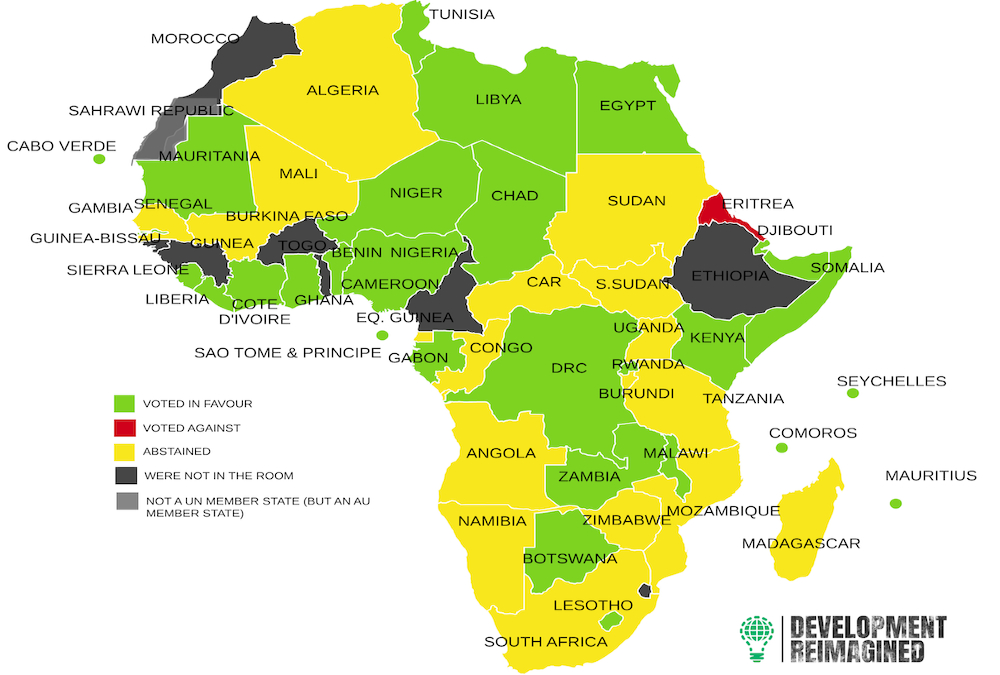
A case in point is the absence of several African nations from the recent Russia-Africa summit in St. Petersburg, which dealt a blow to the Kremlin’s image. Meanwhile, Ukraine has stepped up its diplomatic efforts across Africa, especially after a UN General Assembly vote in which many African countries condemned Russia’s invasion. Kyiv has since prioritized strengthening its diplomatic ties on the continent through numerous high-level visits.
The competition extends beyond Russia and Ukraine. European nations are also vying to maintain their diplomatic presence, while Russia has signed visa-free agreements with countries like Mozambique, Angola, Malawi, Tunisia, Morocco, and São Tomé and Príncipe. Although diplomacy involves more than just visa policies, these agreements symbolize a growing closeness.
The U.S. has also been ramping up its diplomatic efforts, recently announcing support for African nations to gain permanent seats on the United Nations Security Council – an initiative aimed at enhancing Washington’s influence in the region.
Ultimately, African countries should leverage the interests of these global powers to negotiate deals that benefit the continent’s economic development and improve the quality of life for ordinary Africans.
Fidel Amakye Owusu is an International Relations and Security Analyst. He is an Associate at the Conflict Research Consortium for Africa and has previously hosted an International Affairs program with the Ghana Broadcasting Corporation (GBC). He is passionate about Diplomacy and realizing Africa’s global potential and how the continent should be viewed as part of the global collective.
