
Owusu on Africa
Security alerts in Tanzania: spillover from Cabo Delgado?

By Fidel Amakye Owusu
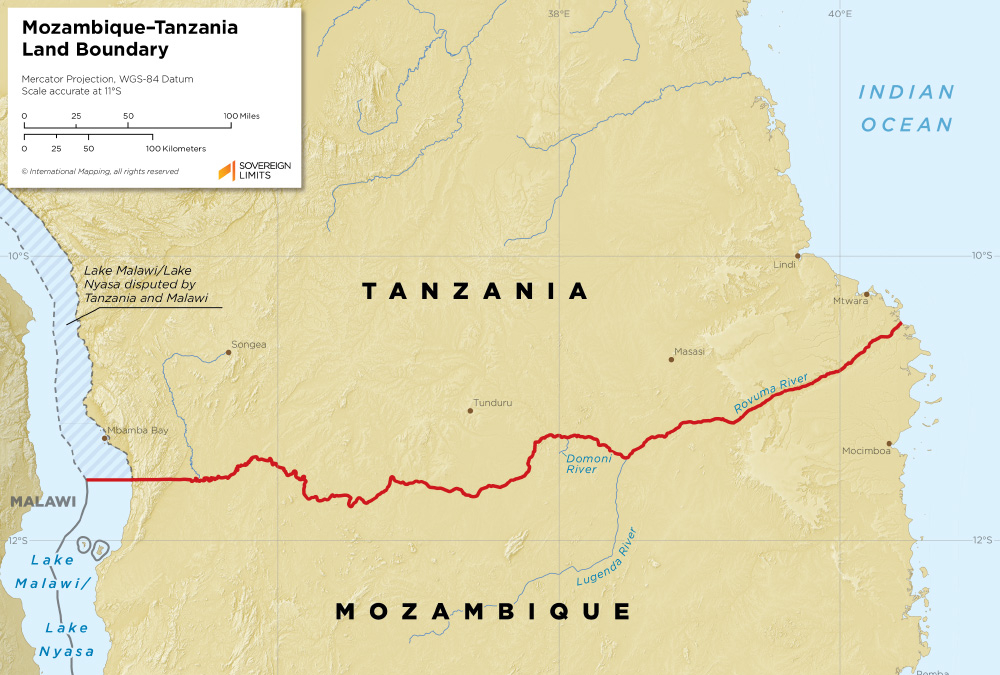
The Rovuma River serves as a natural geographical boundary between Mozambique and Tanzania, defining part of the border along the Indian Ocean coastline in East Africa. Extending almost a thousand kilometers, this river physically separates the two countries while also uniting them through shared historical and cultural ties.
The river’s significance is highlighted in Tanzania’s southern administrative region, which is named after the Rovuma and lies just north of its western banks. Due to this proximity, various ethnic groups, such as the Makonde and Yao, have settled on both sides of the river.
These communities, despite being politically divided, maintain strong cultural and social links that transcend national borders. This geographical and cultural setting has important implications for regional stability.
As I have mentioned previously, violent extremism has spilled over from the Cabo Delgado province in northern Mozambique into southern Tanzania. Recently, the United Kingdom’s Foreign, Commonwealth, and Development Office issued a travel advisory warning of potential attacks in the area.
Tanzania has already faced several attacks in its southern regions, many of which have been coordinated from across the border. In response, the government has intensified its counterterrorism operations, focusing on anti-radicalization programs to curb the influence of extremist groups.
The Mtwara region, located directly across from Cabo Delgado, has become a focal point for terrorist activities. The group known as “al-Shabaab” in Mozambique has exploited this border region to create a “composite threat” that affects both Tanzania and Mozambique.
As noted in previous analyses, the term “composite threat” describes the strategy used by extremist groups operating along border regions. By working with local operatives and utilizing the porous borders, they can evade the military forces of both countries.
This tactic is not exclusive to the Rovuma region. Similar strategies have been observed in the “three borders” area of Mali, Burkina Faso, and Niger, as well as among ISIS militants along the Somalia-Ethiopia border and Sinai extremists near Gaza.
However, it is essential to acknowledge that militants in southern Tanzania have their own ambitions. As they strengthen their local presence and recruit more followers, they may become bolder in their actions, potentially expanding their operations to target larger cities.
Historically, in 1998, Dar es Salaam was one of the first cities to be attacked by al-Qaeda, a then lesser-known group, in an incident planned outside the country. Today, the threat is increasingly internal. This calls for proactive security measures and the development of local solutions that engage community leaders and traditional authorities to address the situation effectively. It is crucial for security planners to be aware of ethnic biases, which can complicate these efforts and hinder effective counterterrorism responses.
Fidel Amakye Owusu is an International Relations and Security Analyst. He is an Associate at the Conflict Research Consortium for Africa and has previously hosted an International Affairs program with the Ghana Broadcasting Corporation (GBC). He is passionate about Diplomacy and realizing Africa’s global potential and how the continent should be viewed as part of the global collective.
