
Owusu on Africa
Owusu on Africa: Nigeria’s food security crisis and Russia’s grain deal – what has changed?

By Fidel Amakye Owusu
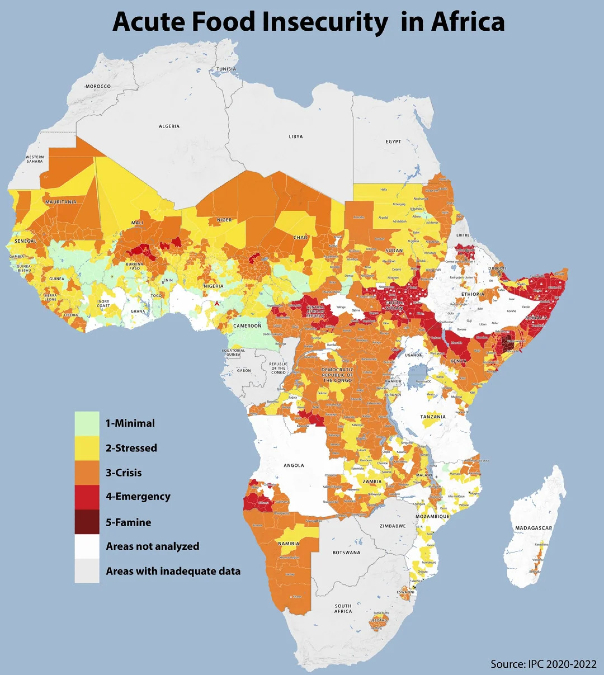
Eleven months ago, I wrote about Africa’s food crisis, suggesting it was more severe than it appeared. As expected, there were differing opinions.
Last week, Nigeria’s federal government declared a state of emergency on food security, prompting many Africans to recognize the gravity of the situation. Food prices have been rising since the Russia-Ukraine conflict, and even before that. Still, few expected Nigeria, the continent’s largest economy with vast arable lands, to make such a declaration at this time.
What’s the Impact?
While the government attributed the emergency to rising food prices, the proposed measures indicate deeper issues within Nigeria’s agricultural sector. The government has promised to use savings from the recently removed subsidy to support the sector. In the short term, they ordered the release of fertilizer and seeds to farmers and households.
Across Africa, food security often relies on imported grains. Billions of dollars’ worth of food are imported regularly, while much of Africa’s agricultural exports are non-food commodities like cocoa, tea, tobacco, cotton, rubber, and coffee, occupying millions of hectares of fertile land. This results in local staples being deprioritized, often left to smallholder farmers who receive minimal support from government policies.
The Grain Deal and Its Aftermath
Recently, the Kremlin announced the termination of the grain deal, which allowed tons of grain to be shipped from the Black Sea to the rest of the world, particularly Africa. This development does not bode well for the continent’s food security outlook.
Diplomatic efforts by African leaders to secure the grain deal in Kyiv and Russia have yielded no tangible results. Putin appears to be leveraging Crimea’s “security” against the deal, and with Ukraine determined to reclaim the peninsula, Africa must focus on achieving food sufficiency internally, at least in the medium to long term.
The Path Forward
Africa’s political independence, economic transformation, and the survival of its youthful population depend on robust agricultural systems prioritizing food production. With a growing youth population consuming more, it is crucial that this consumption benefits domestic economies. Food growers must be supported to capitalize on the high demand, and proactive measures must be taken before emergencies arise.
Identifying and addressing our problems is not doom-saying; it is a necessary step towards a better Africa. By recognizing and tackling these issues head-on, we can create a more resilient and self-sufficient continent.
Fidel Amakye Owusu is an International Relations and Security Analyst. He is an Associate at the Conflict Research Consortium for Africa and has previously hosted an International Affairs program with the Ghana Broadcasting Corporation (GBC). He is passionate about Diplomacy and realizing Africa’s global potential and how the continent should be viewed as part of the global collective.
