
Owusu on Africa
Owusu on Africa: An ‘interesting’ interview on the 2024 Korea-Africa summit
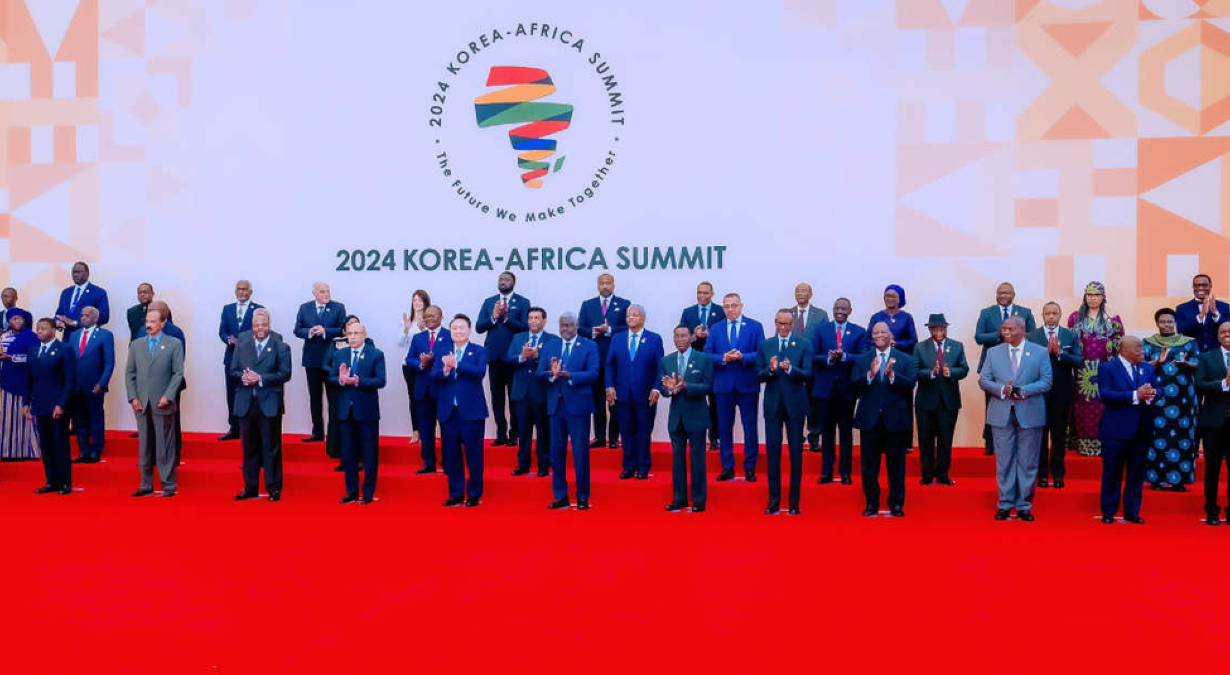

By Fidel Amakye Owusu
Recently, I received a message from a media agency based in Europe. The purpose was to invite me to discuss two significant events: the Korea-African summit scheduled for 4-5 June 2024 in Seoul, and the recent diplomatic efforts in the Sahel by the president of Senegal.
Although I was familiar with the journalist who contacted me, the media agency she represented was new to me. Interestingly, she sought my opinion on the summit before confirming the interview.
During our conversation, it became apparent that she expected a more pessimistic and dismissive viewpoint regarding the summit. Her tone suggested skepticism, implying that the summit might be unnecessary and potentially undermining to Africa.
Having dealt with media outlets with distinct ideological leanings before, I emphasized my approach: focusing on analysis grounded in reality rather than idealism. While I have my principles, I strive to provide realistic assessments. After some discussion, she reluctantly agreed, and we scheduled the interview for the afternoon.
During the interview, the anticipated questions were posed, starting with why African leaders would attend a summit in South Korea.
I began by providing concrete examples. I noted that the phone I was using for the video interview was a Samsung device, and the television I used was also Korean-made. Additionally, I mentioned that Hyundai and KIA vehicles are prevalent in Ghana, emphasizing the significant presence of Korean companies in Africa.
Furthermore, I pointed out that South Korea boasts one of the largest economies in Asia, far surpassing any African country. I explained the historical context of South Korea’s development post-Japanese colonization and the Korean War, highlighting its transformation into a global “middle power.”
While South Korea achieved independence around the same time as some African states, our developmental trajectories and outcomes have diverged. I suggested that if African countries seek examples to emulate, South Korea would undoubtedly be among them.
As I elaborated, my time on the program abruptly ended, indicating a somewhat abrupt conclusion to my participation.
I would also like to emphasize that diplomatic relations between African states and South Korea could potentially offer a less manipulative alternative to engagements with major powers. The critical issue is not where summits are held, but rather how effectively they serve our countries’ interests and aspirations.
In conclusion, my discussion underscored the significance of South Korea-Africa relations and the potential mutual benefits they could offer, highlighting the importance of constructive engagement in international diplomacy.
Fidel Amakye Owusu is an International Relations and Security Analyst. He is an Associate at the Conflict Research Consortium for Africa and has previously hosted an International Affairs program with the Ghana Broadcasting Corporation (GBC). He is passionate about Diplomacy and realizing Africa’s global potential and how the continent should be viewed as part of the global collective.
