
Opinion
Africa’s 4% Mirage: Why Growth Is Not Enough
Africa’s economy continues to expand at an impressive clip. But the real question is not how fast the continent is growing – it is whether that growth is being converted into lasting structural change.

By Gregory September
Africa’s economy is projected to grow at roughly 4.2 percent in 2026, according to the African Development Bank’s latest Economic Outlook. Against a backdrop of global turbulence – persistent inflation in advanced economies, tightening credit conditions, and geopolitical fragmentation – that figure is, by any measure, resilient.
Yet resilience and transformation are not the same thing. And conflating them may be Africa’s most consequential analytical error.
A Number in Context
In a mature, slow-growing economy, a 4 percent growth rate is cause for genuine celebration. In Africa – a continent of 1.5 billion people, the youngest median age of any major region, and urbanization rates that are straining cities faster than infrastructure can be built – that same number tells a far more complicated story.
The denominator matters. So does the rate of change in the underlying demand that growth must meet.
Africa faces not one structural pressure but several simultaneously: a widening infrastructure deficit, a youth population entering the labor market at scale, rapid and often unplanned urbanization, and unemployment rates that remain stubbornly high in many countries. A growth rate that would be transformative in one context is barely adequate in another.
Three Structural Realities
Three interconnected dynamics define this challenge.
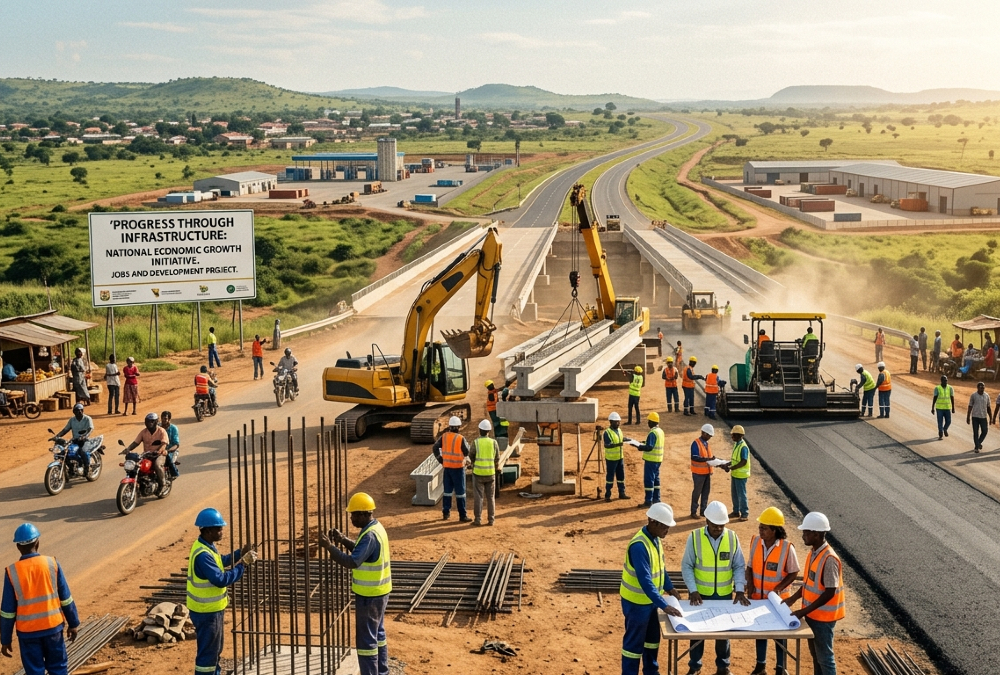
First, Africa’s infrastructure gap remains substantial. Roads, power, water, logistics – the physical backbone of any productive economy – are underfunded relative to need across much of the continent. Capital is flowing in, but not fast enough, and not always to the right places.
Second, Africa is the world’s youngest continent. That is frequently cited as a demographic dividend – and it could be. But a dividend only pays out when young people are absorbed productively into the economy. Without commensurate investment in education, skills, and job creation, demographic youth becomes demographic pressure.
Third, implementation capacity varies sharply across African states. Some governments have demonstrated a genuine ability to translate policy into outcomes. Others have not. This variance – in institutional quality, bureaucratic competence, and political accountability – may matter more than aggregate growth statistics in determining which countries lift their populations out of poverty and which do not.
The Real Constraint
This is why the central question for Africa’s development over the coming decade is not “how high can growth go?” but “how effectively can growth be converted into broad-based transformation?”
Infrastructure, in this framing, is not merely a logistics problem. It is an expression of state capability. Building a road requires not just capital but procurement systems, engineering oversight, contract enforcement, and maintenance planning.
The countries that can do all of those things consistently are the countries that turn growth into development. The ones that cannot often find that GDP figures rise while living standards stagnate.
Africa does not lack for capital interest. Sovereign wealth funds, development finance institutions, and private equity have all identified the continent as a frontier opportunity. What remains scarcer – and harder to import – is the institutional infrastructure to deploy that capital effectively.
The Right Question
The African Development Bank’s 2026 projections offer grounds for cautious optimism. But optimism should be grounded in specifics, not aggregates. A continental growth rate is a headline.
The real story lies beneath it: in which sectors growth is occurring, in which countries, and whether the governance systems exist to ensure it reaches those who need it most.
Higher growth rates matter. But stronger implementation capacity may matter more. The countries that invest in building state systems capable of executing policy at scale – not just attracting investment, but managing it – are the ones most likely to define Africa’s next development chapter.
The 4 percent figure is worth noting. What it does not tell us is worth examining far more carefully.
Gregory September is a South African academic, author, and geopolitical analyst with extensive experience in government and Parliament. He is the founder and CEO of SAUP (Sustainability Awareness and Upliftment Projects NPC), which focuses on sustainability education and community development. He previously served as Head of Research and Development for the Parliament of South Africa. His work centers on sustainability, African geopolitics, and economic development, and he regularly contributes to analysis of global political and economic affairs.
