
Opinion
Ethiopia: Hydro electric power development indispensable to economic transformation
By Molla Mitiku Ayenew
Some three decades ago Ethiopia was in a dire situation. Millions of Ethiopians were affected by a devastating drought that displaced thousands internally and caused numerous deaths. The famine and the resulting catastrophe happened in part due to a lack of political commitment and the absence of appropriate developmental policies/strategies by the then administration.
Fast forward to the present. The socio-economic and political situation of the country was altogether altered with the removal of the military junta and the coming of a new political dispensation in 1991.
The country’s economy has gone through a remarkable transformation. In the past decade alone, the country has consistently enjoyed double digit growth; private enterprise has expanded and similarly, there has been a rapid growth in manufacturing sector which in turn has created employment for thousands of Ethiopians.
Given that the standard of living has improved, the consumption of electricity has also increased. Ethiopia has embarked on massive infrastructure projects all geared to take the country from the pre-industrial stage to a post-industrial and middle income country.
Though Ethiopia is now one of the emerging economies, it has had deep rooted cultural and social retarding attitudes. There was no strong working culture. Replacing the backward culture and building positive attitude towards possibility of altering the country is not as such easy as it refers to changing the attitudes of people which is a crucial factor for any change.
Moreover, the struggle to develop the economy was directly linked with ensuring an enduring peace and realizing democracy. These three: peace, democracy and development are intertwined. One could not exist without the existence of the other. In this regard, the Ethiopian government overtly wrote in its policy, “Poverty is Ethiopia’s arch foe. However, in alleviating poverty, ensuring sustainable economy, realizing lasting peace and building strong democracy are indispensable elements. Ascertaining three of them at the same time is not only necessary but also mandatory”. One of the key factor for sustainable economic development is the development and maintenance of infrastructure – and an emphasis on electric power.
The purpose of this piece is; therefore, to indicate the indispensability of electric power development for Ethiopia’s economic transformation. As the country’s economy is growing fast and the industrial sector is booming, developing electric power is mandatory. The country has ample hydro power potential and should concentrate on it to realize its transformation.
According to the country’s Ministry of Water, Irrigation and Energy, Ethiopia has 12 river basins with an annual runoff volume of 122 billion cubic meters of water and an estimated 2.6 – 6.5 billion cubic meters of ground water potential. This corresponds to an average of 1,575 cubic meters of physically available water per person per year. However, only about 3 percent of water resources are used currently, and only 2 percent of the population has access to electricity in the rural areas.
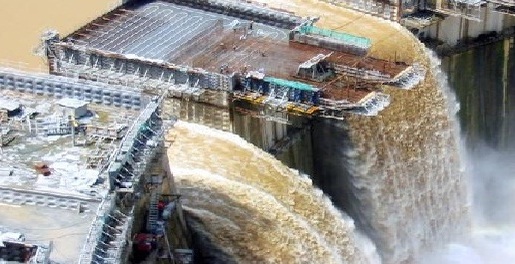
Recognizant of this, the incumbent government has been heavily investing in the development of hydro electric power over the past decade. However, various international organizations have indirectly worked to sabotage these efforts and have negatively influence donors from financing the projects. “The use of renewable resources has made limited headway in Ethiopia, primarily because of financial constraints,” Assefa Abreha, et al (2002:38).
Human Rights Watch, Amnesty International, International Rivers and other organizations sponsored by some “irresponsible external governments” have been attempting to hinder the efforts for hydro electric power development. They have raised irrelevant justifications to “donors” to jeopardize Ethiopia’s efforts to alleviate poverty, ascertain sustainable economic growth and guarantee the respect of the democratic and fundamental rights of the people; fulfilling the right of the people to have access to education, health and other facilities.
