
Opinion
Africa’s Jobless Youth: A Growing Political Risk

By Wavinya Makai
Unemployment in Africa is no longer a statistic to glance at and move on from. It is pressure building beneath the surface of society – quiet in the day, restless at night, waiting for a spark.
When former UN Secretary-General Kofi Annan stood before African leaders at the African Union and warned that a generation without jobs is a generation pushed toward instability, he was reading the future with uncomfortable clarity. That future has arrived.
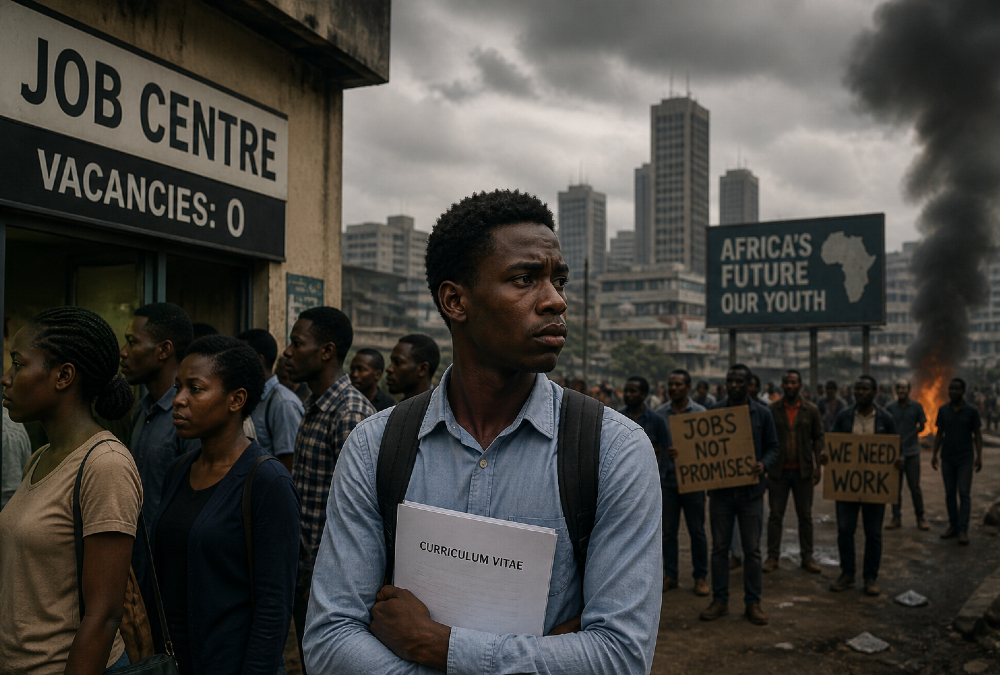
Consider African youth today: educated, connected, and acutely aware of the world’s possibilities, yet locked out of its opportunities. Degrees in hand, ambition in their hearts, and doors that refuse to open.
The continent has built education systems that produce aspiration at scale, yet economies that absorb almost none of it. The result is a dangerous mismatch between what young people believe they can become and what the system will allow them to be.
That gap is where frustration matures into anger – and where anger begins to search for direction.
When Ambition Has Nowhere to Go
History offers an unambiguous lesson about what happens when large populations of young people feel excluded from economic life: they do not disappear. They reorganize.
Sometimes into innovation, yes, but far too often into protest, migration, survival economies that exist outside formal systems and, in the worst cases, into conflict. Instability is rarely born from chaos. It is produced by structural failures left unaddressed for too long.
Africa is the world’s youngest continent. That demographic reality should be its greatest economic advantage. Instead, it is being treated as a liability – because the architecture of African economies remains externally oriented, capital-light in production, heavy in extraction, and weak in industrial absorption.
The continent exports raw potential and imports finished limitation. Youth unemployment is simply the human face of that model.
A Structural Problem Wearing a Human Face
The question is no longer whether unemployment is rising. It is what kind of future is being engineered by allowing it to rise unchecked.
Hope is an economic variable. Employment is a political stabilizer. And dignity is the foundation of any functioning society.
The Cost of Ignoring the Warnings
If African governments and their international partners fail to build industries capable of absorbing the continent’s youth, those young people will find other outlets for their energy and discontent. The ground is already shifting – as conditions across South Africa and numerous other African nations make plain.
Annan warned of this. So did many of the sharpest minds in African development and governance.
The warnings were never the problem. The response has been.
Wavinya Makai is a Kenyan author, development strategist, and Pan-African scholar specializing in African economic sovereignty. Her work focuses on youth development, unemployment, and education reforms that cultivate innovators. She is the author of Capital Violence: The Economic War on African Dignity and holds a Master of Philosophy in Development Studies from the University of Cambridge. Makai has been featured as a development analyst on Citizen TV Kenya and is a frequent speaker on leadership and human rights.
