
Business
Ethiopia provides Africa with a blueprint to finance massive infrastruture projects without donor support
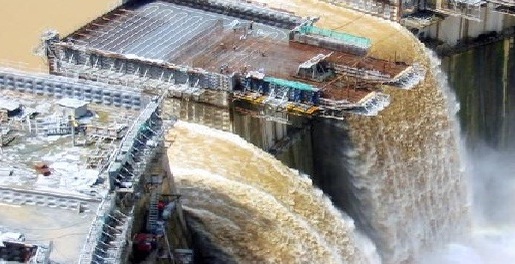
At a cost of US$4.8 billion, it is an audacious project undertaken by one of the fastest growing countries in Africa.
At the construction site in the Benishangul region of Ethiopia near the Sudanese border, some 8,500 workers are laboring tirelessly every day to build the gigantic Grand Ethiopian Renaissance Dam. When completed in 2017, the dam will generate 6,000 megawatts of electricity for both domestic consumption and export.
On the surface, the 170 meter (558ft) tall dam, (Africa’s biggest hydropower project), belies Ethiopia’s financial muscle. The gross domestic product (GDP) per capita in Ethiopia is only US$475.
The country’s late Prime Minister Meles Zenawi, who laid the foundation stone in 2011, insisted that the dam would be built without requesting for financial assistance from external donors and financial institutions, including the International Monetary Fund (IMF) and World Bank. Since then, construction has progressed steadily using money from local taxes, and government bonds. Ethiopians abroad and at home contributed the first US$350 million, with government workers contributing amounts equivalent to a month of their salaries.
According to Semegnew Bekele, an Ethiopian construction engineer working on the dam, “ordinary people are building an extraordinary project.”
Development experts now showcase the dam as proof of an innovative approach to project financing.
“Approximately US$450 million has been raised from Ethiopian citizens to help build the dam and I think the target is probably US$1 billion dollars,” says Zemedeneh Negatu, the managing partner at Ernst & Young Ethiopia.
Ethiopians, private companies and even other countries such as Djibouti are buying bonds. In addition, the Ethiopian Electric Power Corporation, a state-owned utility, is investing its own revenue and the money it is borrowing from state-owned banks. Economists warn that using private sector finance to pay for the dam could slow Ethiopia’s economic growth in the future. But the government counters that this will be offset by selling electricity to countries in East Africa, a region with rapid economic growth.
Ethiopia’s recipe for financing the dam from bonds and taxes is being touted as a model for other African countries. This east African country uses an automated system to track and collect taxes, making evasion difficult. The government regularly carries out awareness campaigns to explain taxation and publicize what collected taxes are funding, such as the dam.
Ethiopia’s financing approach, including taxes, is just one of the emerging ways of funding infrastructure projects in Africa. Other countries on the continent are working towards similar initiatives. Africa currently collects about 27 percent of its GDP in taxes, which is insufficient to fund the much needed infrastructure such as roads, bridges, schools and hospitals.
