
Opinion
Ethiopia: Hydro electric power development indispensable to economic transformation
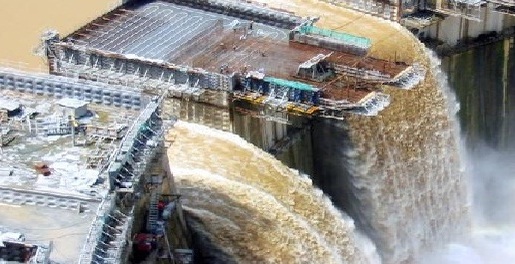
This blackmail has had a significant impact on the country’s move to alleviate poverty as its economy is an emerging one – however, recent developments – like the construction of the Grand Renaissance Dam without donor support have helped the country attain a certain level of independence from external donors and financiers.
Ethiopia is an agrarian economy where the agriculture, according to recent data from Ministry of Finance and Economic Development, accounts for 45.9 percent of the Gross Domestic Product (GDP). About 45 percent of Ethiopia’s land mass is arable. The manufacturing sector which accounts for 13.3 percent of GDP is dominated by food, beverage, textiles, hides & skins, and leather industries.
From 2007-2010 inclusive, the country registered an annual average growth of 11.6 percent, 10.2 percent, 11.3 percent and 13.7 percent respectively. Comparing it with 2014/2015, there is a significant change. In 2012/2013, Ethiopia was the twelfth fastest growing economy in the world. Average annual real GDP growth rate for the last decade was 10.9 percent.
Agriculture, grew by 7.1 percent, while manufacturing, rose by 18.5 percent; the relatively new services sector which has rapidly grown and accounts for an increasing percentage of GDP, increased by 9.9 percent in 2012/13.
Ethiopia has made great strides to become one of Africa’s fastest growing economies – this growing economy needs huge amount of energy. There are various challenges the country has been facing in developing its electric power and other mega projects. According to African Outlook, The Ethiopian economy has experienced strong and broad based growth over the past decade, averaging 10.9 percent per year in 2004/05 – 2012/13 compared to the regional average of 5.3 percent. Expansion of the services and agricultural sectors account for most of this growth, while manufacturing sector performance has been relatively modest.
Economic growth has brought with it positive trends in reducing poverty, in both urban and rural areas. While 38.7 percent of Ethiopians lived in extreme poverty in 2004/05, five years later in 2009/10 this was 29.6 percent – a decrease of 9.1 percentage points as measured by the national poverty line. The target is to reduce this further to 22.2 percent by 2014/15.
Due to the lack of finance, the country could not use its water resources that could contribute to the economic transformation. However, with more efficiency in revenue collection and reduction in waste, the government has been able to finance some major infrastructure projects without having to rely on external financial sources.
This in turn has positively impacted on the administration. The government has significantly become more accountable to its citizens. Ethiopia is working to improve governance and empower local authorities. This model is quite evident – there has been significant progress in various areas: school enrollments have already registered more than 98 percent growth, child mortality has been cut in half, and the number of people with access to clean water has grown to more than 65 percent.
At the current rate of infrastructure development, the country’s hydro electric power generation capacity will increase from the current 2,000 MW to 8,000 MW, and the number of customers from the current 2 million to 4 million and by the end of 2015, the construction of a further 2,395 kilometers (1488 miles) of railway line.
Ethiopia’s fast economic growth requires huge amounts of energy – electricity. The development of its hydro electric power resources is a necessity in order to sustain growth and help in reducing poverty. In other words, one of the most fundamental measures that the country has to take to reduce poverty and ensure fast and sustainable economic growth is parallel development of its energy resources – its huge water potential.
