
Opinion
Leadership Is Not a Performance
Why Africa must stop confusing visibility, charisma, and rhetoric with leadership.

By Daki Nkanyane
Africa has seen too much leadership that knows how to appear before it knows how to build.
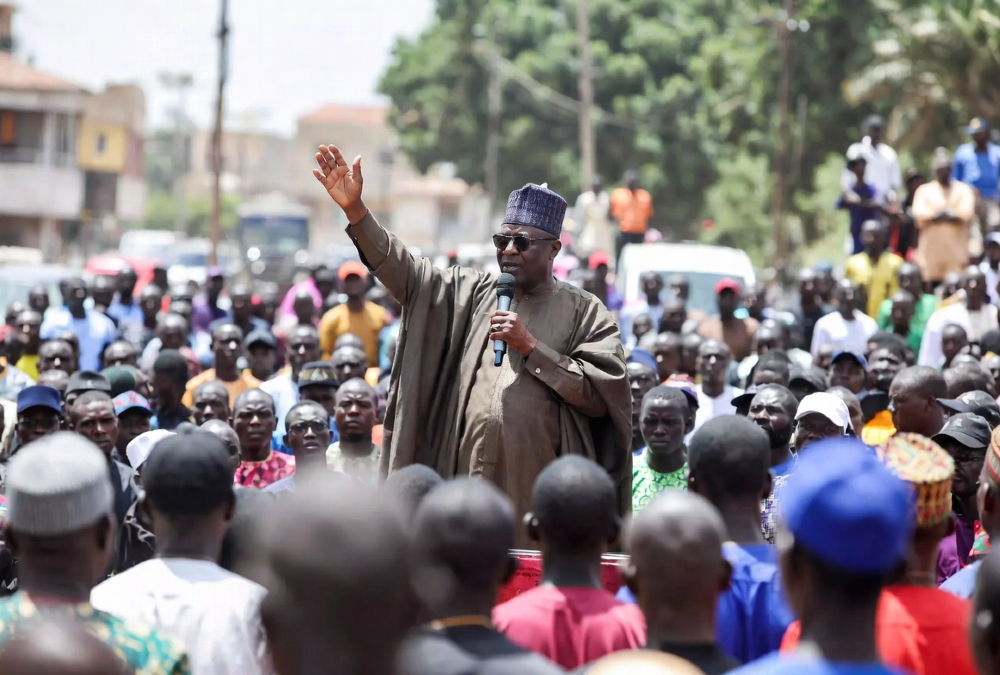
It knows how to speak, how to arrive, how to command attention, how to dominate the frame, how to turn a rally into theatre and a slogan into emotion. It knows how to perform urgency, how to sound decisive, how to wear authority in public.
But none of these things, on their own, are leadership. They are optics. They are style. They are presence. And Africa has paid too high a price for confusing these things with the harder, quieter, more demanding work of actual leadership.
That confusion is especially dangerous in a continent where public trust remains under pressure and institutional legitimacy is often fragile. Afrobarometer’s 2025 work notes that trust in public institutions has declined in much of sub-Saharan Africa, weakening democracy and raising concern about governance more broadly.
This is the first test Africa keeps failing.
It keeps mistaking visibility for capacity. It keeps rewarding performance before stewardship. It keeps allowing rhetoric to stand in for delivery, symbolism to stand in for systems, and charisma to stand in for institutional seriousness.
That is why so much African public life feels dramatically led and weakly governed at the same time. The speeches are often stronger than the structures. The gestures are often bigger than the outcomes. The public image of leadership is often more developed than the public reality of leadership.
The Performance Trap: When Visibility Masquerades as Leadership
Leadership is not performance. Performance seeks reaction. Leadership accepts burden. Performance wants to be seen. Leadership wants things to work. Performance is obsessed with impression. Leadership is obsessed with consequence.
That distinction should be obvious by now, yet it remains one of the most persistent confusions in African politics, business, religion, and public culture. Too many leaders are still assessed by how forcefully they speak rather than how well they govern, by how confidently they dominate the room rather than how responsibly they build institutions, by how effectively they mobilise emotion rather than how patiently they solve problems.
This is especially costly in contexts where citizens are already demanding more accountability and more substantive governance. Afrobarometer’s 2025 citizen engagement work across 39 African countries shows that people are not politically passive; they are increasingly vocal and attentive to governance and accountability.
That should force a harder question: Why does a continent with such visible political energy still so often end up with such weak public outcomes?
Part of the answer lies in how leadership is imagined. In too many places, leadership is still treated as a performance of command rather than an exercise in stewardship.
The leader must look strong, sound certain, occupy the stage, dominate the symbolism of office, and persuade the public that motion is happening even when systems remain stagnant. But real leadership is often less glamorous than that. It is administrative seriousness. It is institutional discipline. It is continuity of purpose. It is the ability to take responsibility not only for what is said, but for what is built, maintained, protected, and handed over stronger than it was found.
The Unglamorous Work That Actually Governs
That kind of leadership is harder to dramatise.
A ribbon-cutting is easier to photograph than institutional repair. A speech is easier to circulate than procurement reform. A declaration is easier to celebrate than the slow work of improving municipal competence, public financial management, school quality, judicial credibility, grid reliability, or transport coordination.
Yet it is precisely these unglamorous areas that determine whether a society is actually being led or merely being addressed.
Africa must become more suspicious of applause. Because applause is one of the most dangerous currencies in public life. It rewards the visible over the durable. It flatters ego. It creates the illusion that public excitement is proof of historical seriousness.
It turns leadership into a spectacle of emotional exchange: the leader gives language, confidence, symbols, and promises; the crowd gives attention, loyalty, and temporary belief. But belief without delivery eventually corrodes trust, and trust is one of the deepest foundations any society needs.
The UNDP’s work on trust in public institutions emphasises that institutional trust is central to effective governance and social cooperation, not a decorative extra.
When Every Sector Rewards the Performer Over the Builder
This is why Africa’s leadership crisis is not only a crisis of bad leaders. It is also a crisis of bad standards for recognising leadership.
We too often admire fluency before discipline. We are too quickly impressed by confidence. We are too tolerant of style without systems. We are too willing to call someone a leader because they can gather people, excite people, or persuade people, even when they cannot build institutions, protect public resources, or govern complexity over time.
This habit does not exist only in politics. It is visible across sectors. In business, there are people who master entrepreneurial theatre without mastering organisational integrity.
In religion, there are people who master the performance of moral authority without embodying ethical seriousness. In public discourse, there are people who master the language of transformation without accepting the burden of implementation.
That is how public life becomes crowded with performers. And performers can be dangerous when entrusted with institutions.
Because institutions do not respond to charisma. They respond to competence, incentives, discipline, and continuity.
An electricity grid does not care about a speech. A treasury does not respond to slogans. A court does not gain legitimacy through symbolism. A hospital does not become humane because a leader knows how to sound visionary.
The African Development Bank’s 2025 outlook is clear that institutions, economic governance, and the rule of law are indispensable to prudent and equitable management of Africa’s capital and development ambitions. That sentence matters because it strips away illusion.
If institutions matter that much, then leadership must be judged primarily by its relationship to institutions. Does it strengthen them or personalise them? Does it protect them or cannibalise them? Does it leave behind systems or only memories of a personality? Does it widen the zone of competence or merely concentrate loyalty around a figure? These are the real tests.
And they expose a brutal truth: much of what Africa has often celebrated as leadership has been little more than advanced performance.
The continent knows this instinctively. Ordinary people experience the difference every day. They know what it feels like to live under leaders who speak magnificently while water systems fail, power systems crack, youth unemployment deepens, corruption normalises, schools underperform, roads decay, and trust collapses into tired cynicism.
They know the gap between ceremonial seriousness and operational seriousness. They know the humiliation of hearing the language of transformation in environments where nothing reliably works.
Answerability: The Quality Performance Culture Most Fears
This is why performance is no longer enough even as a political technology. Its diminishing returns are already visible.
The Mo Ibrahim Foundation’s research on public opinions on governance in Africa highlights important divergences between official or index-based measures and citizen perceptions, reminding us that governance legitimacy is felt in lived experience, not only described in formal narratives. Performance can dominate the narrative for a time. It cannot indefinitely overpower daily reality.
That is where leadership must be redefined. Leadership is not the management of attention. It is the management of responsibility.
Leadership is not the ability to occupy history’s microphone. It is the willingness to carry history’s weight. Leadership is not mainly about being followed. It is about being answerable.
That last point is crucial because answerability is what performance culture tries hardest to avoid. Performance wants adoration without scrutiny, symbolism without measurement, and emotional legitimacy without institutional accountability.
Real leadership is the opposite. It accepts audit. It accepts comparison between promise and outcome. It accepts that public office is not a stage on which personal greatness is displayed, but a site where collective trust is either honoured or betrayed.
Africa needs far more of that understanding. It needs leaders who are willing to disappear into the work rather than always appearing above it.
Leaders who know that a functioning institution is a greater achievement than a memorable speech. Leaders who understand that public life is not a theatre of ego but a discipline of stewardship.
Leaders who can tolerate being underestimated while systems improve, rather than celebrated while systems decay.
A Harder Age Demands a Different Public Ethic
This is especially urgent now because the continent is entering a harder age. Governance pressures are intensifying. Public demands are rising. Conflict, democratic strain, protest, and institutional fragility remain serious across many contexts.
Recent analysis tied to the Ibrahim governance work points to worsening participation and accountability for large portions of Africa’s population over the past decade, alongside deeper democratic and security vulnerabilities. In such an environment, leadership cannot remain theatrical. The cost is too high.
Africa requires a different public ethic. It must begin teaching itself, and especially its young, that leadership is measured not by how large a figure becomes in the imagination, but by how much stability, trust, competence, justice, and continuity that figure helps institutionalise.
A truly led society should not have to rely perpetually on the mood, charisma, energy, or mythology of one person. It should increasingly rely on standards, systems, and norms that endure beyond personalities.
That is what performance culture resists, because performance thrives when institutions remain weak enough to need constant spectacle.
A speech cannot carry a broken institution. A slogan cannot repair a collapsed standard. A personality cannot substitute indefinitely for a system. Africa must become ruthless about this truth.
It must stop calling every visible person a leader. It must stop confusing movement with progress, confidence with competence, and popularity with seriousness.
It must stop rewarding those who can stir feeling without demonstrating responsibility. It must stop training entire societies to believe that salvation comes in the form of personalities rather than disciplined public systems. Because once a continent learns to expect more from performance than from institutions, it begins to participate in its own disappointment.
That disappointment is now too expensive. The future of Africa cannot be entrusted to people who know how to dominate a stage but not how to protect a treasury, run a city, strengthen a ministry, reform a school system, stabilise a utility, or build administrative trust.
The continent has too many needs, too much potential, and too much history at stake to remain seduced by optics. It must become more adult in its public judgment. More demanding. Less dazzled.
Because in the end, leadership is not what happens when a crowd believes in a person. Leadership is what remains when the crowd has gone home and the institution must still work tomorrow.
That is the test. And until Africa learns to apply it more seriously, it will continue to produce too many figures who look like leaders in motion and too few who actually lead in history.
Daki Nkanyane is a South African – born Pan-African thought leader, entrepreneur, keynote speaker, and strategist with over 25 years of experience driving innovation, identity, and development across Africa. He is the Founder & CEO of Interflex Capital, AfrisoftLive, QonnectedAfrica, and iThinkAfrica, where he focuses on youth empowerment, entrepreneurial ecosystems, and Africa’s economic and ideological renewal. His work spans technology, digital transformation, major international events, and strategic advisory for future-ready African institutions. As a contributing writer for The Habari Network, Daki covers African innovation, leadership, human capital, economics, entrepreneurship, and Africa–Caribbean relations through cultural, philosophical, and developmental perspectives. His mission is to help shape a new African consciousness rooted in pride, possibility, and self-determination for Africans on the continent and in the diaspora. He can also be reached on Facebook and X.
