
Opinion
Africa Is Not Plan B – It Is the Better Bet
While the Middle East descends into conflict and disruption, exporters still clinging to Gulf markets are ignoring a continent-sized opportunity taking shape right before them.

By John Kourkoutas
Something significant is shifting in the geography of global trade, and most exporters are not paying attention. While the Middle East grapples with protracted conflict, punishing sanctions, spiraling shipping disruptions, and political instability of an order not seen in decades, the continent to its southwest is quietly becoming the world’s most compelling frontier for trade and investment.
The divergence could hardly be more stark. On one side, a region that has long been the default destination for ambitious exporters is now defined by risk, uncertainty, and diminishing returns.
On the other, Africa – long dismissed as an afterthought in global supply chains – is doing the precise opposite: integrating, investing, and accelerating.
The exporters entering African markets now are locking in distributor relationships that will be difficult to replicate in five years’ time.
The African Continental Free Trade Area (AfCFTA) is in the process of connecting 1.3 billion consumers into the world’s largest free trade zone by geographic scope. Foreign direct investment into the continent reached record levels in 2025.
Demand for imports across fast-moving consumer goods, construction materials, and agricultural commodities is accelerating rapidly in markets such as Kenya, Ghana, Nigeria, and Côte d’Ivoire (Ivory Coast). These are not marginal markets on the periphery of global commerce – they are increasingly central to it.
And yet, a striking number of exporters still regard Africa as a fallback – a contingency to be explored only after more familiar options have been exhausted. That is a strategic miscalculation of the first order.
Five Reasons To Move Now, Not Later
Consider five reasons why Africa deserves to be treated not as an alternative, but as a primary destination.
- Diversification as discipline. Any business whose revenue depends heavily on a single volatile region is operating with unacceptable exposure. Africa’s 54 economies move on different cycles, offering a structural hedge that no single-region strategy can replicate.
- A less crowded field. While competitors jostle for the attention of the same Gulf-based buyers, African markets present substantial import gaps with comparatively few suppliers competing to fill them. The competitive dynamic is fundamentally different – and far more favorable.
- A middle class on the rise. Africa’s consumer class is projected to reach 1.1 billion people by 2030. That is not a niche demographic to be served with token effort. It is a continent-scale market that will demand goods, services, and supply chain relationships for decades to come.
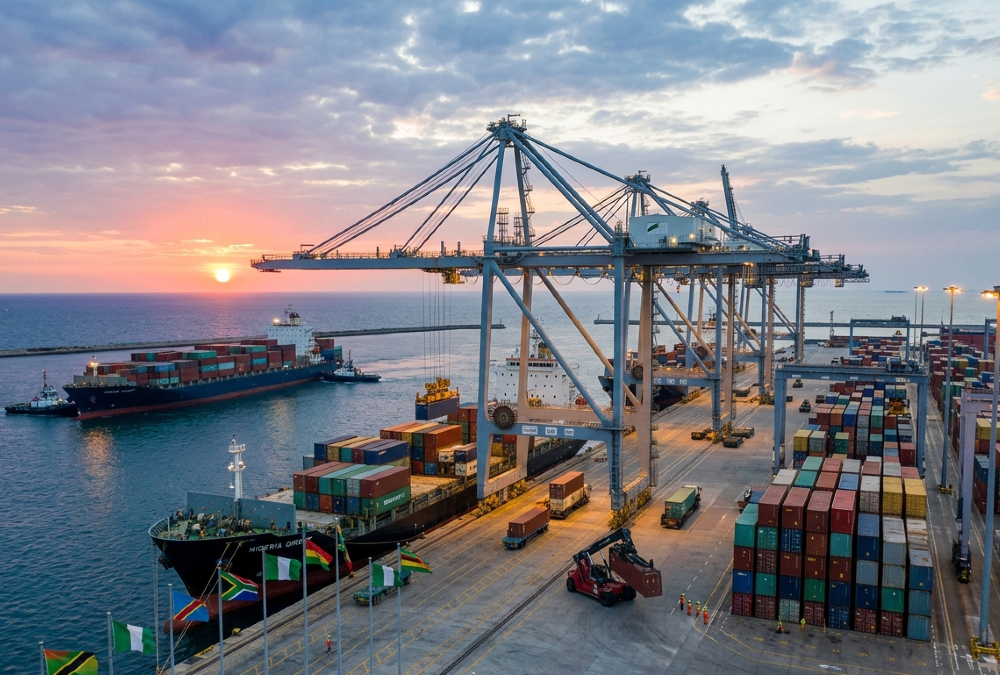
- Infrastructure catching up fast. New deepwater port capacity at Lamu and Tema, a strategic logistics hub at Djibouti, rail corridors connecting landlocked economies to coastlines, and the rapid adoption of digital payment systems are all compressing the friction that once made African trade operationally daunting.
- First-mover advantage is real and time-limited. Exporters establishing themselves in African markets today are building distributor networks, brand recognition, and institutional relationships that will be extremely difficult for late entrants to replicate or displace.
The companies that will define the next decade of global trade will not be those that waited for perfect stability before committing to a new market. They will be the ones that moved decisively into Africa while their competitors remained paralyzed by hesitation and habit.
The window for early-mover advantage in African markets is open. It will not remain so indefinitely. The question is not whether Africa is ready for serious exporters. The question is whether serious exporters are ready for Africa.
John Kourkoutas is business development expert that specializes in helping companies, export teams, and business leaders succeed in Africa’s dynamic and emerging markets.
