
Opinion
Southern Africa’s Quiet Trade Shift Deserves Global Attention
The real barriers to African commerce have never been tariffs. They are the invisible frictions that strangle trade before goods ever reach a buyer. That may finally be changing.

By Ashish Muley
In the endless global conversation about trade liberalization, tariffs command most of the attention. They are measurable, politically dramatic, and easy to headline.
But for businesses operating across African borders, tariffs have long been a secondary concern. The primary obstacle has always been something more mundane and far more damaging: non-tariff barriers, or NTBs.
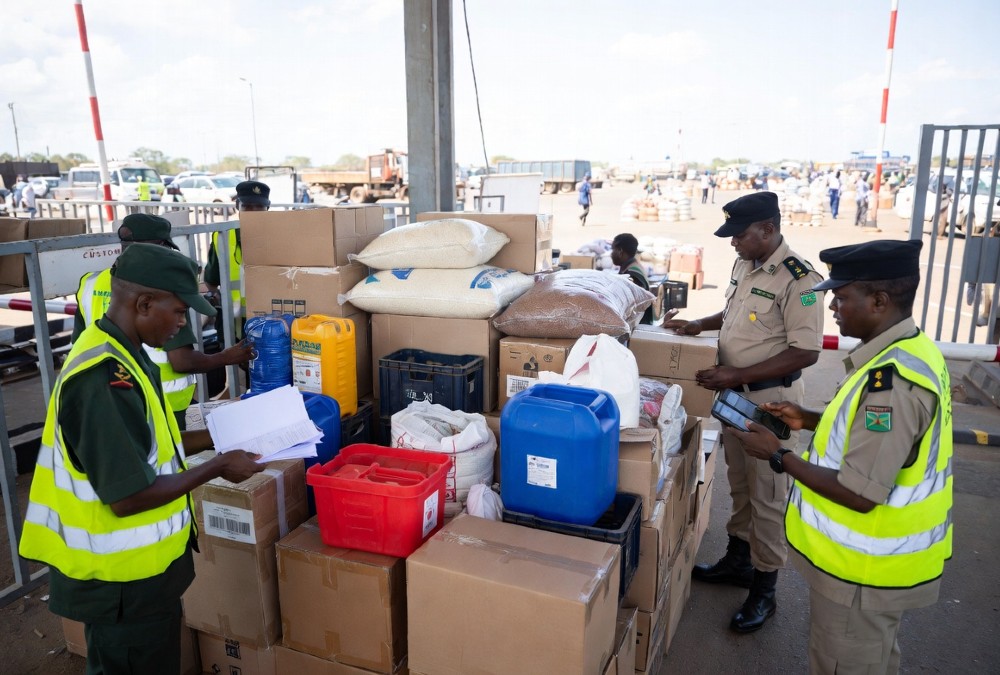
Redundant certifications. Opaque customs procedures. Licensing bottlenecks that take weeks to navigate. Border delays that inflate logistics costs and quietly kill the economics of cross-border commerce. These are the frictions that have historically made intra-African trade punishingly difficult – not the tariff schedules that dominate policy debate.
This is why a recent, largely unreported development out of the Southern African Development Community deserves serious attention.
From Policy Intent to Execution
The Southern African Development Community (SADC), a regional bloc comprising 16 member states, took a decisive step this week by identifying concrete measures to eliminate NTBs across its membership. The details are technical, but the implications are anything but.
More than half of all reported NTBs already have established resolution pathways. Member countries are now moving toward bilateral mechanisms to address pending cases. And perhaps most significantly, a dedicated Technical Working Group on NTBs is being formally institutionalized – transforming what had been ad hoc problem-solving into a structured, accountable process.
For anyone who has watched African trade integration from a distance, the temptation is to greet such announcements with weary skepticism. The continent has a long history of ambitious frameworks that stall at the implementation stage.
But this particular development is different in character. It is not a declaration of intent. It is a machinery being assembled.
The Hidden Cost That Tariffs Cannot Explain
To understand why this matters, consider what NTBs actually do to a business. A small or mid-sized exporter attempting to ship processed food products across two SADC member states may face different labeling requirements in each market, duplicative inspections at the border, and unpredictable clearance timelines that make inventory planning nearly impossible.
For many exporters, these problems are not theoretical, they are the reason deals fall through.
None of this appears in a tariff schedule. All of it drives up cost and risk to the point where many SMEs simply choose not to participate in regional trade at all.
The economic literature is unambiguous on this point: NTBs, not tariffs, represent the dominant hidden cost of doing business across African borders. Their removal – even partial removal – can dramatically reduce transaction times, lower compliance costs, and make regional value chains viable for a broader class of businesses.
If SADC’s current push achieves meaningful results, the downstream effects could be transformational: faster border movement, stronger regional supply chains, and a measurable increase in the competitiveness of African exports on the world stage.
AfCFTA’s Foundation Depends on Getting This Right
The timing is also significant in a continental context. The African Continental Free Trade Area – the landmark agreement designed to create a single market across 54 nations – has made considerable progress on the tariff front.
But AfCFTA’s long-term success has always hinged on something harder to legislate: how efficiently goods actually move across borders once the paperwork is theoretically in order.
SADC’s focus on NTBs signals that at least one major regional bloc has grasped this reality and is acting on it. If the model proves effective, it offers a replicable template for other regional economic communities across the continent. The architecture of AfCFTA is only as strong as the trade corridors built beneath it.
What This Means for Exporters Beyond Africa
For Indian exporters in particular – and for any business with an eye on African market entry – the implications of SADC’s shift deserve a close read. As NTBs recede, market access becomes genuinely smoother rather than nominally open.
Supply chains grow more predictable. Regional distribution hubs, once economically marginal, become viable anchors for broader continental strategy.
SADC, positioned at the southern tip of a continent whose middle class is expanding rapidly, has long been discussed as a potential gateway to wider African markets. The barrier has always been operational unpredictability.
Sectors such as agri-commodities, processed foods, pharmaceuticals, and light manufacturing stand to benefit considerably if that unpredictability is systematically reduced.
The Lesson Hidden in the Fine Print
Africa’s trade transformation will not arrive via sweeping summits or record-breaking bilateral deals. It will come through the removal of small, persistent frictions – the kind that never make headlines but collectively determine whether commerce flows or stalls.
SADC’s latest move is technical in nature. That is precisely what makes it credible. The most consequential reforms rarely announce themselves loudly; they show up in working group mandates and bilateral resolution mechanisms, noticed only by those paying close enough attention.
The question for exporters and investors is whether they are watching these signals – or waiting for a headline that, by the time it arrives, will already belong to someone else.
Ashish Muley is an independent consultant with Stalwart Management Consulting, with 27+ years in agricultural commodity value chains, export markets, and international trade. He has led projects on business development and capacity building across African countries in partnership with international organizations. Formerly, he spent 15 years in financial services leadership, focusing on sales, marketing, and business development. Based in Pune, India, Ashish advises on agricultural trade, commodity markets, and Asia–Africa economic opportunities, and regularly writes on international trade and logistics.
