
Opinion
AGOA Is More Than Just Textiles
By Emmanuel Musaazi
When I caught a glimpse of Uganda’s Draft AGOA National Response Strategy, my patriotic heart soared. I was, especially, proud that Uganda has a draft document out when even countries like Mauritius have not really developed their export promotion strategies for the preferences the United States provides sub-Saharan Africa. Kudos to Uganda’s Ministry of Trade, Industry and Cooperatives and their guide to the next 5 years of trade with the United States.
Immediately, five things stood out for me: First, the title, Trading Out of Poverty, into Wealth and Prosperity was as spot on as it was ambitious. If Uganda could trade with the U.S., there is no doubt that many Ugandans would stand to benefit from AGOA’s market access provisions. Secondly, the document noted that in spite of the credit crunch during the recent economic downturn, Uganda’s agricultural exports consistently increased in value – from US$18.9 million in 2004 to US$38 million in 2011.
Then something caught my eye: While Uganda’s figures were, to say the least minuscule, Uganda’s AGOA document had a graph that displayed her partners in the East African Community. This is important, and made me think that if the East African Community started to cooperate for not just the purposes of AGOA but for the region’s overall export promotion, investors could, at least, be more interested in a bigger market of five countries – two with access to the Indian Ocean – than a landlocked Uganda; even if our population is growing faster than our neighbors.
But it is the last two aspects that surprised me the most: In fourth place, Uganda’s AGOA strategy recognized cotton as the second and most important traditional export crop for Uganda. Here, I thought that, perhaps, the country was making a point to request the United States to remove the tariff rate quota on cotton – which is considered a sensitive commodity over here. The strategy goes on to identify that the cotton industry of mostly small holders is the main source of income for 400,000 poor households. I thought: If each household is made up of about 6 people, then cotton is feeding up to 2.4 million Ugandans. Again, this is key since we export 90 percent of our cotton as raw lint.
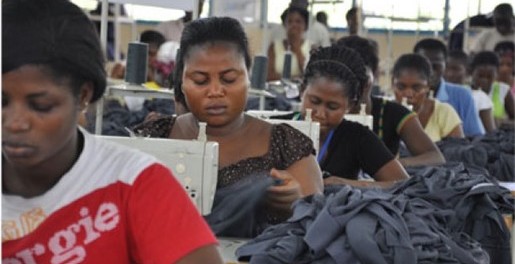
Interpretively, if you combine this cotton nugget with how the entire AGOA program is associated with a single textile factory that collapsed in a spectacular fashion, cotton might, perhaps be the best way for Uganda to shake the anti-AGOA sentiments off. Yes – the United States may not relax its cotton tariff rate quota, but if Uganda has the capacity to produce enough cotton to supply any new factory, then the country can be the poster child for a textile or garment industry value chain – ‘from field to fashion,’ so to speak. After all, the country grows the long-stapled Bukalasa Pedigree Albar (BPA) variety of cotton. With BPA, this could allow for specialization and easier quality control in the production of lint and yarn.
Importantly, because production in Uganda is dominated by small-scale producers, we could even argue that these can be managed as much as they are currently managed under Uganda’s Cotton Development Organization. With over 40 ginneries, Uganda has installed capacity of about 1 million bales of lint.
Unfortunately, Uganda is very much like the United States, in that the country exports much of what it produces to countries like China. In fact, less than 5 percent of what lint is produced is consumed by the two local textile factories available.
As an entrepreneur, I see the opportunity for a product like cotton, in terms of both export and local utilization. If the United States gave cotton duty-free quota-free market access under AGOA, Uganda’s overall AGOA strategy could be expanded from just coffee, tea, textiles and apparel.
