
Opinion
Africa – Helping small farmers adapt to climate change could pay for itself – Report
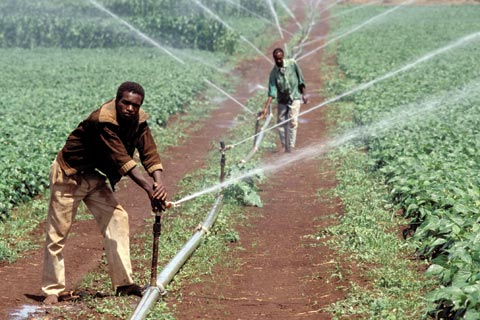
Irrigated farming in Tanzania. PHOTO/Peter Arnold, Inc./Ron Giling
Helping smallholder farmers adapt to changing climate conditions and lower their risks will be crucial to ensuring food security in the future – and could pay for itself, argues a new report looking at the cost-effectiveness of adaptation.
Putting a financial value on the benefits of adaptation – from more weather-resilient rural roads that help farmers get crops to market, to new ways of making a living – is crucial because “that is ultimately what decision makers understand”, said Gernot Laganda, a climate change adaptation specialist with the International Fund for Agricultural Development (IFAD), which produced the report.
Calculating economic benefits can help drive funding to adaptation and transform national agricultural policies in the ways that are needed, Laganda told journalists at the U.N. climate negotiations in Warsaw.
In Kenya’s eastern Mount Kenya region, investment in farmer field schools – to help growers adopt new agricultural technology and techniques – led to significant increases in sales of crops and livestock products such as milk, a set of IFAD case studies found.
Improving rural roads in the same area cut the cost of transporting food to market by 20 percent, and farmers who adopted soil and water conservation methods saw their harvests rise by 65 percent, IFAD said.
The introduction of efficient stoves also led to a 50 to 75 percent reduction in the volume of wood used for cooking. That, along with efforts to replant trees in the Tana River watershed, and investment in irrigation, helped boost jobs in the region and cut the time women spent collecting water and wood.
“The climate debate often overlooks how adaptation can result in economic and financial opportunities for smallholder farmers,” the IFAD report said. Farmers can cash in by diversifying their crops or finding additional sources of income, for example.
