
Opinion
Africa – Helping small farmers adapt to climate change could pay for itself – Report
In Bangladesh’s Haor region, hit by severe annual flooding that is expected to worsen with climate change, building low-cost protective walls and stabilising slopes with vegetation could be a cost-effective strategy for farmers, the report said.
Vocational training in “profitable trades” such as motorcycle and engine repair, carpentry, brick making and establishing seed nurseries could also make farmers more resilient by diversifying their incomes.
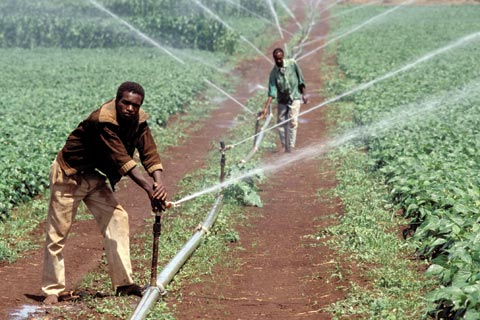
And in southwest Bolivia – where changing weather patterns are bringing longer droughts and more extreme rainfall and wind, as well as higher temperatures – different crops and better irrigation could help raise household incomes by at least US$310, and perhaps as much as US$1,685 a year, the report estimated.
“These investments do not just benefit smallholder farmers, but contribute to wider development goals such as poverty reduction, functioning environmental services and cutting carbon emissions,” the report noted.
Enrico Mazzoli, an economic and financial analyst for IFAD, said that while many of the numbers in the report are estimates of benefits expected from adaptation that is only now getting underway, they are “robust and conservative”, and are based on examining the difference between continuing with current policies and making adaptive changes as the climate shifts over the next 20 years.
While global demand for food is expected to grow by at least 70 percent by 2050, in some regions of the world, adaptation will be needed simply to maintain production in the face of more extreme weather and other climate impacts, Mazzoli said.
“It’s often the case that we don’t increase anything, but we keep the production constant – which is often today the biggest challenge,” he added.
Republished with permission from AlertNet Climate
