
Opinion
Africa – Helping small farmers adapt to climate change could pay for itself – Report
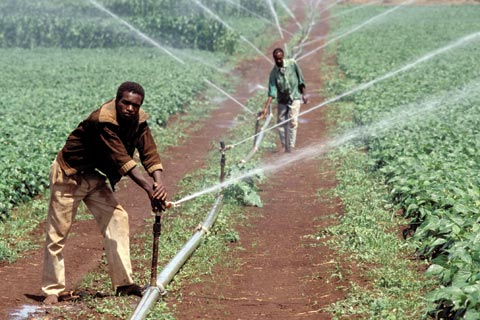
The 5 case studies – 4 of which estimate the potential benefits of future planned adaptation in Bolivia, Vietnam, Bangladesh and Turkey – suggest “it is possible to quantify the benefits that arise from adaptation investments in economic and financial terms”, and that such benefits are cost-effective, the IFAD report said.
It argues that using climate finance to fund adaptation for small-scale agriculture would be a wise investment, particularly because small farmers produce up to 80 percent of food in sub-Saharan Africa, and agriculture accounts for up to 70 percent of jobs in the world’s least-developed countries.
“Climate adaptation is proving its effectiveness in equipping smallholder farmers with the tools and practices they need to carry on their livelihoods in a future with many uncertainties,” the report said.
Boost To Incomes, Development
In Vietnam, for instance, IFAD estimates that measures to help farmers adapt to rising salinity in the Mekong Delta could yield benefits beyond the cost of the adaptation measures.
Persuading some farmers to abandon rice growing in favor of a mix of coconuts and sugarcane could boost household incomes by as much as US$3,916 a year, the report estimates, while switches to shrimp cultivation could bring even higher incomes.
Providing farmers with better data on water salinity – through automated sensors used to produce “salinity forecasts” – could help them understand the changing conditions. And developing saline-tolerant rice and other crops, as well as a saline-tolerant catfish species, could enable them to protect their incomes, the report said, as might investing in processing facilities for coconut and cacao.
