
Owusu on Africa
Why Somalia Is Rejecting UAE Cooperation: The Bigger Picture

By Fidel Amakye Owusu
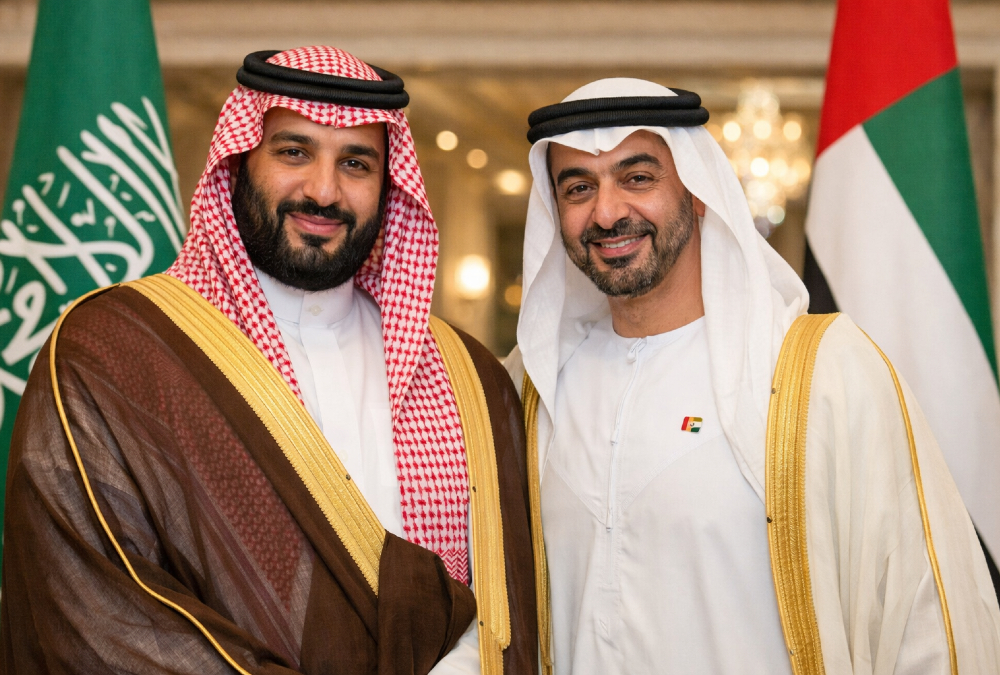
Two ambitious crown princes have emerged in the Gulf, each possessing formidable charisma, transformative visions for their respective nations, and deeply conservative views on regional order. Both have demonstrated a willingness to pursue unprecedented measures to discipline fellow member states they perceive as insufficiently aligned with regional security objectives.
For years, their alliance appeared unshakable. Then cracks began to form. One crown prince adopted a more restrained posture in a conflict he considered dangerously destabilizing.
This same leader gradually cultivated closer ties with what many in the region regard as a shared adversary, while the other remained conspicuously noncommittal about such diplomatic maneuvers.
Most significantly – and often overlooked – this same crown prince has now ascended to full authority following his father’s death. What was once a partnership between two heirs apparent has transformed into a relationship between a sitting monarch and a crown prince, regardless of the latter’s substantial de facto power.
At the heart of this shift lies a clash of personalities and ambitions.
The Red Sea Rivalry
The consequences have been swift and unmistakable. As the United Arab Emirates (UAE) deepened its relations with Israel and expanded its footprint across the Horn of Africa – including Sudan, Ethiopia, and Somalia – Riyadh grew increasingly uncomfortable.
The UAE was accumulating strategic leverage in a region Saudi Arabia considers its natural sphere of influence.
From the Saudi perspective, the UAE’s geography should not entitle it to assert dominance across the Red Sea and Gulf of Aden. Crown Prince Mohammed bin Salman likely believes that if any regional power merits such influence, it must be Saudi Arabia.
Riyadh appears to be signaling that the UAE should operate within its perceived weight class and concentrate its influence on the Persian Gulf, where Saudi Arabia maintains its own commanding presence. Abu Dhabi’s growing foothold on both flanks of the Gulf of Aden and Red Sea has clearly unsettled the kingdom.
Recent strikes targeting UAE interests in Yemen deliver an unambiguous message. An anticipated Saudi-sponsored Pakistani arms sale to the Sudanese Armed Forces represents another dimension of this deepening rift between the two monarchies. The UAE’s backing of the Rapid Support Forces is similarly viewed in Riyadh as a strategic overstep.
A Familiar Pattern
To be sure, the United States, China, Türkiye, France, and other powers maintain their own regional presence. Yet to Riyadh, the expanding influence of its longtime ally and fellow Gulf Cooperation Council member signals potential rivalry rather than partnership.
The kingdom appears willing to clip the wings of a fellow falcon. Somalia’s rejection of UAE cooperation – particularly regarding the contentious Somaliland issue – is merely one feature of this larger strategic recalibration.
This dynamic is not fundamentally different from the coordinated pressure both states applied to Qatar when similar concerns emerged.
The Path Forward
Despite these tensions, both countries have substantial incentives for cooperation. While states may harbor competing ambitions, dialogue remains preferable to confrontation when suspicions arise.
The alternative risks destabilizing a region already beset by multiple security challenges.
African states and their political leaders must also ensure they do not become pawns in proxy conflicts driven by external rivalries. Somalia’s reassessment of its relationship with the UAE reflects a broader recognition that Horn of Africa nations need not accommodate every Gulf power play.
Regional sovereignty demands that African countries chart their own course, even when pressured by wealthy external actors pursuing competing visions of influence.
The question now is whether pragmatism will prevail over pride. Can two ambitious Gulf powers find accommodation, or will their rivalry further fragment an already volatile region?
For Somalia and its neighbors, the answer will determine whether they control their own destiny or remain hostage to conflicts not of their making.
Fidel Amakye Owusu is an International Relations and Security Analyst. He is an Associate at the Conflict Research Consortium for Africa and has previously hosted an International Affairs program with the Ghana Broadcasting Corporation (GBC). He is passionate about Diplomacy and realizing Africa’s global potential and how the continent should be viewed as part of the global collective.
