
Owusu on Africa
West Africa’s Bold New Military Initiative: Can a 260,000-Troop Force Defeat Terrorism?

By Fidel Amakye Owusu
In 1963, as African nations emerged from colonial rule, Ghana’s visionary leader Kwame Nkrumah made a bold call: the continent needed a unified African Military High Command. Such a force, he argued, would not only safeguard Africa’s hard-won independence but also serve as a rapid-response shield against internal conflict and external threats.
The Congo Crisis, erupting just months after independence, underscored the urgency of his proposal.
Yet Nkrumah’s dream never materialized. Cold War rivalries, regional distrust, and divergent national interests stymied pan-African defense integration.
The Organization of African Unity (OAU), precursor to today’s African Union (AU), was established without a centralized military command – leaving Africa’s security architecture fragmented from the outset.
A New Chapter for Regional Security
Now, more than six decades later, West Africa is attempting to revive that vision – on a regional scale.
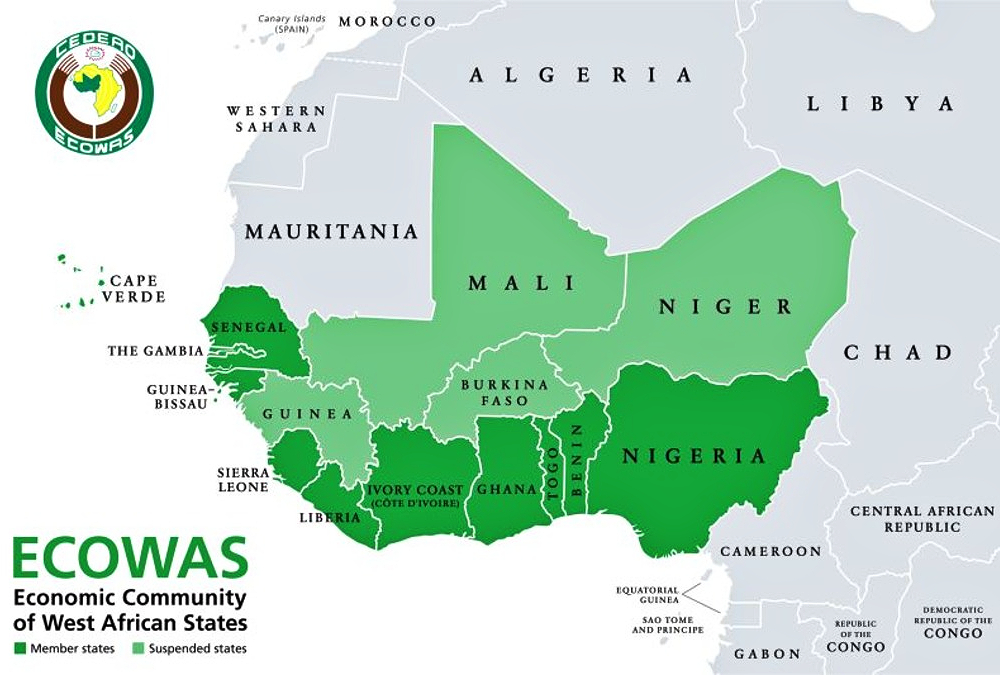
In late August 2024, defense chiefs from the Economic Community of West African States (ECOWAS) gathered in Abuja, Nigeria, and unveiled a sweeping plan: a proposed 260,000-troop regional military force dedicated to combating terrorism across West Africa. With an estimated annual cost of US$2.5 billion, the initiative marks the most ambitious collective security effort the region has ever undertaken.
The urgency is undeniable. West Africa, particularly the Sahel and coastal frontier states, has become the epicenter of global terrorism.
According to the Global Terrorism Index, the region now accounts for over half of all terrorism-related deaths worldwide. Groups linked to ISIS and al-Qaeda have expanded their reach from Mali and Burkina Faso into Benin, Togo, and even coastal Ghana – threatening the stability of nations once considered secure.
The proposed ECOWAS force aims to reverse this trend through coordinated border patrols, intelligence sharing, and rapid deployment capabilities. But the question on every policymaker’s mind is not whether the region needs such a force – but whether it can make it work.
A Troubled Precedent
History offers cautionary tales. The G5 Sahel – a joint counterterrorism force comprising Mauritania, Mali, Niger, Burkina Faso, and Chad – was once hailed as a model of regional cooperation. Yet it collapsed in 2023, undermined by coups, political instability, and growing distrust between military juntas and civilian-led governments.
France’s withdrawal from the region further eroded support.
Similarly, the Multinational Joint Task Force (MNJTF), formed to combat Boko Haram in the Lake Chad Basin, has struggled with funding shortfalls and political infighting. Chad and Niger have recently threatened to withdraw, citing unmet commitments and strategic disagreements.
Even the Accra Initiative – an intelligence-sharing and joint patrol mechanism among Ghana, Ivory COast, Togo, and Benin – has seen minimal operational activity in recent years, hampered by bureaucratic inertia and competition for regional leadership.
These setbacks highlight a persistent challenge: regional military cooperation in West Africa has often been strong in concept but weak in execution.
Keys to Success: Institutionalization, Equity, and Leadership
For the new ECOWAS force to avoid the same fate, three critical elements must be addressed:
- Institutional Resilience
The force must be embedded in a permanent, well-resourced command structure – not treated as an ad hoc coalition. This means establishing a dedicated regional headquarters, standardized training protocols, and clear rules of engagement. Without institutional permanence, the force risks dissolving at the first sign of political friction. - Equitable Burden-Sharing
While the US$2.5 billion annual cost will be shared among 15 member states, economic disparities are stark. Nigeria and Ivory Coast, with stronger economies, will need to assume greater financial and logistical responsibilities. But burden-sharing must also be perceived as fair—smaller nations must have a meaningful voice in decision-making to prevent resentment and disengagement. - Political Will and Civilian Oversight
Military-led governments in Mali, Niger, and Burkina Faso have distanced themselves from ECOWAS in recent years, citing sovereignty concerns. For the force to succeed, buy-in from all member states—including those under military rule – is essential. Equally important is ensuring civilian oversight to maintain democratic legitimacy and prevent mission creep.
A New Chapter in African Security?
The stakes could not be higher. If successful, the ECOWAS force could become a blueprint for continental security cooperation – breathing new life into Nkrumah’s long-unrealized dream.
It could also reduce dependence on foreign military actors, from former colonial powers to emerging global players like Russia and Türkiye, whose involvement often comes with geopolitical strings attached.
But success will require more than troop numbers and funding pledges. It will demand trust, transparency, and a shared commitment to the common good over narrow national interests.
West Africa stands at a crossroads. The threat of terrorism is evolving faster than ever. The question is no longer whether Africa can defend itself – but whether it can finally unite to do so.
This new military initiative may be the best chance yet to answer that question in the affirmative.
Fidel Amakye Owusu is an International Relations and Security Analyst. He is an Associate at the Conflict Research Consortium for Africa and has previously hosted an International Affairs program with the Ghana Broadcasting Corporation (GBC). He is passionate about Diplomacy and realizing Africa’s global potential and how the continent should be viewed as part of the global collective.
